

Lead Product Designer → Director of Product Design & UX · UX leadership · Experience strategy · Research & design direction · Cross-functional alignment
Aligned leadership around one experience-platform vision, bringing independent roadmaps into a more continuous learner journey.
ACT had 37+ systems and 5+ product lines. The opportunity was to connect identity, roadmaps, and learner support more consistently across the ecosystem.
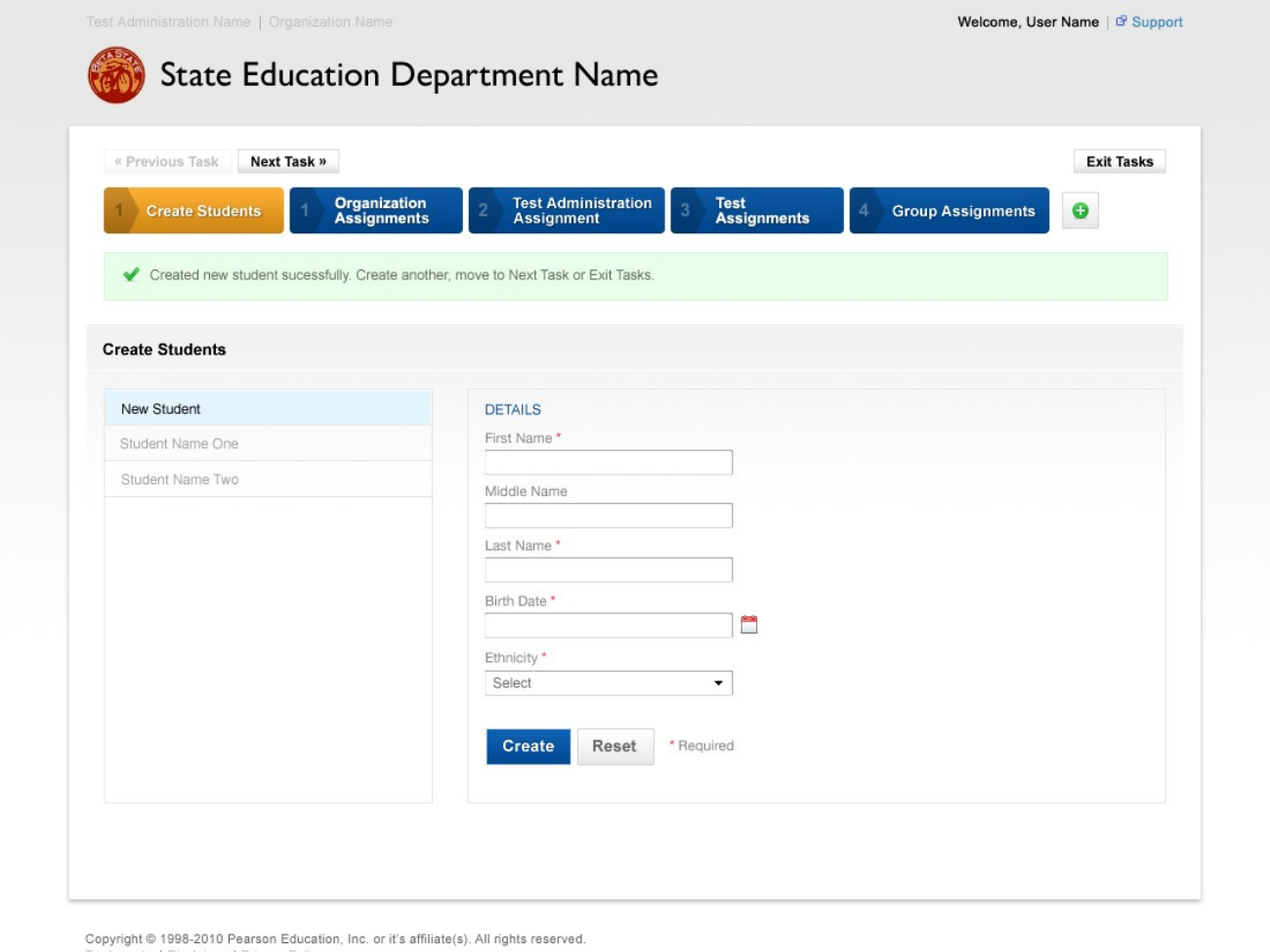
In a separate ACT initiative, the UX team simplified registration from roughly 30 minutes to under 7 minutes. The Unified Learner Experience work influenced roadmap thinking across MyACT and adjacent products, gave Product and Architecture a common way to evaluate integration decisions, and expanded the retention conversation beyond individual test events.
ACT had products spanning testing, planning, scores, and next-step decisions, but they had evolved independently. Separate roadmaps, identity systems, and handoffs meant learners often had to re-establish context as they moved between products.
What began as a MyACT redesign became a broader question: how could ACT better connect the learner journey across its products?
Alongside the ecosystem work, I was leading UX across individual learner workflows at ACT. Registration was a separate initiative and a concrete example of the detailed experience work my team was responsible for while I led the broader UX function.
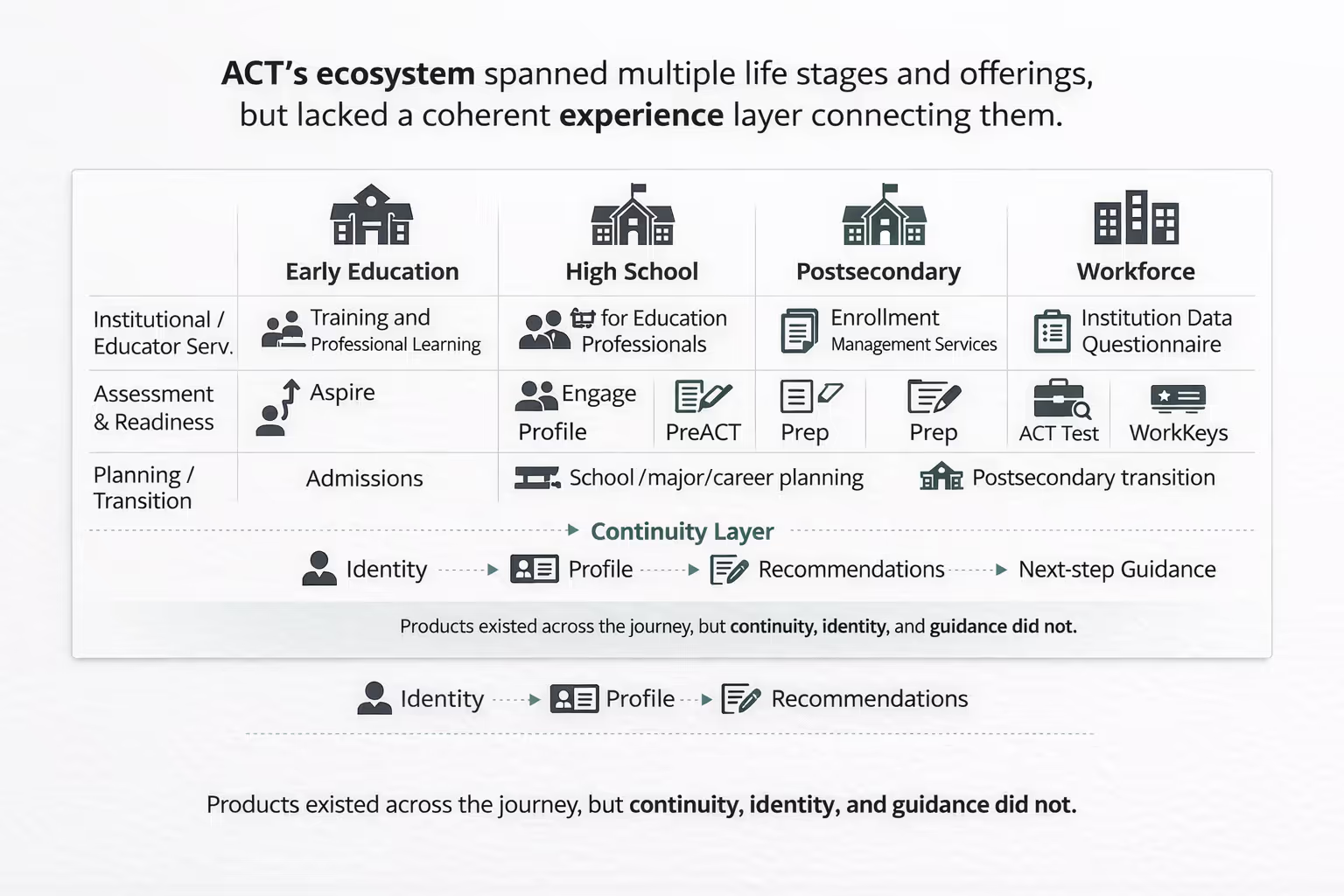
Ecosystem diagram showing ACT offerings across multiple life stages and the missing experience layer connecting them.
- Symptoms: Students, families, and educators moved across independently designed products, creating an opportunity to make next steps and decision support more continuous.
- Drivers: Independent product roadmaps, multiple identity systems, varied tagging standards, and limited cross-product integration.
- Constraints: Multiple personas, life-stage transitions, independently managed products, and no single experience layer.
- Result: ACT’s broader value was obscured, learner continuity broke down, and platform-level retention potential remained under-realized.
ACT had built a broad portfolio of assessments, prep tools, diagnostics, reporting systems, and planning products across students, parents, counselors, educators, institutions, and workforce pathways. But these offerings evolved more as separate products than as a connected learner experience.
As a result, students and families encountered ACT through isolated moments such as registration, testing, score reporting, prep, planning, or exploration. Each interaction could be useful on its own, but the ecosystem did not provide a clear sense of continuity, next steps, or how the pieces fit together over time.
This limited learner clarity, reduced cross-product value, and made it harder for ACT to express its broader role across school, postsecondary, and career decisions.
Ecosystem diagram showing ACT offerings across multiple life stages and the missing experience layer connecting them.
I started with MyACT, but discovery quickly showed that the larger challenge lived across the surrounding ecosystem.
Identity systems, product roadmaps, tagging standards, and diagnostics had evolved independently across products. Recommendations, pathways, and actions were not connected by a shared experience layer.
Better screens alone wouldn’t fix the breaks between products or scale across ACT’s ecosystem.
ACT’s ecosystem already contained many of the ingredients for a stronger learner experience. The challenge was that the underlying systems, product models, and organizational incentives were not aligned around continuity.
The strategy had to account for:
- Independent product roadmaps with a connected learner experience
- Assessment events with longitudinal learner support
- Different personas within one platform model
- Near-term roadmap needs with longer-term integration
This made systems design and organizational alignment part of the UX challenge.
Discovery showed the biggest continuity gaps were between products, where identity, data, navigation, and product ownership did not consistently carry context forward.
That changed the work from improving MyACT usability to mapping where the learner journey broke across the ecosystem.
- Identity and data were distributed across products.
- Product roadmaps were often optimized independently.
- Planning, testing, scores, and next-step decisions weren’t connected into one clear journey.

Journey map showing opportunities to connect awareness, registration, preparation, results, and future planning.


Discovery quickly moved beyond MyACT itself. We needed to understand how ACT’s products connected over time so learners, families, and educators could carry context forward and make better decisions.
I used ecosystem maps, personas, journey models, and early concepts, working with product, research, and architecture to find where the ecosystem was breaking across identity, transitions, recommendations, and decision support.
Student persona illustrating support needs and college-readiness decisions.
Parent themes showing how family support, transitions, and long-term planning shaped decision-making across the journey.
Counselor journey map revealing the operational complexity of coordinating testing, communication, and student support in schools.
Several patterns became clear across the research and systems work:
- Learners encountered ACT in separate moments across a much larger journey.
- Different personas needed different kinds of guidance, which made continuity across the ecosystem especially important
- Important data and product capabilities existed, but were not integrated into meaningful next steps
- Team and product boundaries were contributing directly to the learner experience
- The bigger opportunity was continuity across life stages and products, beyond isolated screen improvements
The findings pointed toward a product direction that connected the learner journey across ACT products.
The persona and journey work showed how differently each audience experienced ACT. High school students, parents, counselors, adult learners, and institutional stakeholders each encountered different parts of the ecosystem, which made continuity across them especially important.
A single persona or product was too narrow to represent the full experience. The model had to adapt across roles and life stages while still helping people understand where they were and what came next.
Journey map showing opportunities to connect awareness, registration, preparation, results, and future planning.
The strategy moved beyond improving one portal to defining how ACT’s products could work together around the learner.
I modeled the experience across identity, recommendations, planning, diagnostics, and support so teams could see the learner journey and the technical dependencies behind it.
The key constraint: connect independently evolving products while allowing each to remain distinct.
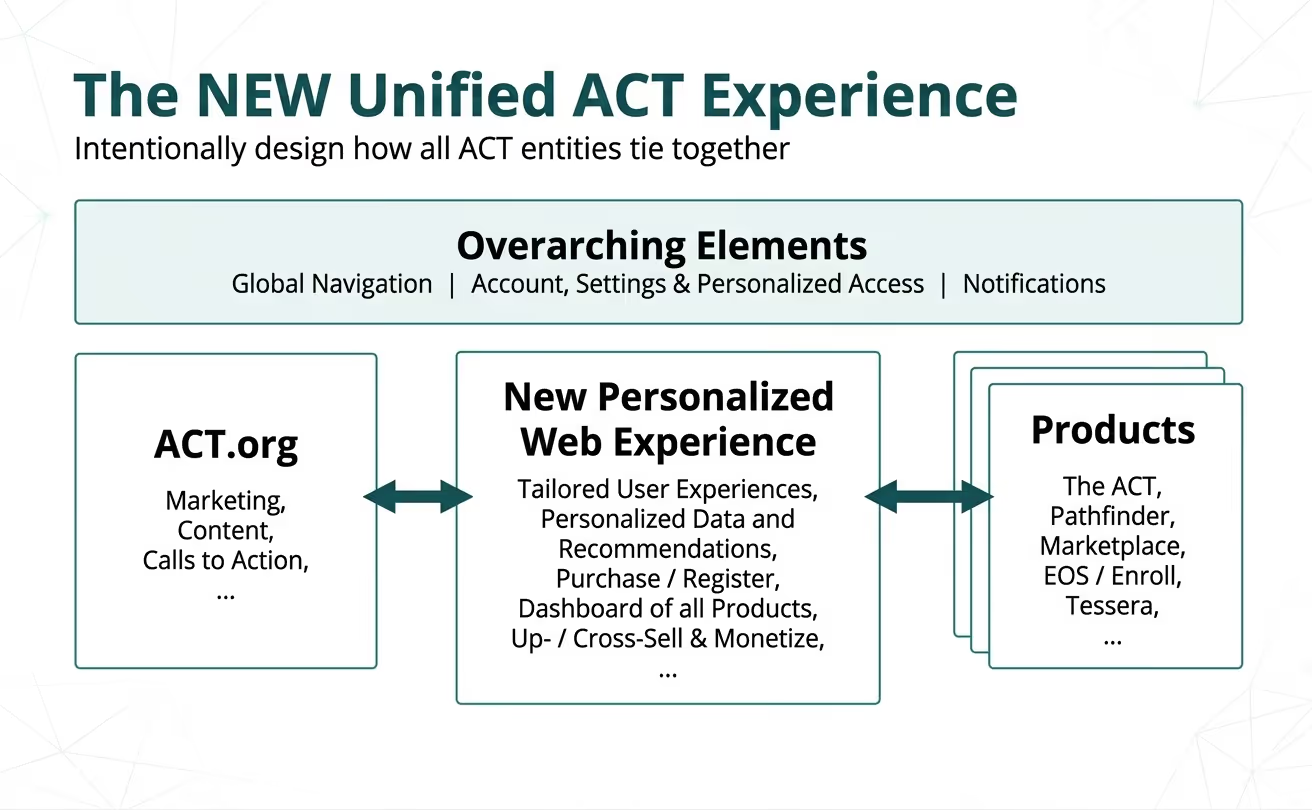
System model showing how a personalized ACT experience could connect ACT.org, shared platform elements, and a broader product ecosystem through a unified experience layer.
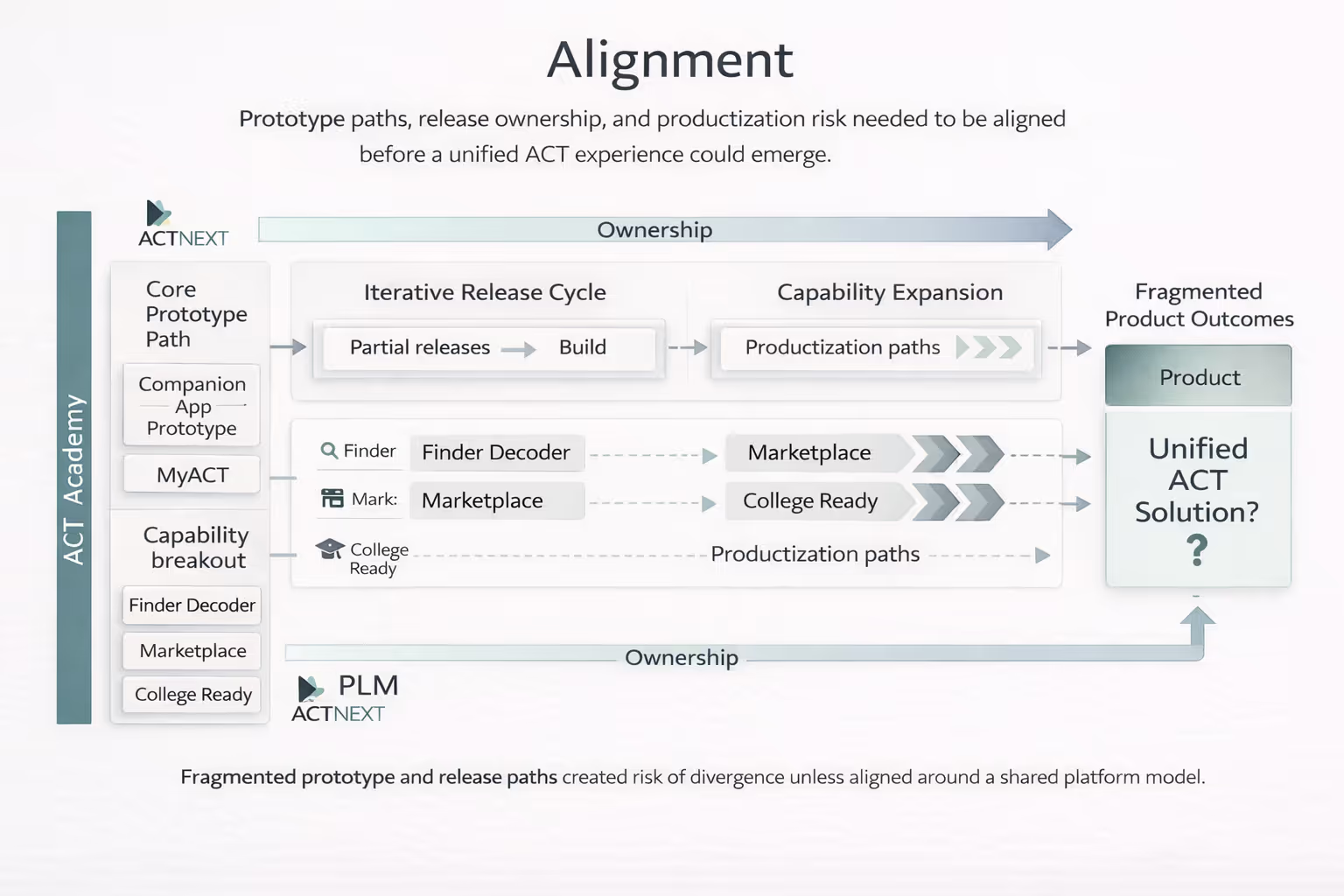
The work expanded from improving a signed-in ACT portal to defining how ACT’s products could support a more connected learner experience over time.
The strategy connected identity, recommendations, diagnostics, exploration, and action across products and life stages. Identity, integration, and product boundaries therefore became part of the UX work rather than downstream implementation details.
System model showing how a personalized ACT experience could connect ACT.org, shared platform elements, and a broader product ecosystem through a unified experience layer.
- Goal: Connect assessment, planning, and next-step decisions into a more continuous learner journey.
- Inputs: Identity, profile data, scores, interests, skills, and life-stage context.
- Core interactions: Recommendations, pathway exploration, prep, score interpretation, and planning across schools, majors, and careers.
- Support layer: Parents, counselors, educators, and institutions providing guidance and context at key decisions.
- System challenge: Connect independently evolving products, identity systems, and data through shared experience patterns while allowing each product to keep evolving on its own.
The concept was a modular experience that could adapt to different personas while maintaining continuity across the ACT ecosystem.
Core principles included:
- One longitudinal identity across life stages
- Contextual recommendations based on profile, diagnostics, and goals
- Cross-product integration across prep, planning, reporting, and exploration
- Dynamic pathways that help users see meaningful next steps
- A platform model that could support present needs and future evolution
That gave teams a concrete model to use in product and roadmap discussions.
The work also reframed retention around the longer learner journey.
Retention became a longer-term question: how could ACT stay useful across planning, testing, results, and later decisions?
Learner journeys became the organizing model for the work.
Simplified alignment model showing how multiple prototype and release paths could converge around a shared platform direction.
I turned the strategy into a more personalized signed-in experience designed to help learners understand what to do next based on where they were in their journey.
The Roadmap Builder, unified navigation, and pathway-based recommendations made the direction concrete. Teams could react to a real experience and discuss the platform model through something tangible.
The Roadmap Builder connected learner profile data, majors, schools, careers, and ACT offerings into a usable planning experience.

Early Roadmap Builder concept showing how ACT could connect learner profile data, majors, schools, and career paths into a more personalized planning experience.

Once the direction was clear, I moved into experience modeling: how should a learner carry context across planning, testing, results, and next-step decisions as they move between ACT products?
The model connected ACT.org and the broader product ecosystem through shared navigation, account access, recommendations, and personalized pathways. The goal was for learners to carry context forward across entry points.
The concept centered on a personalized signed-in environment that could adapt to a learner’s goals, profile, and stage in the journey.
Core behaviors included:
- Surfacing recommendations based on profile, scores, and interests
- Connecting schools, majors, and careers in a more navigable planning model
- Helping learners interpret results in the context of future decisions
- Creating continuity across ACT.org, planning tools, assessments, and adjacent products
- Supporting more personalized entry points and reducing one-size-fits-all navigation
The signed-in experience was designed to help learners understand what mattered next.
The Roadmap Builder was one of the strongest directions because it turned the ecosystem model into a planning experience people could actually react to.
It connected learner inputs, majors, schools, and career paths in one visible pathway. That let stakeholders see how the continuity model could work in an actual interaction.
Early Roadmap Builder concept showing how ACT could connect learner profile data, majors, schools, and career paths into a more personalized planning experience.
A key question was how the signed-in experience should relate to ACT.org and the broader product portfolio. We positioned it as the place that could carry navigation, account context, recommendations, notifications, and shared access patterns across products.
The products could keep evolving independently while sharing navigation, identity, and pathway patterns. The higher-fidelity concept showed how those patterns could come together in a signed-in experience that stakeholders could evaluate more directly.
The work produced:
- A clearer model for learner continuity across planning, testing, results, and next-step decisions
- A personalized web experience concept connecting ACT.org, planning tools, and adjacent products
- More concrete interaction patterns for recommendations, pathway exploration, and guidance
- A common basis for Product, Architecture, and leadership decisions
- A clearer view of how separate product moments could become a connected learner platform
Teams used these artifacts in roadmap discussions.
We tested the direction through concept reviews, journey modeling, and cross-functional discussion with Product, Architecture, Research, and adjacent teams. The work clarified dependencies and open questions.
The concepts gave those groups something concrete to use when evaluating dependencies, roadmap decisions, and the broader learner experience.
- The reviews made cross-product dependencies visible, giving teams a clearer basis for roadmap decisions.
- Teams could evaluate roadmap decisions against the full learner journey.
- The model clarified where ACT could support learners between major testing moments.
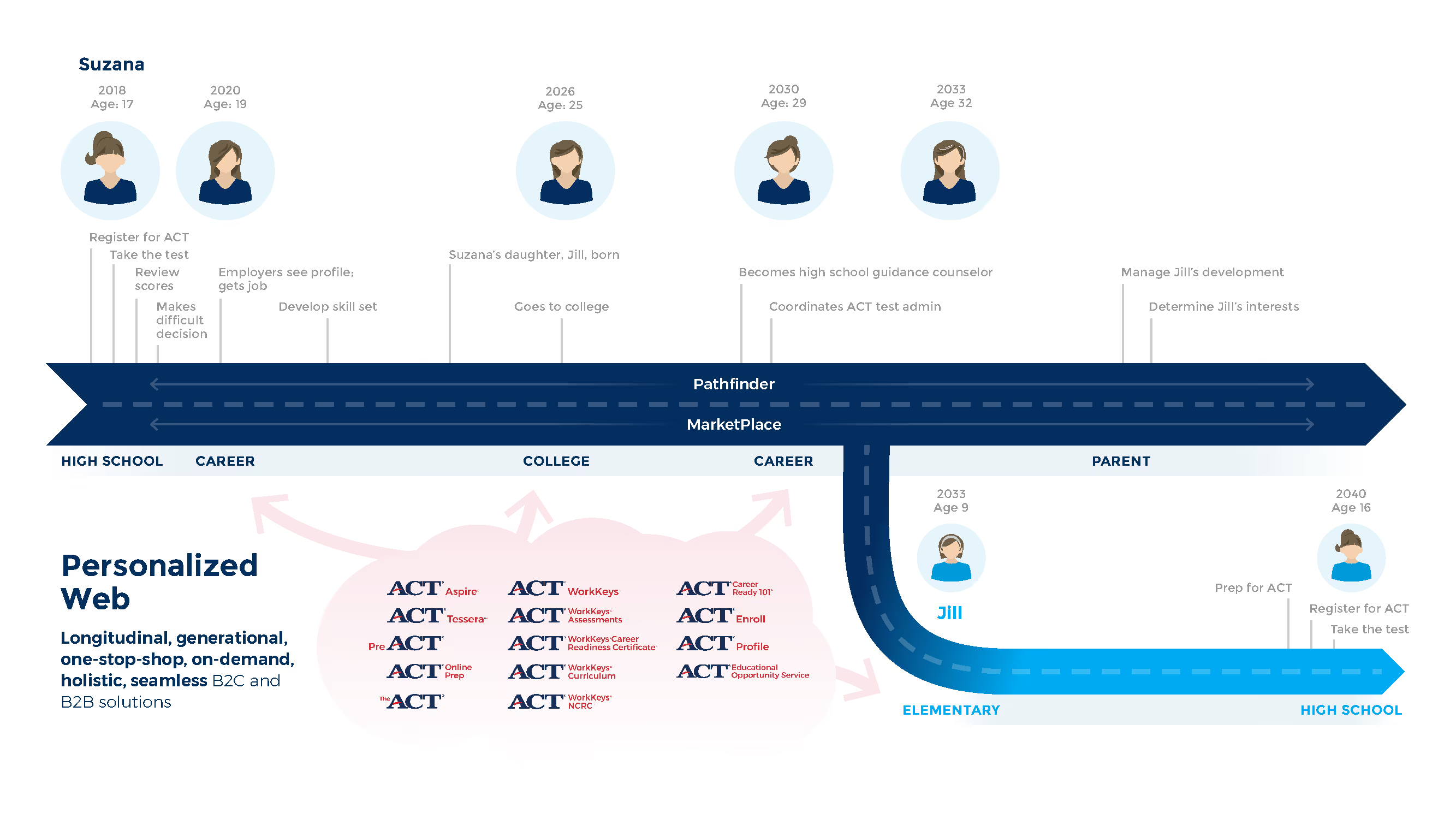
Executive alignment artifact illustrating how a personalized ACT experience could support learners across life stages, career development, and generational transitions.
Because the work was early and covered the broader ecosystem, reviews tested whether the direction could hold together across products, personas, and platform constraints.
Product, architecture, research, and adjacent teams challenged the model against existing product boundaries, identity dependencies, and integration realities.
The work made ecosystem fragmentation visible in a way teams could act on.
The reviews pointed to four things:
- Continuity required more than improving a single surface
- Identity and access had to be treated as core parts of the experience
- Recommendations and pathways needed to connect across products
- Roadmap decisions had to be evaluated against the broader learner journey
The reviews kept the work focused on the cross-product scope.
The reviews made several cross-product decisions easier to discuss:
It helped:
- Align stakeholders around a more unified ACT experience vision
- Connect product roadmaps around learner continuity
- Identify dependencies across identity, tagging, and integration
- Clarify how ACT.org, personalization, and adjacent products could connect
- Influence roadmap thinking across planning, companion experiences, and related offerings
The shared model gave teams a common way to discuss how ACT should work as an ecosystem.
The opportunity expanded beyond a single test event to a longer-term learner relationship through planning, recommendations, and transitions across life stages.
Planning, recommendations, and later decisions became part of the product conversation.
My ACT work operated at two very different scales. The Unified Learner Experience gave ACT a clearer model for the learner relationship across products and between major testing moments, while separate product work kept me close to detailed learner workflows.
Together, those separate initiatives reinforced the importance of working at multiple levels of abstraction: setting direction across products and systems while staying close enough to detailed experience work to guide important learner workflows.
A separate example: simplifying registration
Registration was separate from the Unified Learner Experience work. Under my UX leadership, the team simplified the workflow from roughly 30 minutes to under 7 minutes. I stayed close to the experience work while also leading the broader UX function.
What I took from it:
- A broad product portfolio does not automatically feel connected.
- Identity architecture often shapes the UX.
- Strategy gets easier to discuss when people can see it.
- Ownership and alignment often shape the experience.
- There was more value ACT could provide between major testing events.
Building consistency before formal design systems
At ACT, implemented styles lived with Engineering, which was common at the time. Design systems were only beginning to emerge as a formal UX practice, so we created consistency through detailed documentation and close collaboration across teams.
Our UX team created a detailed enterprise style guide that brought UX patterns and brand guidance into one place. It helped teams reuse interface decisions instead of resolving the same questions product by product.
Today I'd carry that same intent into a shared, coded component system with clear ownership across Design and Engineering, connecting the design language, accessibility decisions, and production implementation from the start.
How I'd approach this work with AI today
At ACT, the evidence lived in a lot of places: usability studies, interviews, support data, analytics, and journey maps. The broader experience also stretched across 37+ systems and five product lines.
For the broader ecosystem work, I'd use AI to work across evidence from ACT's product landscape, looking for recurring patterns, conflicts across sources, emerging learner needs, and questions worth validating. For a focused initiative like registration, I'd use it with the team to explore more flow and prototype options before committing design and engineering effort.
My role would still be to set direction, weigh the evidence, help the team decide which learner needs deserve the most attention, and choose what we validate with real students.
1. Design continuity across the portfolio, not just within products
ACT already had a broad portfolio of offerings, but breadth alone did not create continuity. A designed experience layer was what could connect those moments into a more coherent learner journey.
2. Treat identity architecture as part of the experience
A unified learner experience depends on screens and navigation, identity, account structure, and personalized access patterns. All of those layers determine whether continuity is possible.
3. Use artifacts to make strategy concrete and debatable
The Roadmap Builder, unified navigation, and pathway concepts gave stakeholders something concrete to react to. That made the strategy easier to discuss and challenge.
4. Make ownership and alignment explicit early
The learner experience depended on product ownership and architecture as much as screen design. Teams had to coordinate decisions across those boundaries for the model to work.
5. Design for the relationship between major moments
Thinking about ACT through learner journeys opened a broader product direction, with more emphasis on ongoing support between major test events.