The Need
Students, parents, and educators moved through separate ACT products and decision points with little continuity from assessment through postsecondary and career planning.
What I Led
Led the UX team in cross-functional discovery, ecosystem modeling, and experience vision work to define how ACT’s products could operate as a unified learner platform.
How it Worked
Shifted the work from improving a single portal to connecting identity, recommendations, diagnostics, and product pathways across the learner journey.
Impact
Helped leadership discuss a connected learner platform, exposed key integration dependencies, and shifted planning from isolated product improvements toward learner continuity.

Context
This work focused on connecting ACT’s growing ecosystem of assessments, prep tools, diagnostics, and planning products around a more continuous learner experience.
ACT had built meaningful capabilities across students, parents, counselors, educators, institutions, and workforce pathways, but many products evolved independently. Separate roadmaps, fragmented identity systems, inconsistent metadata, and uneven coordination made the broader experience feel patchwork and made next steps less clear for users.
The opportunity was to define a more unified platform vision connecting testing, profile data, recommendations, school and career exploration, and key life-stage transitions. This became a systems-level design challenge shaped by organizational complexity, technical fragmentation, and the need for long-term alignment.
Business Stakes
ACT already had the ingredients for deeper learner engagement, but fragmentation limited continuity and cross-product value.
Success required a unifying experience vision that could guide roadmap decisions, make platform dependencies visible, and extend ACT’s relationship with learners beyond individual assessment events.
Team
UX, Product Leadership, Enterprise Architecture, ACTNext, Research, and cross-product stakeholders across MyACT, Companion, Marketplace, Pathfinder, and related ACT entities.
Constraints
Impact Snapshot
I served as Director of UX, leading the UX team while staying hands-on with ecosystem discovery, systems modeling, cross-product experience strategy, and early interaction design.
I worked with product leadership, research, enterprise architecture, and adjacent ACT teams to move the work from a single signed-in experience toward a broader learner-platform direction. I mapped the blockers and used the experience model to keep teams working from the same learner journey.
Key contribution: Led the UX effort to define the experience layer connecting assessment, planning, recommendations, and pathways across ACT’s ecosystem.
ACT’s ecosystem was shaped by fragmented identity systems, uneven tagging standards, independently evolving roadmaps, and competing organizational priorities.
I worked across product, architecture, research, and leadership to clarify what was structurally blocking continuity and guide the conversation toward a more unified experience strategy. That meant aligning teams around shared models and helping the organization think beyond local product optimization toward a longer-term learner platform vision.
ACT had products spanning testing, planning, scores, and next-step decisions, but they didn’t feel like one learner experience. Separate product roadmaps, identity systems, and handoffs made learners repeatedly start over.
What began as a MyACT redesign became a broader question: how could ACT better connect the learner journey across its products?
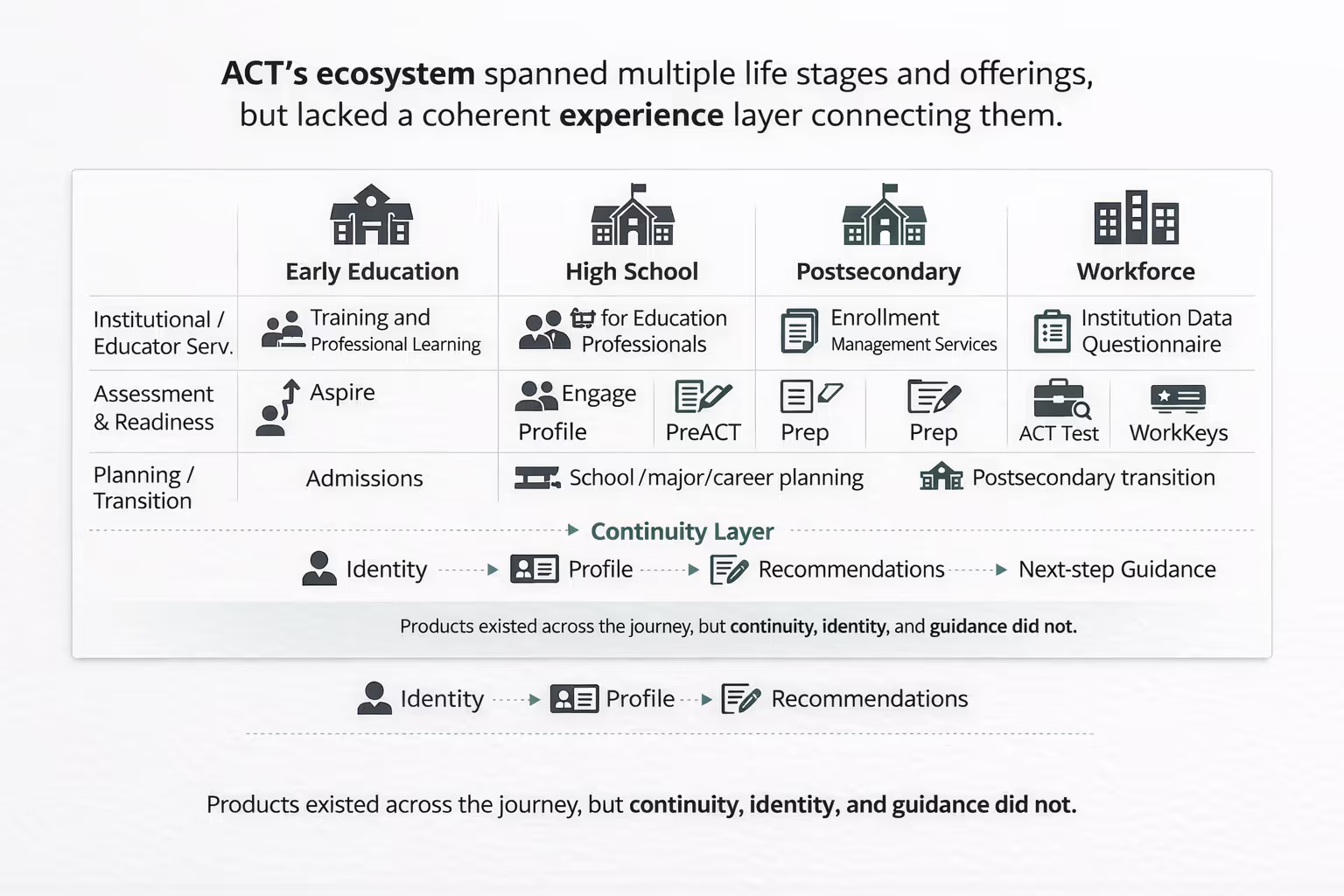
Ecosystem diagram showing ACT offerings across multiple life stages and the missing experience layer connecting them.
ACT had built a broad portfolio of assessments, prep tools, diagnostics, reporting systems, and planning products across students, parents, counselors, educators, institutions, and workforce pathways. But these offerings evolved more as separate products than as a connected learner experience.
As a result, students and families encountered ACT through isolated moments such as registration, testing, score reporting, prep, planning, or exploration. Each interaction could be useful on its own, but the ecosystem did not provide a clear sense of continuity, next steps, or how the pieces fit together over time.
This limited learner clarity, reduced cross-product value, and made it harder for ACT to express its broader role across school, postsecondary, and career decisions.
Ecosystem diagram showing ACT offerings across multiple life stages and the missing experience layer connecting them.
At first glance, this could have been a MyACT redesign. Discovery showed that the problem extended well beyond the interface.
Identity systems were fragmented. Product roadmaps were optimized locally. Tagging standards and diagnostics were inconsistent. Recommendations, pathways, and actions were not connected by a shared experience layer.
Better screens alone wouldn’t fix the breaks between products or scale across ACT’s ecosystem.
ACT’s ecosystem already contained many of the ingredients for a stronger learner experience. The challenge was that the underlying systems, product models, and organizational incentives were not aligned around continuity.
Any credible solution had to reconcile:
This was a systems design and organizational alignment problem.
Discovery showed that the biggest breaks weren’t inside individual screens. They happened between products, where identity, data, navigation, and product ownership didn’t carry the learner experience forward cleanly.
That changed the work from improving MyACT usability to mapping where the learner journey broke across the ecosystem.

Journey map illustrating how fragmented ACT experiences created friction across awareness, registration, preparation, results, and future planning.


Discovery quickly moved beyond MyACT itself. We needed to understand how ACT’s products connected over time so learners, families, and educators could carry context forward and make better decisions.
I used ecosystem maps, personas, journey models, and early concepts, working with product, research, and architecture to find where the ecosystem was breaking across identity, transitions, recommendations, and decision support.
Student persona illustrating the uncertainty, support needs, and future-planning pressure surrounding college readiness.
Parent themes showing how family support, transition anxiety, and long-term planning shaped decision-making across the journey.
Counselor journey map revealing the operational complexity of coordinating testing, communication, and student support in schools.
Several patterns became clear across the research and systems work:
The findings pointed toward a product direction that connected the learner journey across ACT products.
The persona and journey work exposed how fragmented the experience felt across very different users. High school students, parents, counselors, adult learners, and institutional stakeholders each encountered different slices of ACT, but none experienced a clear path through the ecosystem.
A single persona or product couldn’t represent the problem. The experience model had to adapt across roles and life stages while still helping people understand where they were and what came next.
Journey map illustrating how fragmented ACT experiences created friction across awareness, registration, preparation, results, and future planning.
The strategy moved beyond improving one portal to defining how ACT’s products could work together around the learner.
I modeled the experience across identity, recommendations, planning, diagnostics, and support so teams could see the learner journey and the technical dependencies behind it.
The key constraint: connect independently evolving products without pretending they could all become one product.
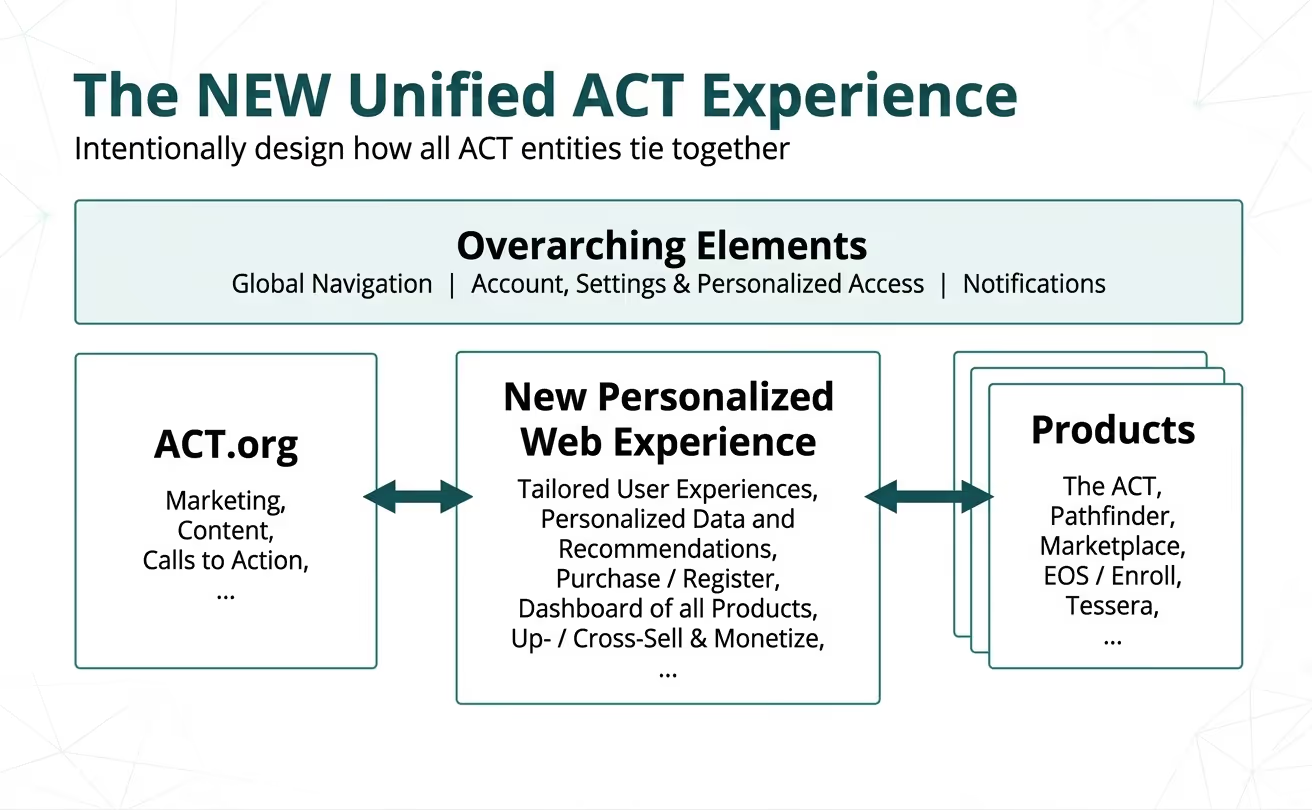
System model showing how a personalized ACT experience could connect ACT.org, shared platform elements, and a broader product ecosystem through a unified experience layer.
The work expanded from improving a signed-in ACT portal to defining how ACT’s products could support a more connected learner experience over time.
The strategy focused on how identity, recommendations, diagnostics, exploration, and action could connect across products and life stages. That meant identity, integration, and product boundaries had to be addressed as part of the UX work.
System model showing how a personalized ACT experience could connect ACT.org, shared platform elements, and a broader product ecosystem through a unified experience layer.
The concept was a modular experience that could adapt to different personas while maintaining continuity across the ACT ecosystem.
Core principles included:
That gave teams a concrete model to use in product and roadmap discussions.
The work also changed how we talked about retention.
Retention became a longer-term question: how could ACT stay useful across planning, testing, results, and later decisions?
Learner journeys became the organizing model for the work.
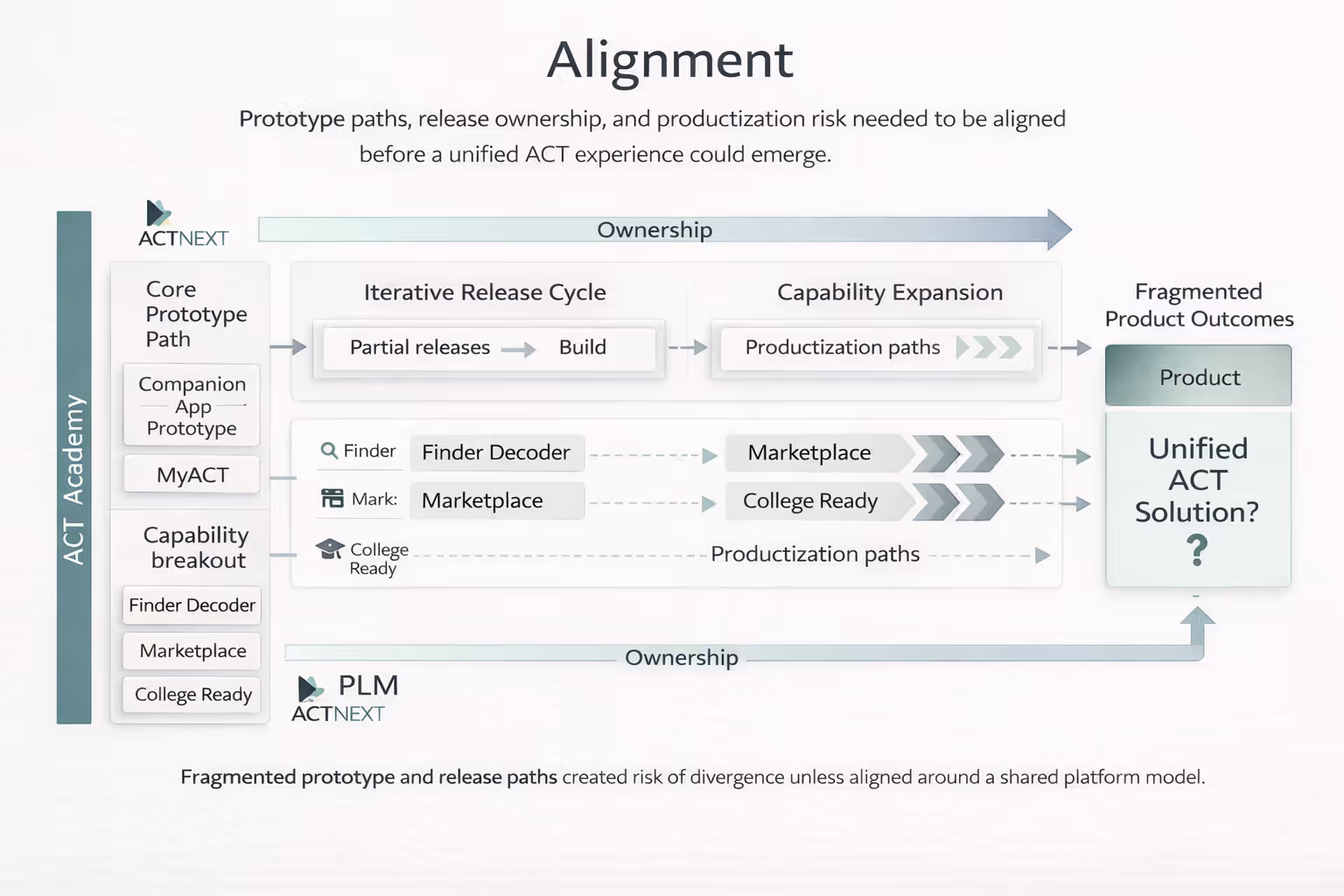
Simplified alignment model showing how multiple prototype and release paths risked fragmenting into separate products without a shared platform direction.
I turned the strategy into a more personalized signed-in experience designed to help learners understand what to do next based on where they were in their journey.
The Roadmap Builder, unified navigation, and pathway-based recommendations made the direction concrete. Teams could react to an experience instead of only discussing platform diagrams.
The Roadmap Builder connected learner profile data, majors, schools, careers, and ACT offerings into a usable planning experience.

Early Roadmap Builder concept showing how ACT could connect learner profile data, majors, schools, and career paths into a more personalized planning experience.
Once the direction was clear, I moved into experience modeling: how should a learner move through planning, testing, results, and next-step decisions without losing context between ACT products?
The model connected ACT.org and the broader product ecosystem through shared navigation, account access, recommendations, and personalized pathways. The goal was for learners to carry context forward instead of rediscovering it at each entry point.
The concept centered on a personalized signed-in environment that could adapt to a learner’s goals, profile, and stage in the journey.
Core behaviors included:
The signed-in experience was designed to help learners understand what mattered next.
The Roadmap Builder was one of the strongest directions because it turned the ecosystem model into a planning experience people could actually react to.
It connected learner inputs, majors, schools, and career paths in one visible pathway. That let stakeholders see how the continuity model could work in an actual interaction.
Early Roadmap Builder concept showing how ACT could connect learner profile data, majors, schools, and career paths into a more personalized planning experience.
A key question was how the signed-in experience should relate to ACT.org and the broader product portfolio. We positioned it as the place that could carry navigation, account context, recommendations, notifications, and shared access patterns across products.
The products could keep evolving independently without forcing everything into one product. The higher-fidelity concept showed how those shared patterns could come together in a signed-in experience that stakeholders could evaluate more directly.
The work produced:
Teams used these artifacts in roadmap discussions.
We pressure-tested the direction through concept reviews, journey modeling, and cross-functional discussion with product, architecture, research, and adjacent teams. The work exposed dependencies and gaps.
The concepts gave those groups a shared reference point for evaluating dependencies, roadmap decisions, and the broader learner experience.
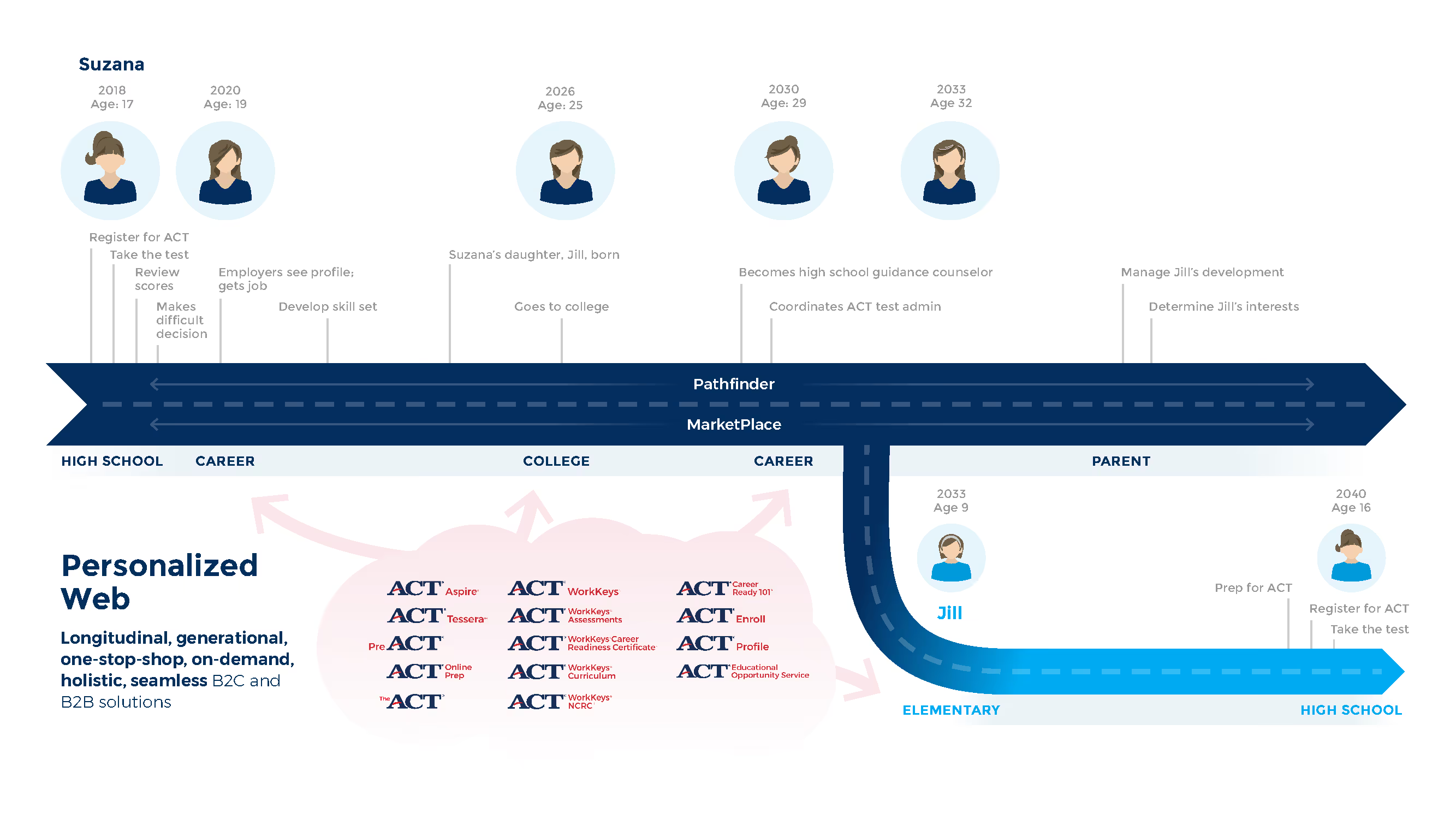
Executive alignment artifact illustrating how a personalized ACT experience could support learners across life stages, career development, and generational transitions.
Because the work was early and ecosystem-level, reviews focused on whether the direction held together across products, personas, and platform constraints.
We pressure-tested the model through cross-functional discussions, concept reviews, and journey modeling with product, architecture, research, and adjacent teams. The core question was whether it could support a broader learner relationship without ignoring the realities of the existing products and platforms.
The work made ecosystem fragmentation visible in a way teams could act on.
The reviews pointed to four things:
The reviews kept the work focused on the cross-product problem.
The work was phased, but it still changed how teams discussed the learner experience and roadmap.
It helped:
The biggest change was the question teams were asking. Discussion moved from individual product moments to how ACT should work as an ecosystem.
The opportunity expanded beyond a single test event to a longer-term learner relationship through planning, recommendations, and transitions across life stages.
Planning, recommendations, and later decisions became part of the product conversation.
The work gave ACT a clearer model for the learner relationship across products and between major testing moments.
It also gave product, architecture, and leadership more concrete ways to discuss where integration mattered and where independent roadmaps were creating friction.
What I took from it:
1. A broad portfolio does not automatically feel connected
ACT already had a broad portfolio of offerings, but breadth alone did not create continuity. Without a designed experience layer, users still encountered the ecosystem as disconnected moments.
2. Identity problems show up as UX problems
A unified learner experience depends on more than screens and navigation. Identity, account structure, and personalized access patterns shape whether continuity is possible.
3. Strategy got easier to discuss once people could see it
The Roadmap Builder, unified navigation, and pathway concepts gave stakeholders something concrete to react to. That made the strategy easier to discuss and challenge.
4. Some experience problems are really ownership and alignment problems
The learner experience depended on product ownership and architecture as much as screen design. Teams had to coordinate decisions across those boundaries for the model to work.
5. ACT had more value to offer between test events
Thinking about ACT through learner journeys opened a broader product direction, with more emphasis on ongoing support between major test events.