Founding Lead UX Designer and sole designer in year one, owning IA, core workflows, interaction patterns, early system foundations, and hands-on React/CSS implementation.
Established a coherent model for review, markup, discussion, snapshots, Stories, and role-aware external collaboration around the 3D object itself.
Sensitive IP, huge 3D data, specialized CAD workflows, external participants, and limited direct access to users.
Vertex was building a cloud platform for reviewing and collaborating on large 3D models. The hard part was giving distributed engineering teams enough shared context to discuss changes, markup issues, and decisions without falling back to screenshots, email, or separate desktop tools.
The product needed a collaboration model that worked around the 3D object itself.
SYSTEMS THINKING
The recurring problem was context: feedback kept getting separated from the 3D model it was about.
People were bouncing between screenshots, files, and meetings instead of discussing decisions in the model itself.
Engineering teams relied on complex 3D assemblies to make critical decisions, but collaboration broke down during review and feedback.
Teams shared large files through legacy tools, emailed screenshots, or relied on meetings to explain changes that were hard to reference later. Feedback lived outside the model context, forcing people to translate intent across tools and viewpoints.
The result was slower decisions, more rework, and weaker shared understanding across teams and vendors.
Most existing tools were optimized for individual authoring, not shared decision-making. Opening full assemblies was slow even on high-end machines, and stakeholders who only needed to review still had to load entire models.
Vendors and non-engineering partners often lacked access, creating bottlenecks and translation errors. Instead of enabling collaboration, the toolchain reinforced silos.
At first glance, the problem looked like missing collaboration features. Discovery showed the deeper issue was shared context. Teams needed a way to build shared understanding around complex systems without forcing everyone into the same tools, workflows, or performance constraints.
Any solution had to reconcile:
Without a new approach, decisions would remain slow, rework would increase, and sensitive data would be either overshared or withheld.
Most importantly, the barrier to enterprise adoption would stay too high for the platform to scale. This was a systemic collaboration failure limiting speed, trust, and adoption.
With limited direct user access in a stealth startup, I combined empathy mapping, workflow analysis, competitive review, and close work with product and engineering to understand how engineering teams exchanged design feedback.
The recurring need was shared context: people had to know what part of a model someone meant, what changed, and what action was expected.
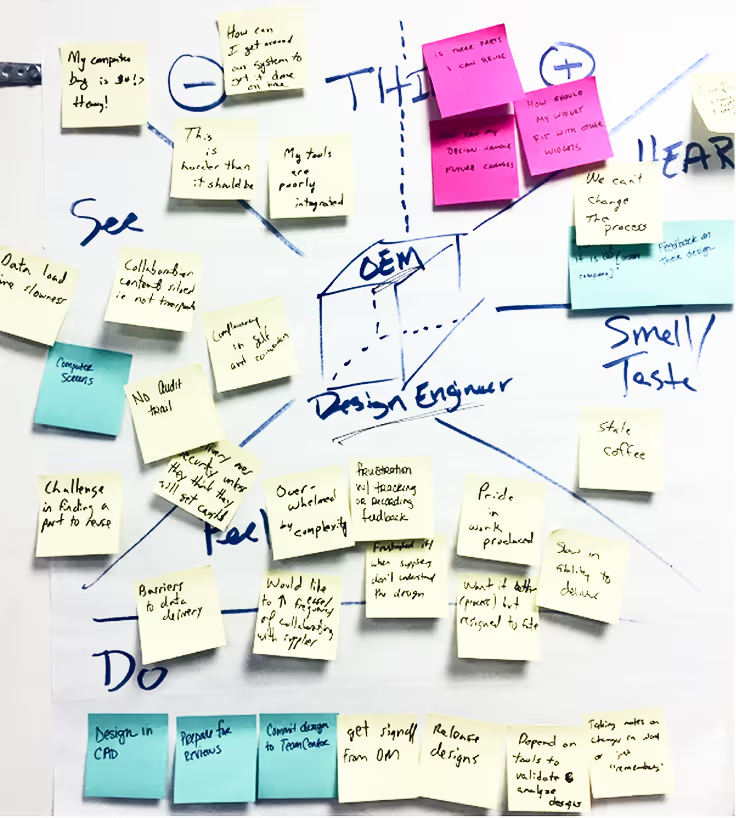
Empathy mapping helped make the different collaboration needs, pressures, and handoffs across engineering roles visible.
DISCOVERY ADVANTAGE
Stealth mode limited customer access, so I built discovery around the evidence we could get.
I combined domain SMEs, Product and Engineering input, workflow mapping, competitor patterns, security, and performance constraints.
With limited early access to external users, discovery focused on building a shared understanding of how engineers actually collaborated around 3D models.
I worked closely with product, engineering, and an experienced design engineer SME to synthesize domain knowledge across end-to-end design and manufacturing workflows, collaboration handoffs between OEMs and suppliers, and the realities of security, performance, and tooling in enterprise environments.
This work was less about validating a single hypothesis and more about reducing risk before committing to a specific interaction model.

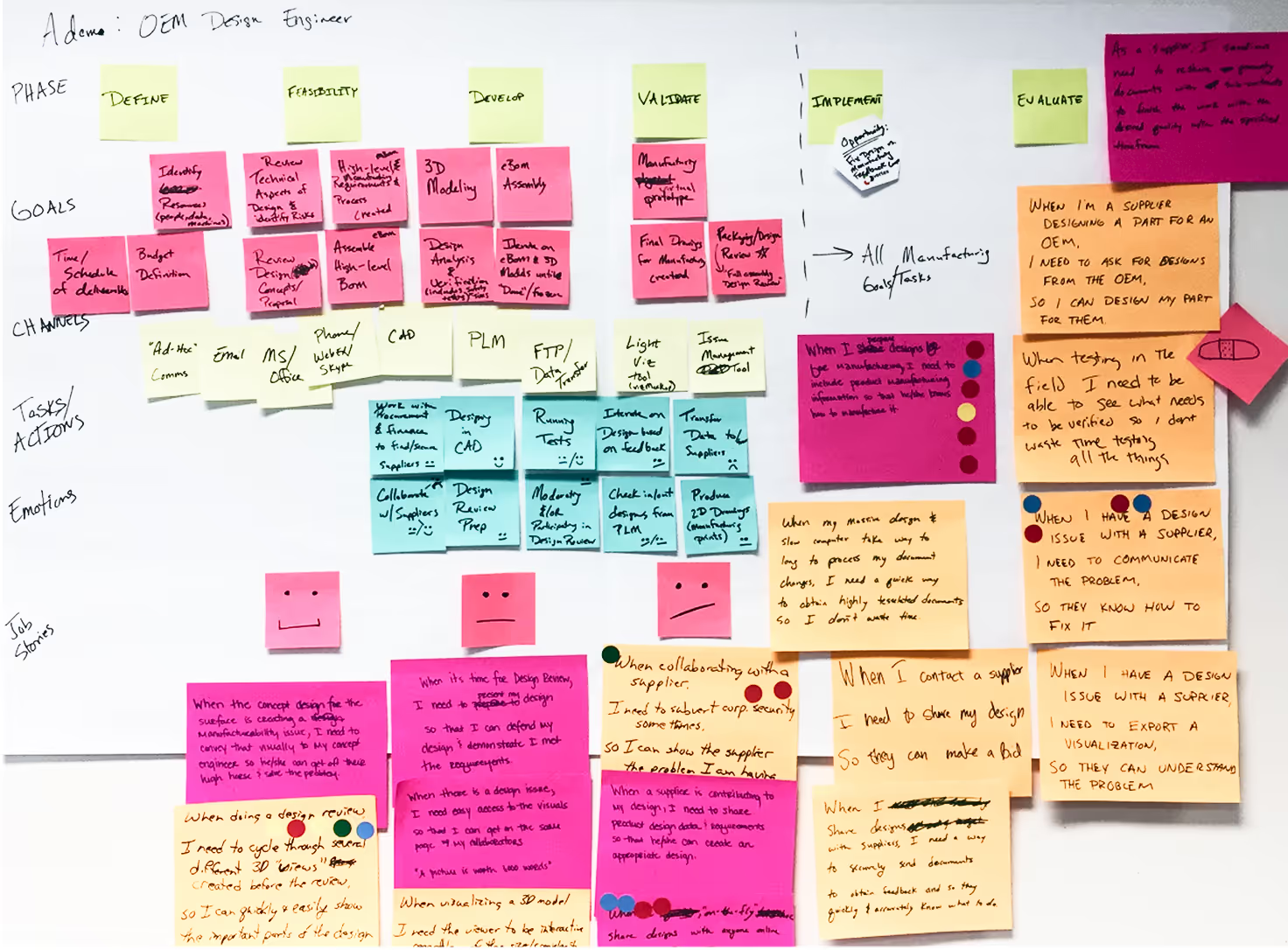
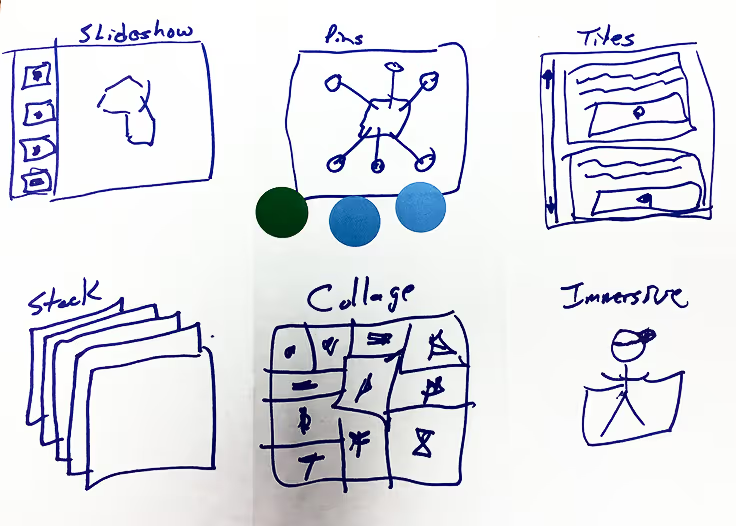
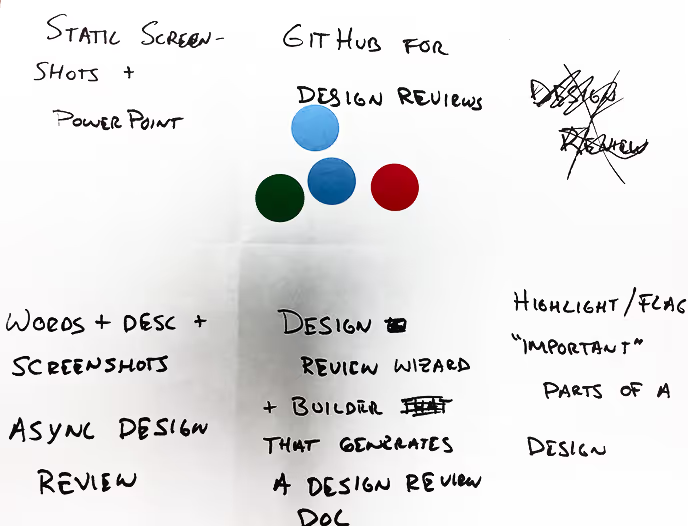
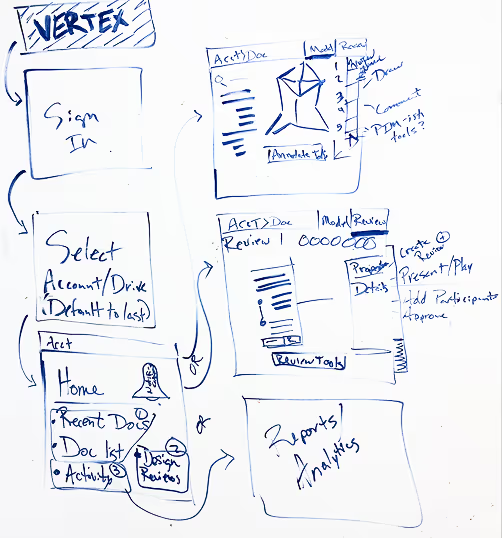
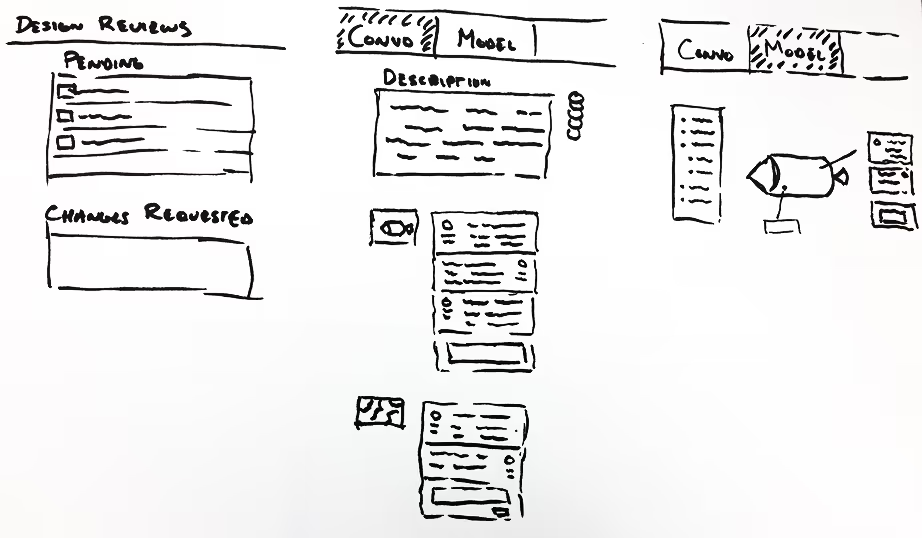
To move from ambiguity to direction, I facilitated a focused design sprint with product, engineering, and the SME.
The sprint helped the team:
This created alignment across disciplines and established a concrete starting point for experience design grounded in domain reality rather than assumption.
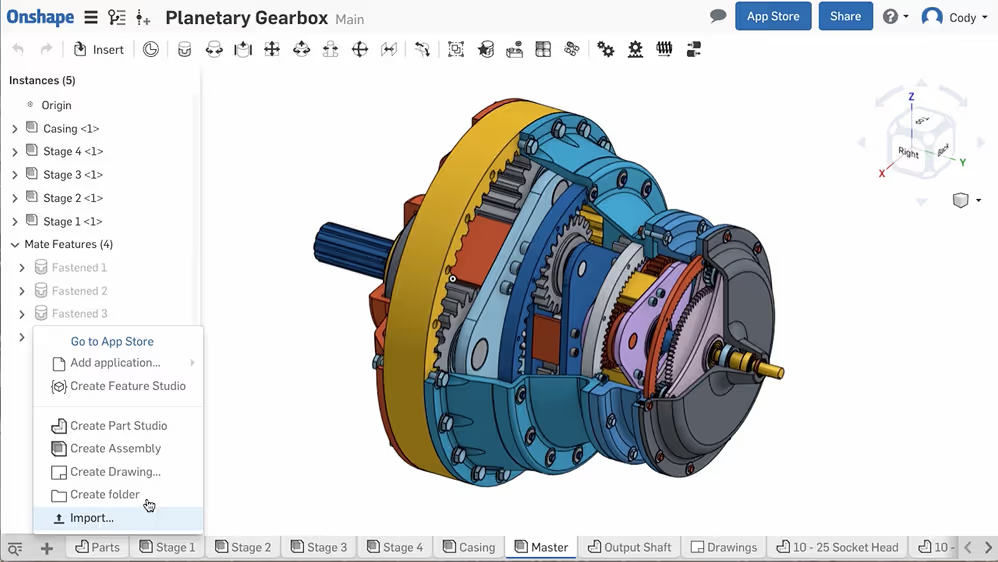
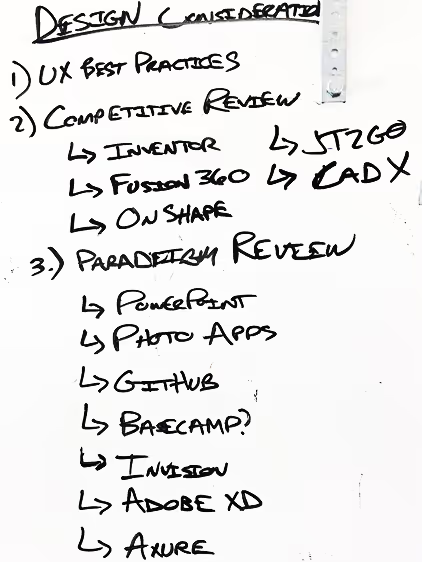
In parallel, I reviewed both direct CAD tools and adjacent collaboration paradigms to understand where existing solutions succeeded and where they fell short.
This included CAD platforms such as Inventor, Fusion 360, Onshape, JT2Go, and CADX, alongside adjacent paradigms such as PowerPoint, photo markup tools, GitHub, Basecamp, and InVision / Axure.
The goal was not to replicate CAD depth, but to understand where collaboration was being forced into tools not designed for it, which patterns were already familiar and effective, and which could be adapted safely.
The pattern was consistent: collaboration happened around the model in screenshots, static documents, and disconnected conversations instead of in the model itself.
Across discovery, several insights became clear:
These findings directly shaped the interaction model and platform direction that followed.
I defined the interaction model around model state, viewpoint, selection, markup, discussion, and handoff. A design sprint helped turn those ideas into a product direction the team could build against.
That gave product and engineering a common model for how a cloud 3D review session should behave.
Discovery showed the core problem was missing shared context during review and feedback.
Existing workflows forced teams to export models, capture static screenshots, and reconcile feedback across disconnected tools. That removed spatial context, slowed decisions, and increased risk, especially with external suppliers.
The strategy was to anchor collaboration to the model so discussion, context, and decisions stayed connected to the work. The goal became designing a system that supported shared understanding across roles, disciplines, and access boundaries.
Collaboration in 3D is mediated through 2D inputs, while meaning lives in a spatial environment that changes with camera angle, zoom, and orientation. There is no single stable surface, so feedback can lose intent over time.
The challenge is compounded by role differences across engineers, reviewers, and external partners. Collaboration patterns therefore had to bind 2D input to 3D context while remaining understandable across audiences and over time.
The strategy was guided by four goals:
These goals provided clear guardrails for experience design and prevented the solution from drifting toward familiar but ineffective patterns.
Working within a stealth startup environment required focus and restraint.
The strategy prioritized:
That gave the team enough structure to keep building while technical and organizational constraints were still changing.
I designed the core review workflows from zero to one: navigating the model, capturing a viewpoint, marking up geometry, starting discussions, and returning collaborators to the same context later.
The goal was to make 3D collaboration understandable to people who already knew engineering workflows without making communication itself another complex tool.
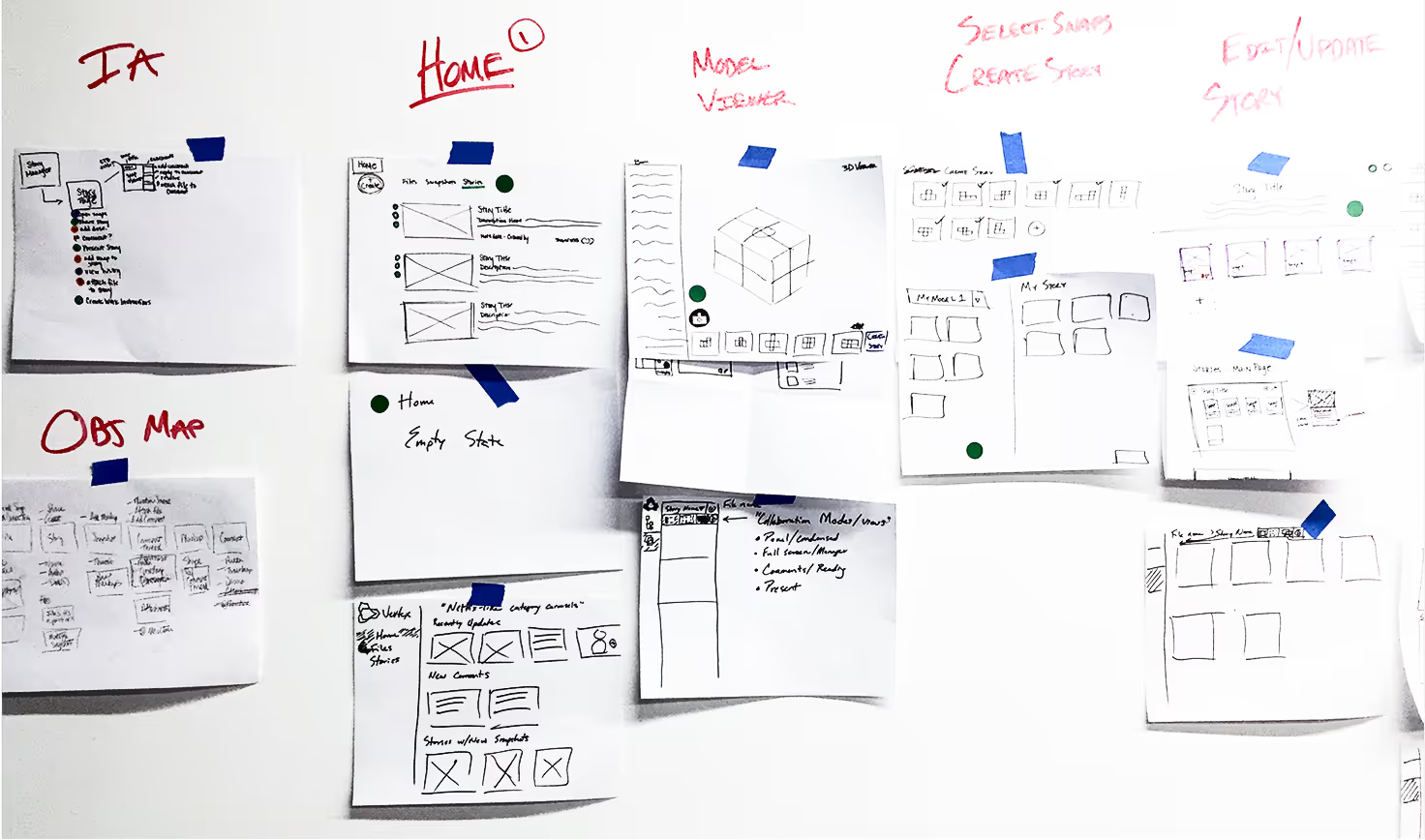
Core interaction design for reviewing a 3D model while keeping markup and discussion tied to the model context.
DESIGN LEVERAGE
I built Stories so teams could communicate 3D decisions over time, anchored directly to the geometry.
Snapshots, annotations, sequence, and discussion stayed together, so people could understand a decision later without hunting through separate files.
With the strategy defined, the focus shifted to designing an experience that enabled collaboration around complex 3D assemblies without overwhelming users or compromising performance, security, or clarity.
I focused on a common interaction model for exploration, discussion, and decision-making across roles and contexts. That gave the team patterns it could reuse as new workflows were added.
Early design work centered on how users collaborated around models, not just how they inspected them.
The experience was structured around three core activities:
This kept interaction decisions grounded in real workflows rather than tool-centric patterns.
To support these workflows, I designed a system that separated model interaction, commentary, and narrative storytelling while keeping them tightly connected.
Key design decisions included:
This allowed teams to move fluidly between exploration and communication without duplicating effort or breaking context.
One of the most important concepts was Stories, a way to curate and communicate decisions.
Stories allowed users to:
This reduced reliance on external tools and made collaboration more accessible to non-CAD specialists while preserving engineering accuracy.
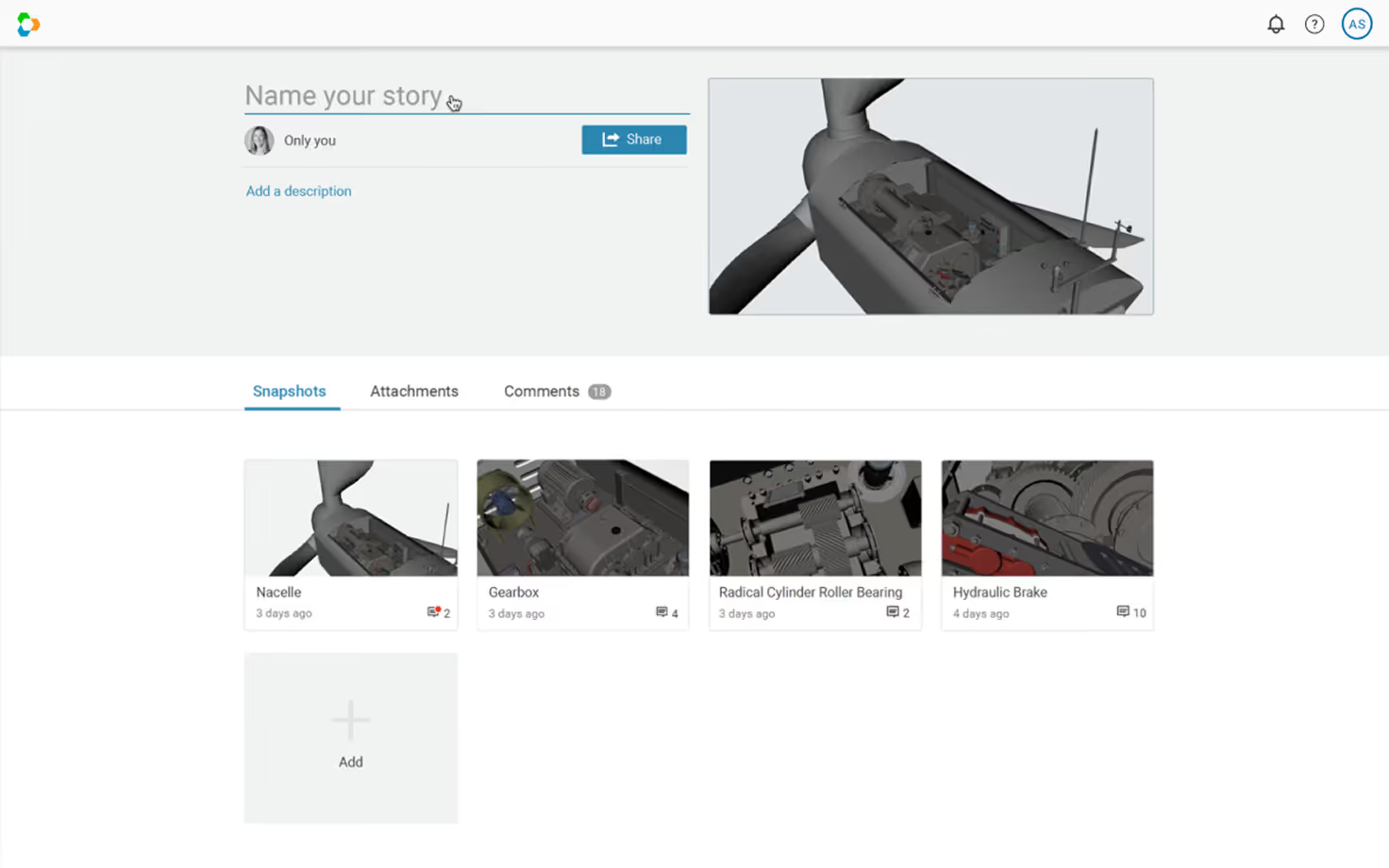
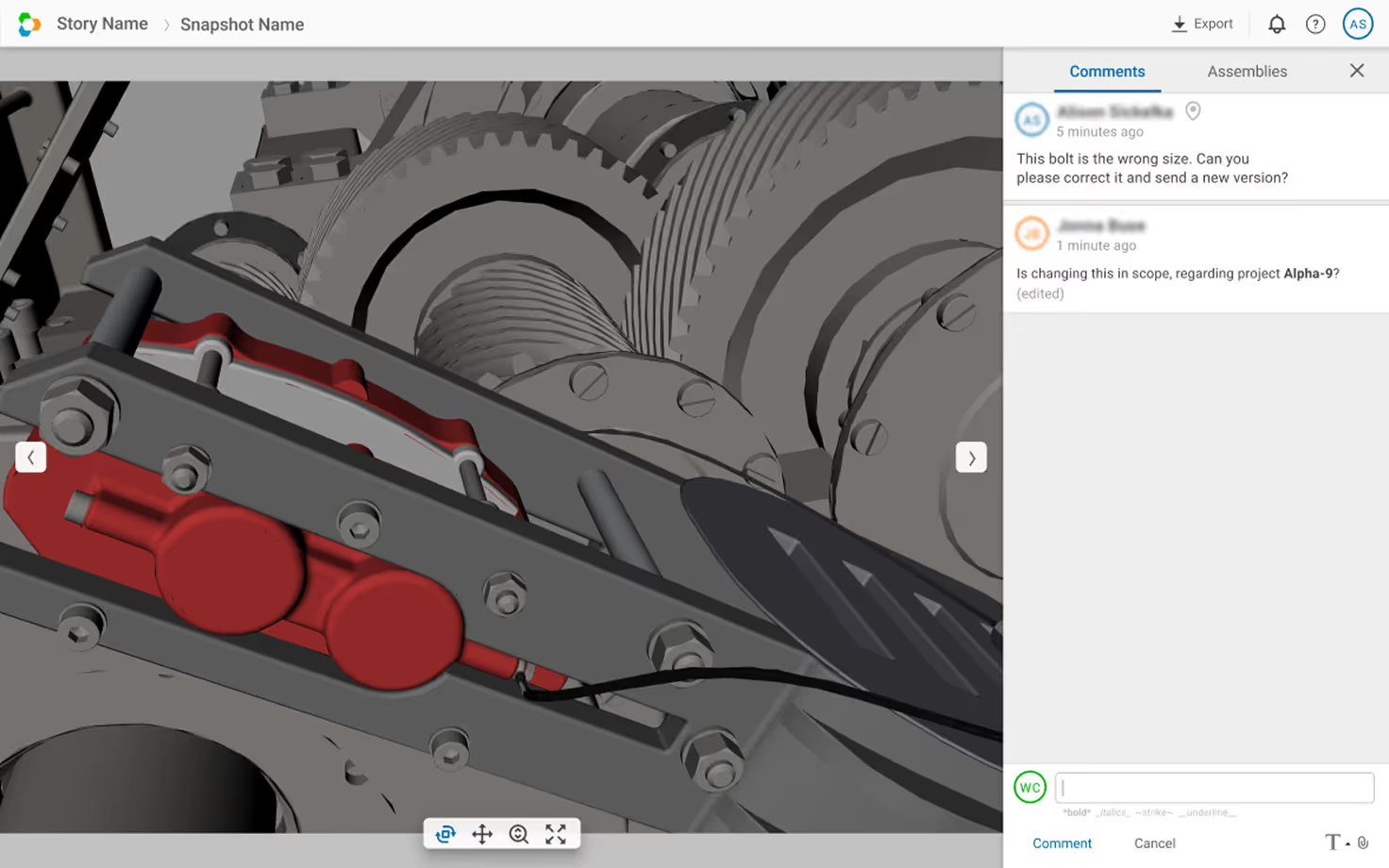
To support synchronous work, the experience included lightweight collaboration features that mirrored how teams already worked together.
These included:
The goal was not to replace meeting tools, but to make model-based collaboration faster and more precise.
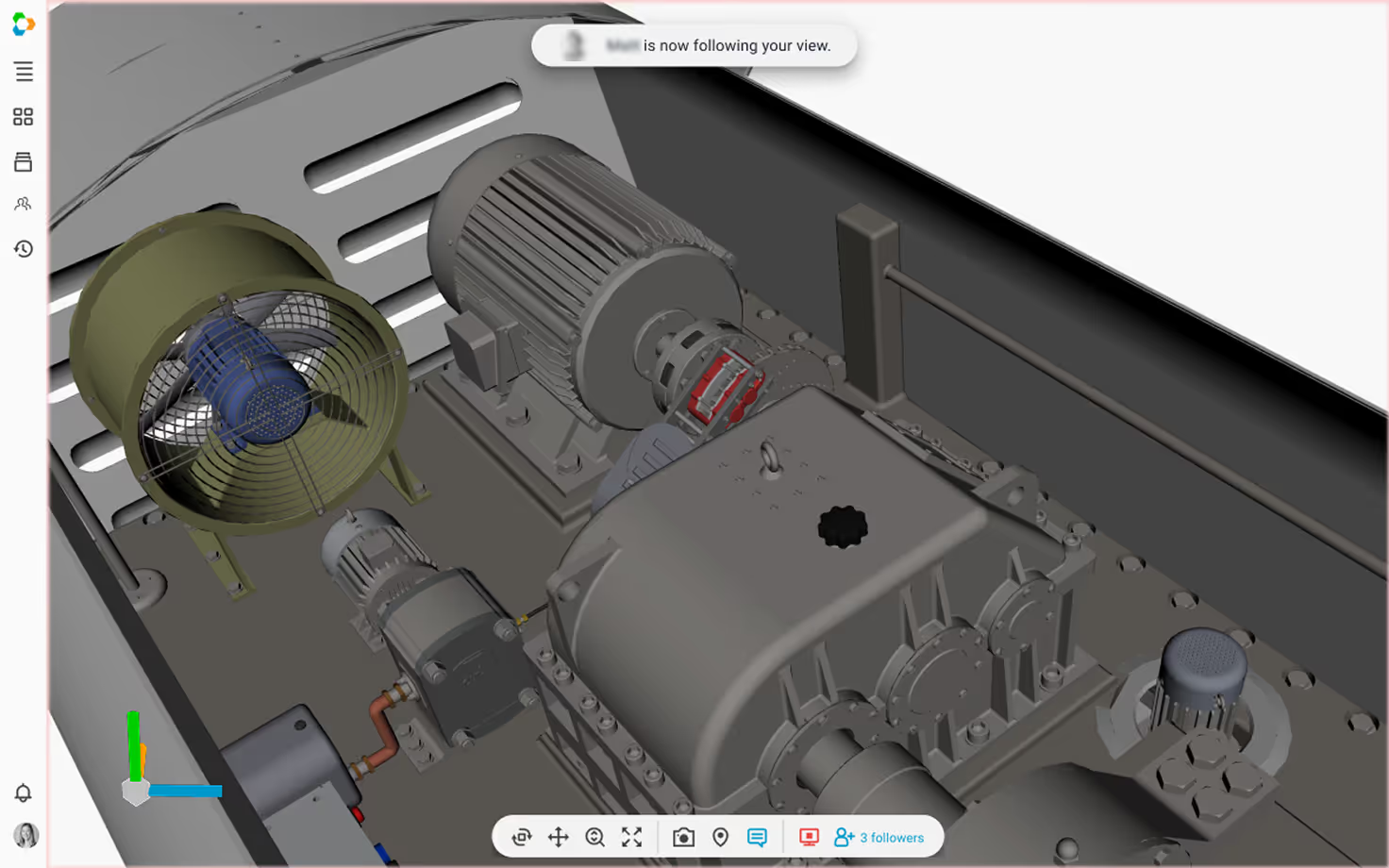
Throughout execution, I iterated closely with product and engineering to balance usability, performance, and feasibility.
This included:
The result was an experience that remained responsive and understandable under heavy technical constraints.
Validation came through internal design and engineering review, QA collaboration, moderated usability work later in the product, and directional feedback from design and engineering practitioners at mHUB.
The feedback refined the interaction patterns and gave the team evidence that the core collaboration model was understandable enough to keep building.
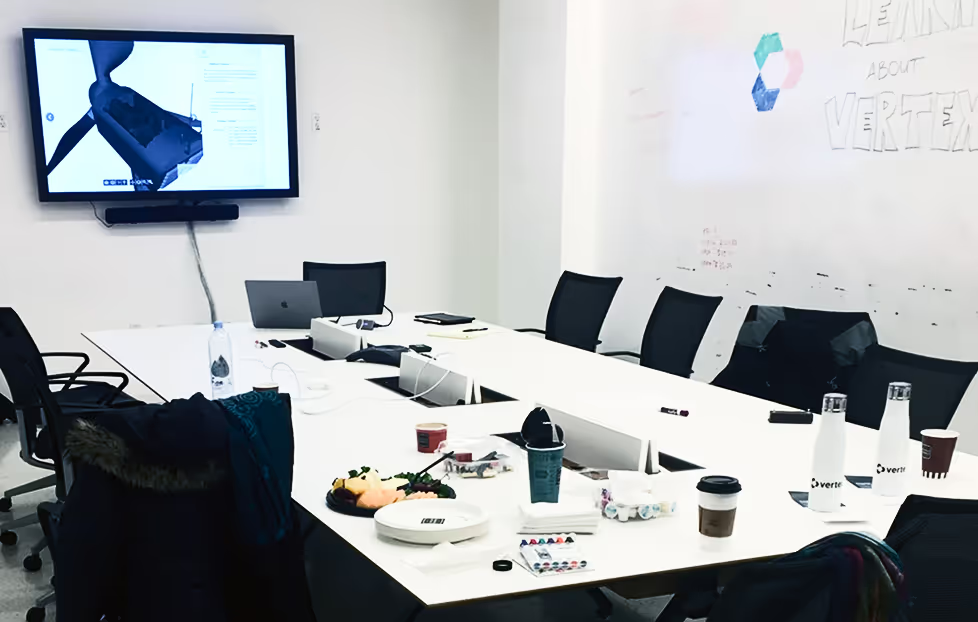
Directional feedback at mHUB helped pressure-test the core interaction patterns with design and engineering practitioners.
REAL-WORLD CONSTRAINTS
Security and performance shaped the interaction model from the start.
Role-aware access and lightweight participation let non-CAD stakeholders collaborate without exposing full IP or loading entire assemblies.
With the core interaction model, collaboration workflows, and system structure in place, validation focused on whether the experience aligned with real-world engineering collaboration needs without disrupting existing design processes.
Validation occurred across two tracks: internal stakeholder review and external directional exposure.
Concepts and flows were reviewed iteratively with product leadership, engineering partners, and a senior design engineer SME with deep CAD and manufacturing experience.
These reviews focused on:
Feedback reinforced that the system-level approach, including snapshots, stories, markup, and role-aware collaboration, mapped well to existing workflows while reducing friction from file-based handoffs and fragmented tools. Validation led to refinements in details without changing the core interaction model.
To pressure-test early concepts outside the immediate team, selected designs were shared in facilitated sessions at mHUB with design and engineering practitioners experienced in complex systems and collaborative workflows.
These sessions provided directional validation for:
Feedback was largely affirming, with minor refinements to labeling, affordances, and interaction clarity while the foundational system structure remained intact.
Validation gave the team:
The result was a strong, extensible baseline for secure, role-aware collaboration around complex 3D assemblies.
The work established the interaction foundation for Vertex’s first product direction. Core patterns for viewing, markup, discussion, and shared context carried into later product development as the company evolved.
What I took from it: in a 0→1 technical product, defining the interaction language early can give product and engineering something concrete to make decisions against before there is enough usage data to optimize.
Designing collaboration systems requires treating shared understanding as a first-class design outcome, not a byproduct of interface design.
In this environment, success depended less on visual polish and more on:
The project taught me to define shared context, system state, and tradeoffs early. Those decisions mattered more as the product and the number of collaborators grew.