

Founding Product Designer & Researcher · Product design · UX research · Product strategy · Complex workflows
Nine research-derived customer archetypes became the structure for the Knowledge Center, with the same vetted ERC content supporting both browsing and AI-assisted questions.
As Innovation Refunds rapidly onboarded hundreds of salespeople and served hundreds of thousands of customers each month, reps had to answer complex ERC questions in real time while guidance was spread across email, documents, SMEs, and changing rules.
Reduced duplicate and conflicting guidance, made updates easier to manage, and gave reps faster access to usable answers during customer conversations.
Sales reps answered complex ERC questions in real time while product knowledge was distributed across email, documents, and individual memory. Experienced reps had developed their own shortcuts; newer reps needed easier access to shared, current guidance.
The core need was getting the right guidance into a live, nonlinear sales conversation.
- Symptoms: Reps spent time searching across sources, relied heavily on individual expertise, and needed a more dependable way to get current guidance during live conversations.
- Drivers: Information lived across email threads, docs, and ad hoc files, creating an opportunity for clearer ownership and governance.
- Constraints: Diverse usage patterns, constant content change, and a need for fast adoption with minimal training.
- Result: Faster cycles, more consistent messaging, and lower internal support demand.
Critical product and sales knowledge was scattered across inboxes, slide decks, chat threads, and personal documents. A shared source was needed to make guidance easier to find, trust, and maintain. Experienced reps developed effective shortcuts over time, and the opportunity was to make that expertise easier to share. Newer team members often learned through shadowing or by asking SMEs, so a shared system could make strong guidance available to more people.
As the organization grew, the lack of a reliable source of truth made messaging harder to maintain and scale.
The opportunity was to make static reference content useful during live conversations. Reps needed to pivot quickly based on questions, objections, and use cases, while the existing tools relied on linear navigation and broad searches. In the moment, memory or improvisation was often faster.
The opportunity was to make guidance fast enough to use during a live conversation, so reps could rely on shared content instead of personal notes or memory.
At first glance, this looked like a content organization issue. Discovery showed the bigger opportunity was how knowledge was used. Sales conversations were dynamic, situational, and nonlinear, so guidance had to adapt continuously based on client context and the direction of the discussion.
The opportunity was to design around how sales teams actually reasoned through a conversation and bring the right information into that workflow.
A viable approach needed to balance:
- Structured guidance that still felt natural in conversation
- Consistency with room for rep judgment
- Fast access to accurate information during live work
- Shared ownership so expertise could scale across the team
The challenge was to make tacit expertise explicit while still feeling natural to use. That reframed the effort from documentation cleanup to system design.
Research with sales reps, customers and prospects, a 300+ response survey, and a research partner showed two things: buyer mindsets differed sharply, and top performers carried a lot of the decision logic in their heads.
I synthesized that into personas, objections, conversation patterns, nine customer archetypes, and a clearer knowledge model that sales could recognize and use quickly.
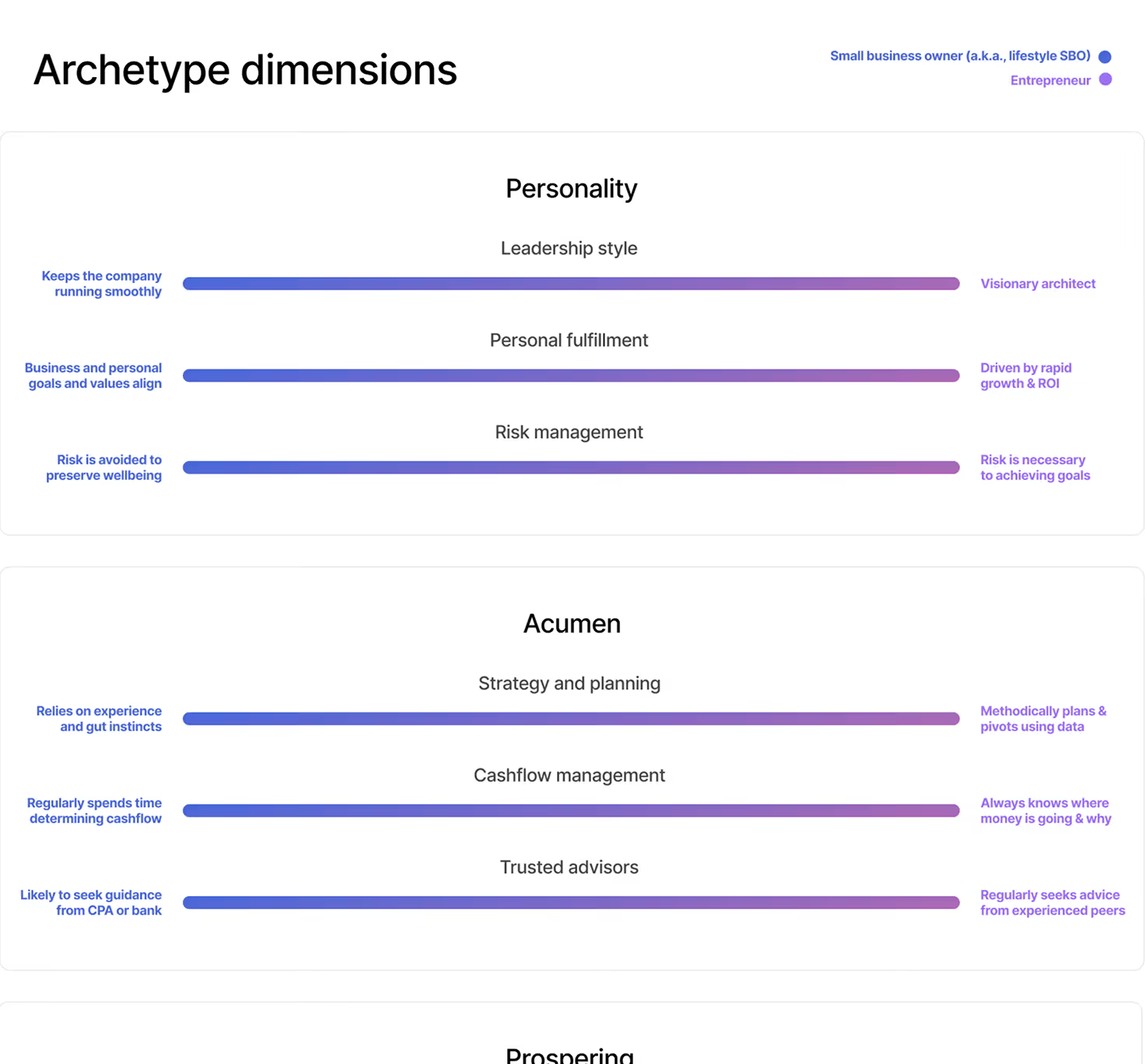
Behavioral comparison showing how different buyer mindsets changed decision-making, risk tolerance, and the guidance reps needed.
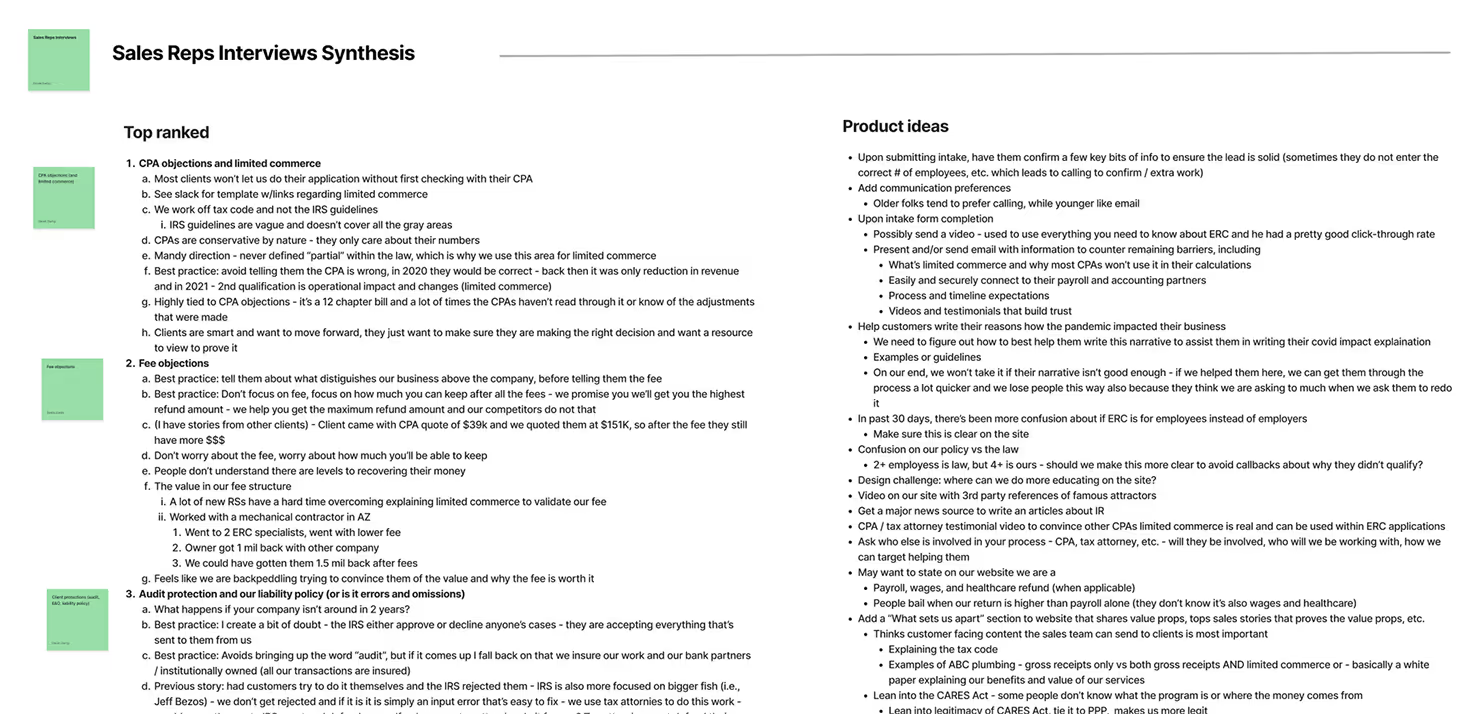
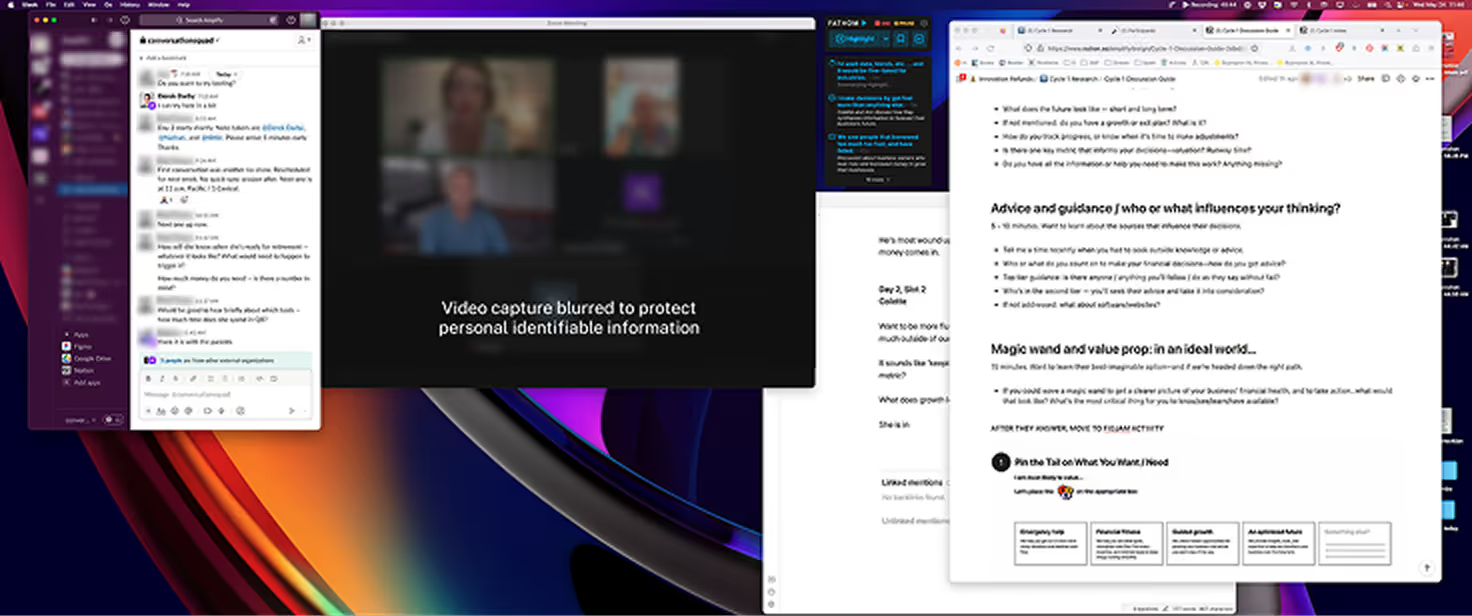
Discovery focused on how sales teams learned, retained, and reused knowledge, and how customers experienced that information in live conversations. The existing approach relied heavily on individual expertise, documents, and long email threads that took time to search and keep current.
As the organization grew, a shared source of truth became increasingly important for keeping guidance current and consistent across teams.
Discovery combined multiple inputs so patterns were confirmed across sources and grounded in repeated evidence. I partnered with a specialized research firm to conduct moderated customer interviews while remaining hands-on in planning, live sessions, and synthesis. In parallel, I led large-scale surveys across 300+ responses to understand demographics, motivations, and behavioral differences across small business owners and more entrepreneurial operators.
Interviews started broad to surface themes, then narrowed into deeper sessions with selected participants and internal SMEs to validate assumptions and separate edge cases from core needs. Personas were derived from customer research and extensive sales team input, then reviewed with sales to ensure they reflected real objections, decision dynamics, and conversation flow.
One key insight was the behavioral difference between compliance-oriented small business owners and more entrepreneurial operators, even at similar company sizes.
- SBOs prioritized certainty, documentation, and validation before moving forward.
- Entrepreneurs optimized for speed, upside, and strategic advantage, often tolerating more ambiguity.
The two groups responded better to different levels of detail, reassurance, and speed. I mapped the key behavioral dimensions across both archetypes so guidance could adapt by audience while keeping the core message consistent.
Sales teams held deep experience-based knowledge about objections, explanations, and successful framing, but much of it lived in conversations, personal notes, and memory.
I synthesized interview data, call insights, FAQs, and survey findings into structured themes that reflected how reps reasoned through complex deals.
Synthesis focused on:
- Common objections and how they evolved during conversations
- Language patterns that built trust versus increased friction
- Where reps improvised when guidance was hard to find or keep current
- Information customers repeatedly asked for and wanted easier access to
Personas and themes were validated with sales and used as working tools that directly informed content structure, language, and prioritization.
Discovery showed that the real opportunity was structure, context, and confidence. The information existed; the next step was making it easier to find, maintain, and apply in real conversations.
Any solution would need to:
- Make expert knowledge easy to access and reuse without oversimplifying it
- Support different customer mindsets without forcing reps to improvise
- Keep relevant context visible during live conversations
- Evolve as products, policies, and messaging changed
These insights directly shaped how the system was framed, organized, and designed in later phases.
The strategy was to turn individual know-how into a trusted, governed knowledge system built around how reps actually sold: customer context, objections, conversation patterns, supporting topics, and clear ownership.
That same knowledge system also gave us a reliable way to support AI-assisted questions because the model could work from content our team already knew and maintained.
- Goal: Make sales knowledge fast to find, easy to trust, and simple to maintain.
- Inputs: Product knowledge, messaging, assets, and enablement updates.
- Core interactions: Search, browse by use case or audience, save, and share.
- Governance: Ownership, review cadence, versioning, and visibility rules.
- Outcome: Faster preparation and more consistent conversations across the sales organization.
The strategy centered on four goals:
- Create a single source of truth
Information needed to be authoritative, current, and consistent across sales workflows and customer touchpoints. - Meet users where decisions were made
Knowledge had to fit existing sales and operational workflows and stay easy to reach during live work. - Scale access to expertise across a growing sales team
The system needed to help average performers operate more like top performers while accelerating onboarding for new hires. - Support both internal and external use cases
Internal teams needed nuance and guidance. External audiences needed clarity, confidence, and trust.
The strategy was shaped by a few core guardrails:
- Fast access during live conversations so reps could stay in the flow of the discussion
- Trustworthy information reps could use confidently with customers
- Clear ownership and governance so content stayed current
- One flexible system that could support different customer types and situations
This led to a clear direction: build a knowledge system that turned sales expertise into explicit, reusable guidance integrated into how the organization already worked.
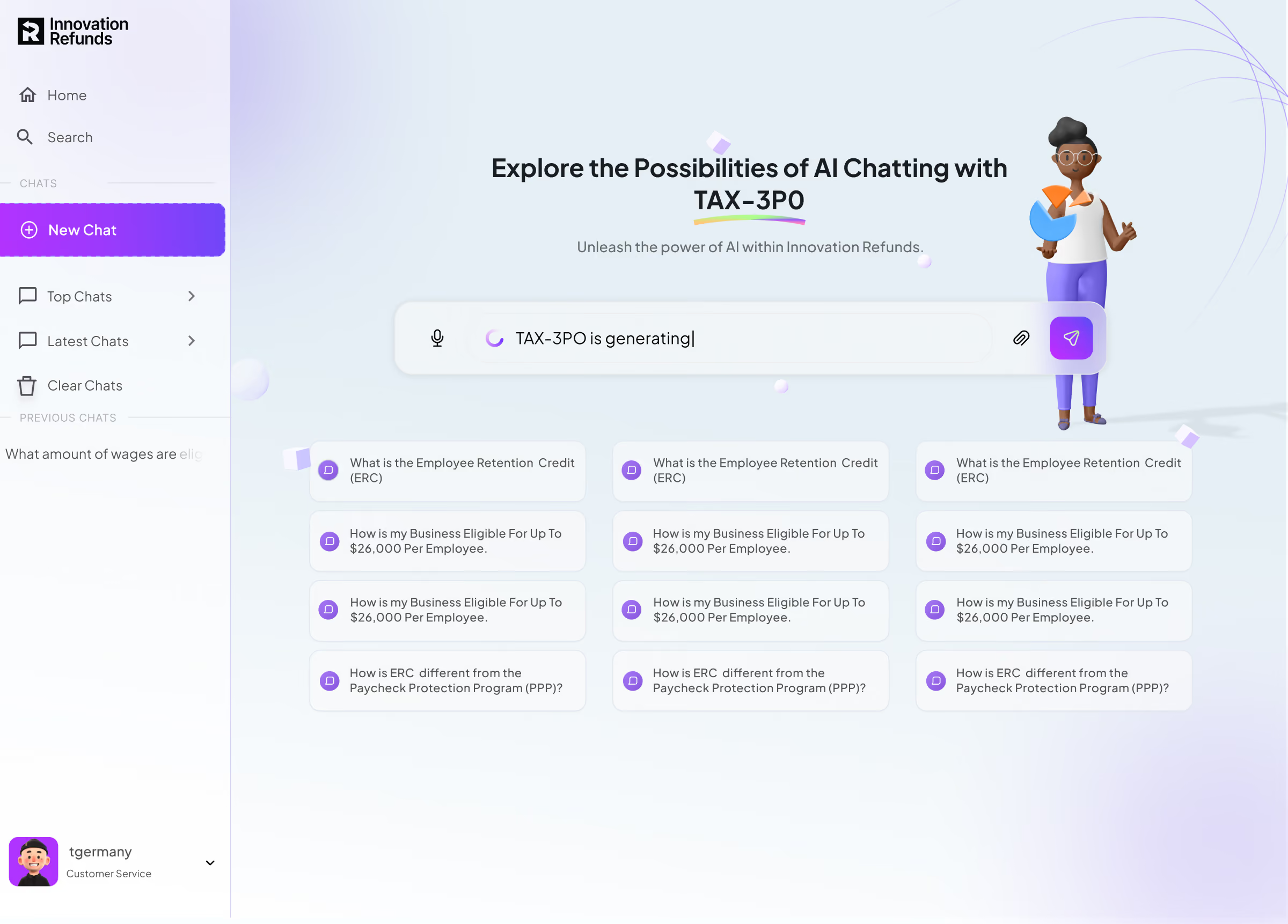
Once the knowledge model was in place, we could give reps another way into it. If they already knew the question, they could ask it conversationally and get to an answer faster during live work.
Early tests highlighted an important limitation of the technology at the time: hallucination. When context was incomplete, the model could produce a confident answer that sounded plausible. Our team had already researched, written, and structured much of the ERC guidance, so we grounded the AI in that vetted content and gave it a much tighter body of knowledge to work from.
That gave reps two useful ways into the same knowledge: browse when they needed context, or ask when they already knew the question.
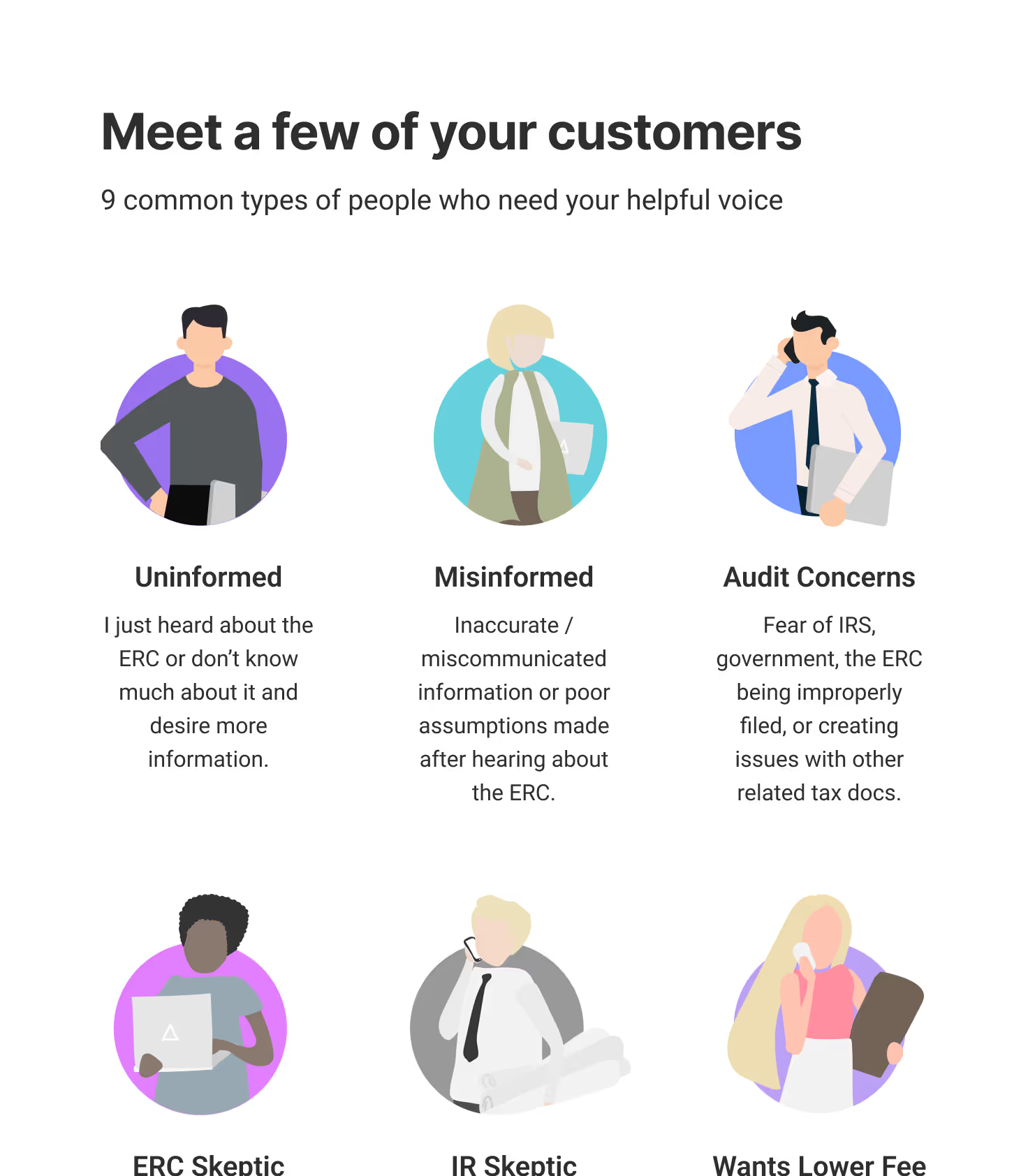
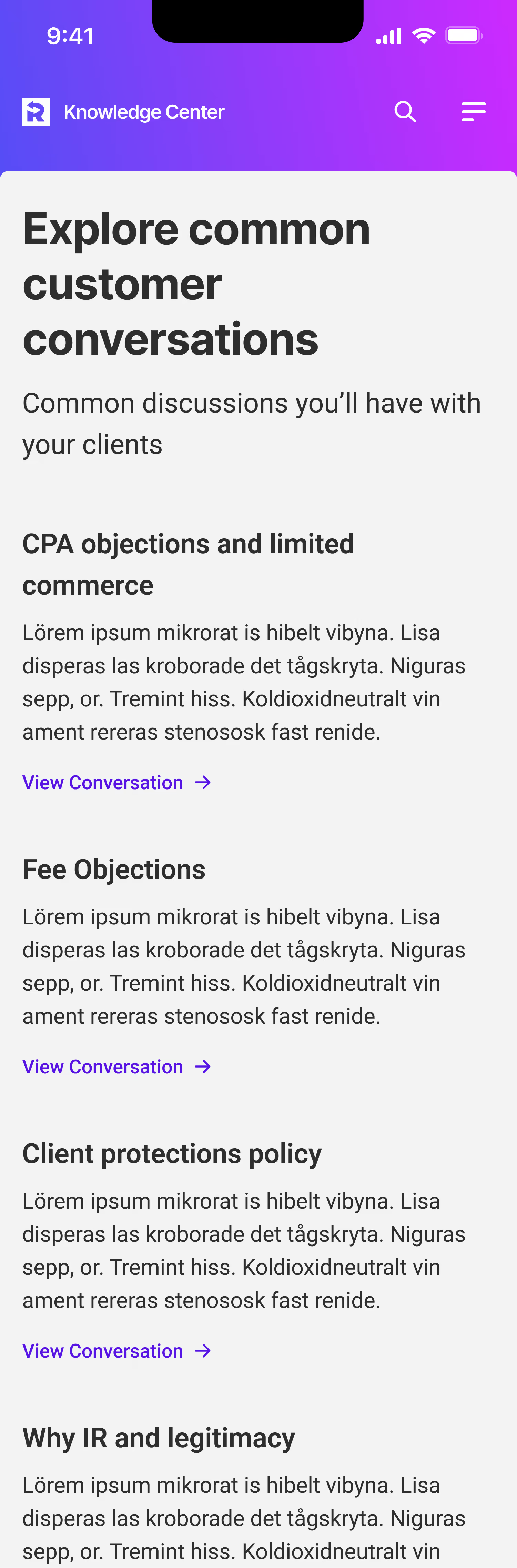
Nine customer archetypes became the primary entry point. Each one connected what customers said, what they worried about, how reps could respond, and deeper supporting content.
I used progressive disclosure so reps could browse quickly and go deeper when needed. For direct questions, the AI path gave them another way to get to the same guidance.
The same vetted ERC content supported both experiences, keeping answers aligned with the guidance reps already used.
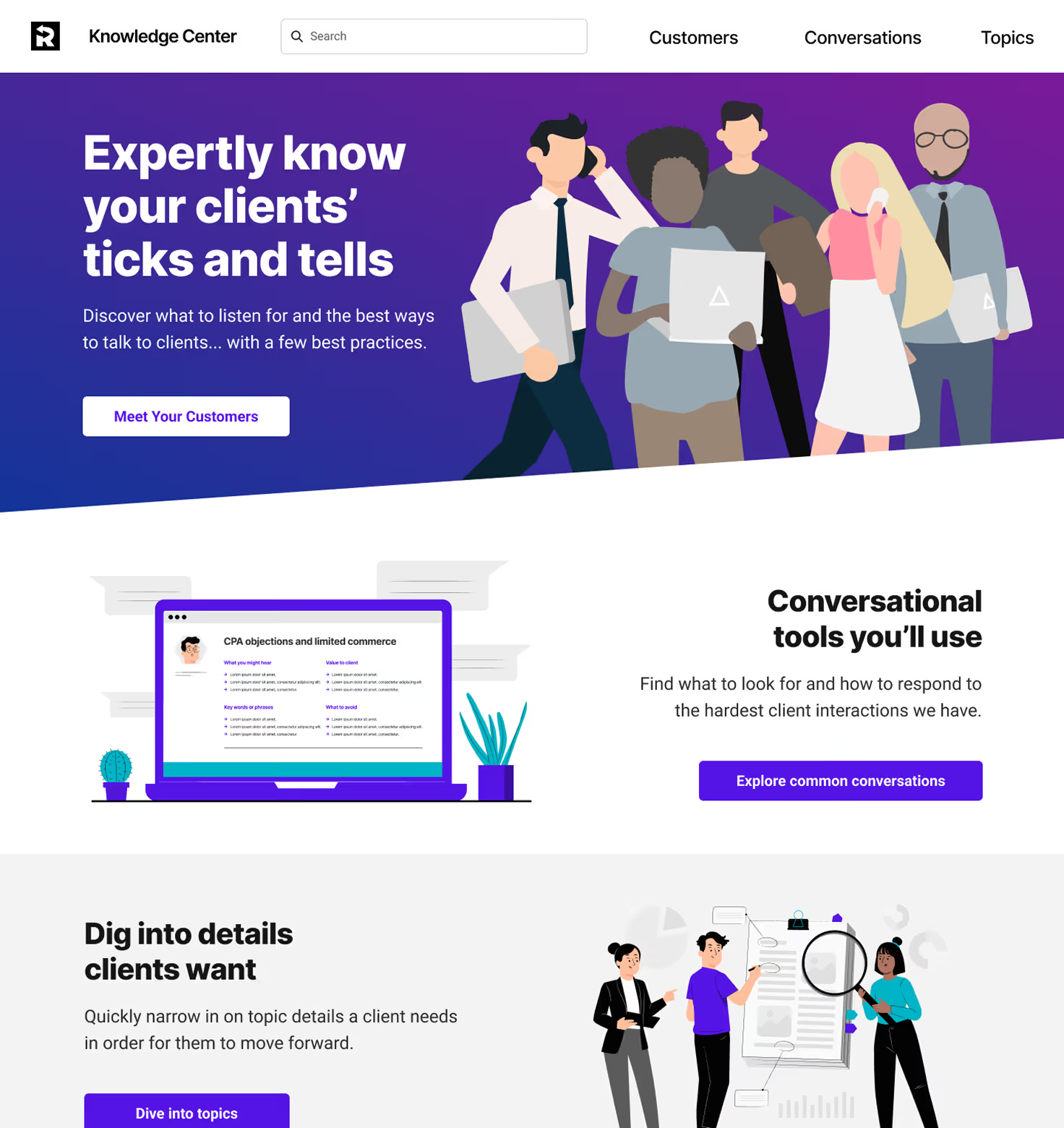
Knowledge Center interface designed around fast retrieval during real sales conversations.
%201.avif)
%201.avif)
The experience was organized around how sales and support teams think, speak, and respond in live customer conversations.
The system surfaced clear guidance at the moment of need, helping teams respond with more confidence and consistency while keeping the underlying ERC detail available when they needed it.
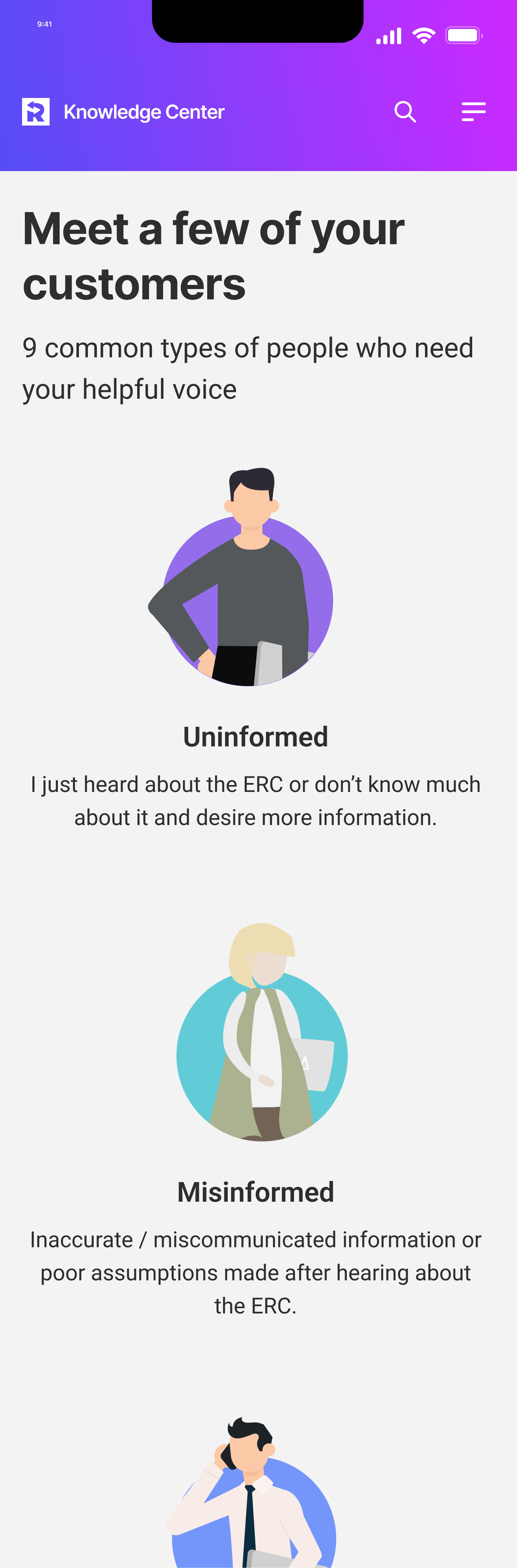
The experience was anchored around nine customer archetypes reflecting common mindsets in ERC conversations.
Each archetype captured:
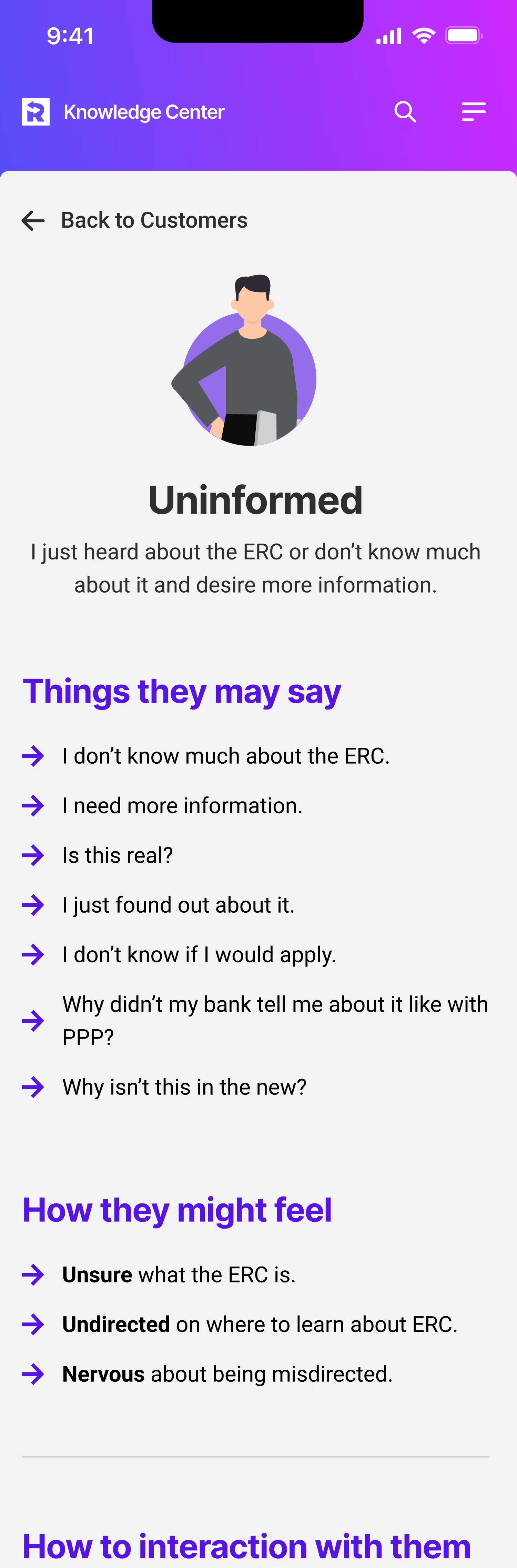
- What customers typically said
- What they were worried about
- What information moved them forward
This let teams quickly recognize who they were talking to and tailor their response from the guidance in front of them.
Impact: Faster onboarding, better continuity during live calls, and more consistent messaging across the organization.
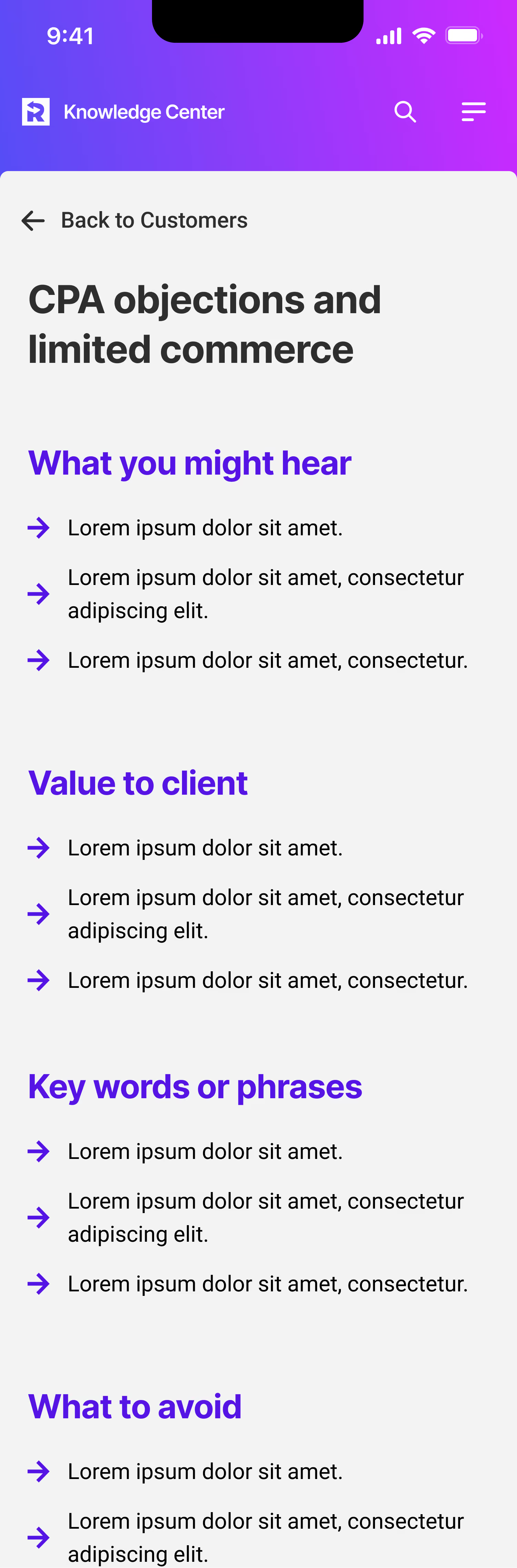
Common customer discussions were treated as repeatable conversation patterns that teams could reuse across calls, coaching, and follow-up.
Each conversation included:
- Common objections or questions
- Emotional context
- Clear guidance on how to respond
- Links to related conversations and supporting content
This made proven guidance easier to share while preserving human judgment in delivery.
The experience supported different levels of urgency and expertise through progressive detail:
- High-level overviews for quick orientation
- Conversation-level guidance for live calls
- Deeper detail when credibility, compliance, or edge cases mattered
The same structure worked for live calls, follow-up, and internal prep.
The structured experience let reps browse by customer, conversation, topic, FAQ, or tool. The AI path was useful when they already had a specific question and wanted a faster route to an answer.
Both used the same source material, so the answer a rep got matched the guidance they could browse.
Beyond the interface, the system was designed to support:
- Clear navigation across Customers, Conversations, Topics, FAQs, and Tools
- Content governance and updates
- Analytics, feedback loops, and AI-assisted retrieval grounded in governed source content
The structure could grow while keeping guidance clear, trustworthy, and maintainable.
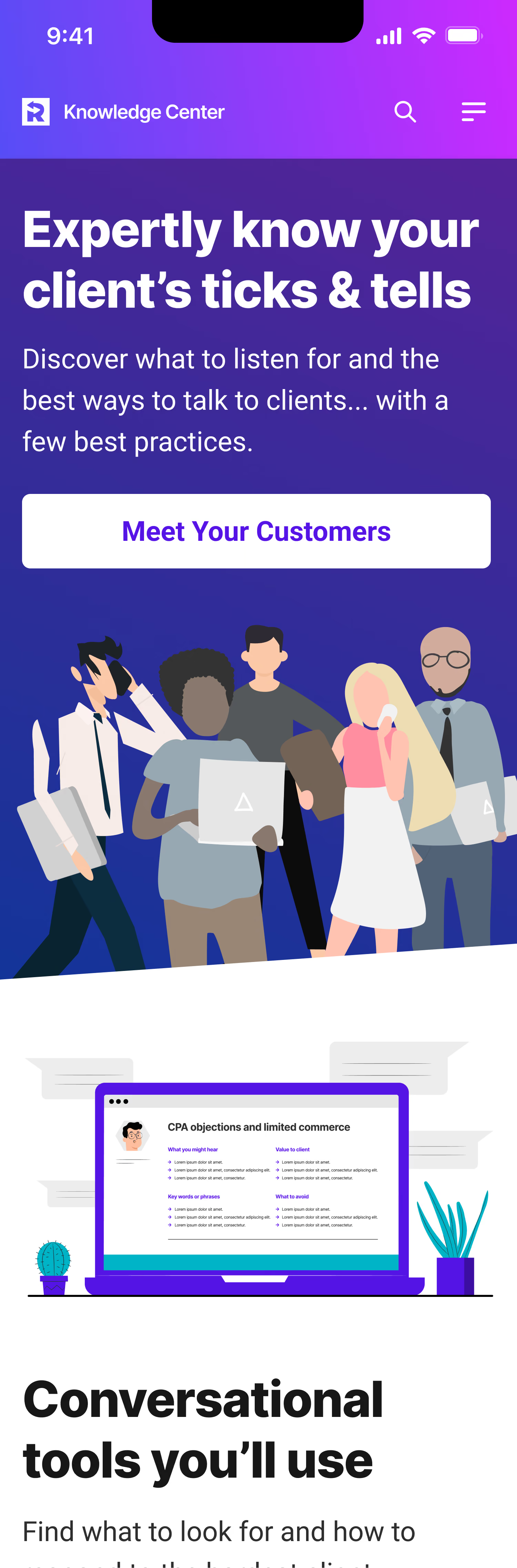
Mobile views of the delivered Knowledge Center, showing how customer archetypes and conversation guidance carried into smaller-screen use during live sales work.
I led delivery end to end, assembling a cross-functional team, aligning priorities, sequencing milestones, and coordinating execution with engineering while keeping sales and operations involved.
Phased delivery shipped usable value early while governance, content types, integrations, and automation opportunities expanded over time.
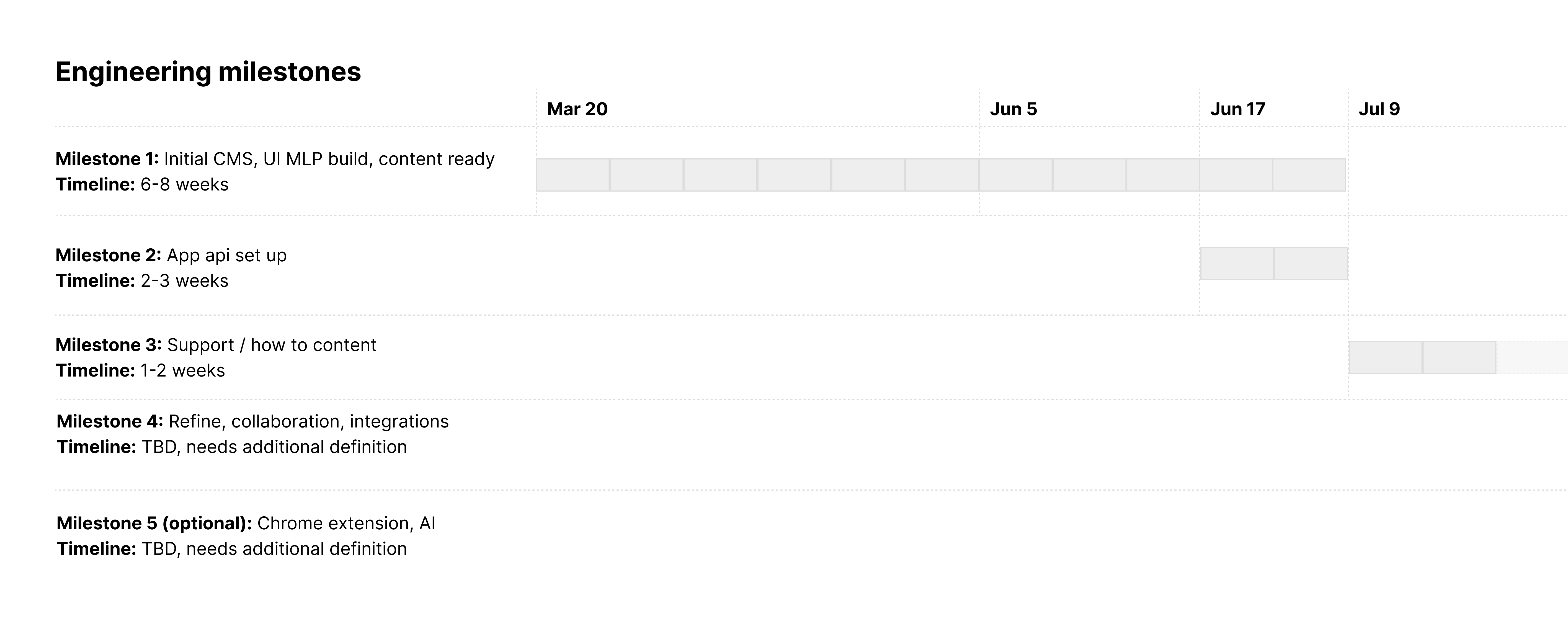
Phased delivery roadmap used to sequence build milestones, manage scope, and ship usable value early.
The work combined research, design, product leadership, and delivery, turning scattered knowledge across emails and static documents into a shipped system used by the sales organization.
I led delivery end to end, assembling a cross-functional team, aligning priorities, creating the phased rollout plan, and coordinating execution with engineering while keeping sales and operations involved throughout.
Delivery was structured as milestones so usable value could ship early while the system scaled in parallel. Early phases focused on the Contentful CMS, information model, and first internal release. Later phases expanded content types, refined interaction patterns, and introduced integration and automation opportunities.
This phased approach let the team ship usable value early, keep scope manageable, and improve the platform while active sales work continued.
Validation happened in working sessions and ongoing feedback with sales, account reps, SMEs, operations, and engineering. For the AI experience, the test was simple: could a rep trust the answer enough to use it during a live customer conversation?
Feedback sharpened labels, hierarchy, and retrieval while the core information model held up.
Validation focused on realism: could the system support live conversations under time pressure?
We ran working sessions with sales, account representatives, and internal SMEs to test whether the structure reduced ambiguity, supported scenario-based navigation, and enabled confident responses from shared guidance. Feedback led to refinements in labeling, structure, and retrieval patterns while confirming that the core interaction model matched how teams actually sold.
Concepts and flows were reviewed iteratively with sales leadership, operations partners, and engineering stakeholders to ensure the system was viable within organizational and technical constraints.
Reviews focused on:
- Accuracy and consistency of guidance across customer scenarios
- Clarity of content ownership and update workflows
- Feasibility of maintaining content while keeping expertise easy to access
- Alignment with CMS capabilities and engineering milestones
Validation confirmed that the information model matched how sales teams reasoned about objections, questions, and trust-building moments. Refinements were made to labeling and hierarchy, but the underlying system design remained intact.
Trust was the central validation question for the AI experience: would a rep use the answer during a live customer conversation?
Grounding the model in vetted ERC content gave it a reliable body of knowledge to work from. Because the same team maintained that content for the Knowledge Center, improving the source material improved the AI answers too.
The platform gave Sales one place to find and maintain ERC guidance, then extended that same knowledge into AI-assisted questions. It supported faster onboarding, better continuity during live calls, and more consistent messaging while giving the team a clearer way to keep the underlying content current.
One lesson has stayed with me: AI is only as useful as the knowledge behind it. The source material and the way people access it matter as much as the prompt.
Creating shared UI patterns while the startup scaled
Innovation Refunds was scaling quickly, so reusable UI decisions became increasingly valuable. My design team created a design system for Engineering so components, interaction patterns, and visual decisions could stay consistent as new workflows and internal products were added.
That systems work supported a product environment spanning complex FinTech workflows, HubSpot experiences, and an internal Contentful-based sales enablement platform. Shared patterns gave Design and Engineering a common reference and made it easier to extend the product consistently.
The broader lesson was organizational as much as visual: at a fast-moving startup, a design system helps a small team carry good decisions forward. It improves consistency and leaves more time for the complex workflow questions where design judgment matters most.
How I'd approach this work with AI today
AI was already starting to show up while I was leading this work. I was part of an early exploration of an AI knowledge assistant for Sales, and the opportunity was obvious: hundreds of reps could get an answer without leaving a customer conversation. In a tax-information setting, trust was a core requirement, so the strongest direction was grounding answers in vetted content the team already maintained.
Today I'd make the connection between governed content and AI answers more transparent. The Knowledge Center already used the same vetted ERC content for browsing and AI-assisted questions; I'd show the source behind each AI answer so a rep could quickly verify where it came from. I'd also use AI during synthesis to work through the 300+ research responses faster, with product decisions grounded in the underlying evidence.
My role would be to define what counts as an authoritative source and set the quality bar for AI guidance used in customer conversations.
- Improved sales efficiency by reducing time spent searching for materials, answers, and approvals
- Increased confidence in live conversations through clearer, more current, and more trusted content
- Reduced cognitive load for new and tenured reps by organizing tools, content, and workflows around real sales tasks
- Created a single source of truth across sales, marketing, product, and leadership, reducing duplication and conflicting guidance
- Enabled faster updates to messaging, assets, and enablement materials without disrupting sales workflows
- Information architecture that could grow with the platform in products, regions, and sales motions without increasing complexity
Internal platforms create value when they fit the work people are already doing.
The work left me with four things an enablement system has to get right:
- Design around how teams actually work in real sales situations
- Balance flexibility with governance so information stays useful as it grows
- Make accuracy, recency, and ownership visible so teams know what they can rely on
- Give AI a reliable, well-maintained body of knowledge to work from
Leading this effort meant aligning stakeholders with different priorities and giving the team a shared direction for clearer decisions and faster execution.
The result was an internal product that supported revenue outcomes by helping people do their jobs with less friction and more confidence.