Context
This project focused on designing a collaborative 3D modeling platform for large engineering and manufacturing organizations, including companies such as Rockwell Collins, John Deere, Vermeer, and Caterpillar.
These teams relied on complex 3D assemblies to design, review, and make decisions, often across internal teams and external vendors. Existing workflows were slow, fragmented, and poorly suited for collaboration around large, highly detailed models.
The product was built as a cloud-based platform to enable faster decision-making, safer sharing, and more effective collaboration without requiring users to download or manipulate full models locally.
Business Stakes
This product needed to unlock faster, safer collaboration around complex 3D models for large engineering organizations. Success required proving enterprise viability while navigating early-stage uncertainty.
Team
Product Management, Engineering, Domain SMEs (Engineering & Manufacturing)
Constraints
Impact Snapshot
I served as Lead UX Designer and was the sole designer during the product’s first year, with end-to-end responsibility spanning strategy, discovery, system design, and delivery.
Working within a stealth startup environment, I operated across high ambiguity and limited access to external users. My role extended well beyond interface design and required close partnership with product management and engineering to define the problem space, align early direction, and establish a foundational set of interaction patterns and behaviors for a complex, cloud-based platform.
As the company grew, I continued to shape the core interaction and system foundations that became the basis for future products and pivots.
Key Leadership Contribution: Defined the core interaction and system model that enabled fast, secure, role-aware collaboration around complex 3D assemblies, aligning product, engineering, and business constraints into a shared foundation for future development.
This project required leadership without precedent or clear benchmarks. As a stealth startup building a novel platform, many assumptions about collaboration, performance, and usability had to be tested and refined in parallel with technical exploration.
I worked closely with product and engineering to navigate uncertainty around feasibility, security, and user adoption, translating evolving constraints into clear design direction. This meant making incomplete information actionable, aligning teams around shared mental models, and continuously adjusting the solution as the organization, product, and market understanding evolved.
Engineering and manufacturing teams rely on complex 3D models to make critical decisions, but collaboration around those models was fundamentally broken.
Feedback cycles were slow and disjointed. Teams shared large files through legacy tools, emailed screenshots, or relied on meetings to explain changes that could not be easily referenced later. Comments lived outside the model context, forcing teams to mentally map feedback to specific parts or views.
As a result, understanding degraded as models moved between people, teams, and vendors.
Most existing tools were optimized for individual authorship, not shared decision-making.
Opening full 3D assemblies was slow, even on high-end machines. Collaborators who only needed to review or comment still had to load entire models, increasing friction and discouraging participation. Vendors and non-engineering stakeholders often lacked access entirely, creating information bottlenecks and translation errors.
Instead of accelerating collaboration, the tools reinforced silos.
Sharing full models also introduced significant IP and security concerns.
Organizations were forced to choose between speed and control. Providing access to entire assemblies exposed sensitive intellectual property, while restricting access slowed progress and limited feedback. There was no reliable way to share only what was necessary for a given discussion or decision.
For large enterprises, this tradeoff was unacceptable.
At first glance, the problem appeared to be missing collaboration features.
Through early discovery, it became clear the challenge was deeper. Teams did not just need comments or annotations. They needed a shared understanding of complex systems without forcing everyone into the same tooling, workflows, or performance constraints.Any solution had to reconcile:
Without a new approach, organizations would continue to absorb the cost of misalignment.
Decisions would remain slow. Rework would increase. Sensitive data would be overshared or withheld. Most importantly, the barrier to enterprise adoption would remain too high for the platform to scale.
This was a systemic collaboration failure that limited speed, trust, and adoption.
With limited early access to external users, discovery focused on building a shared, accurate understanding of how engineers actually collaborate around 3D models today.
I worked closely with product, engineering, and an experienced design engineer SME to synthesize domain knowledge across:
This work was not about validating a single hypothesis. It was about reducing risk by deeply understanding the system engineers operated within, before committing to any specific interaction model.
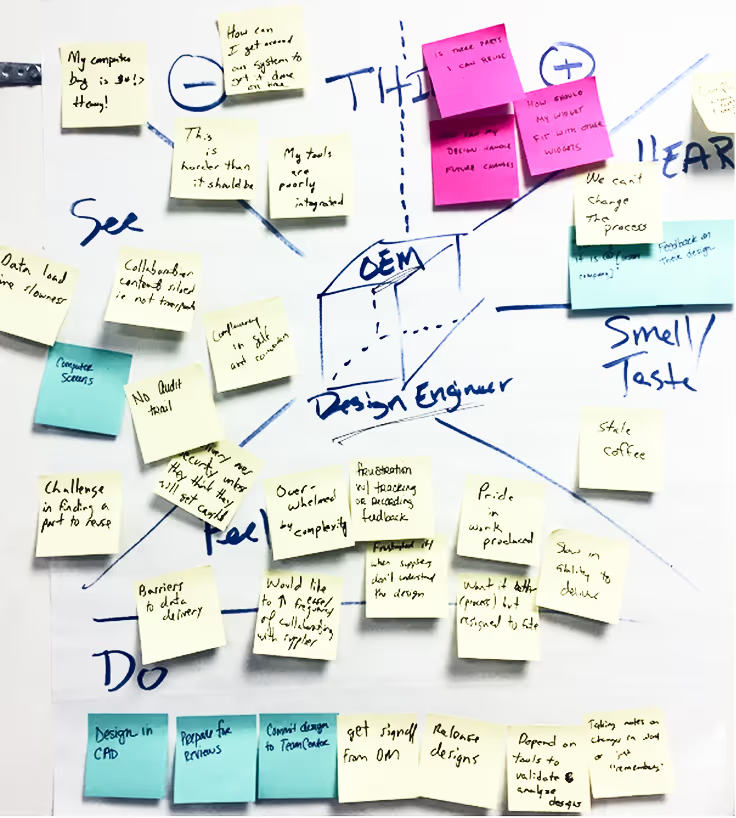

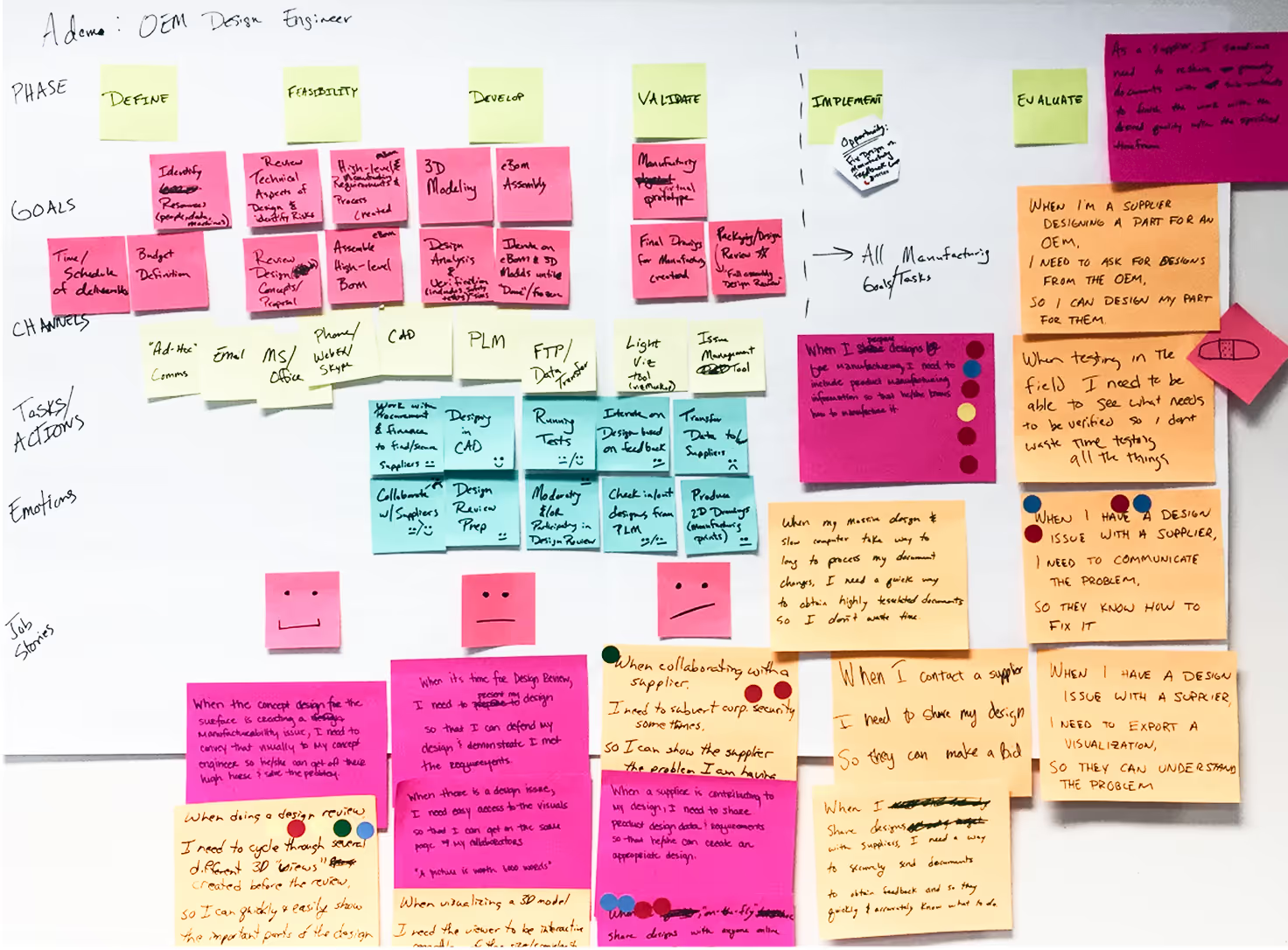
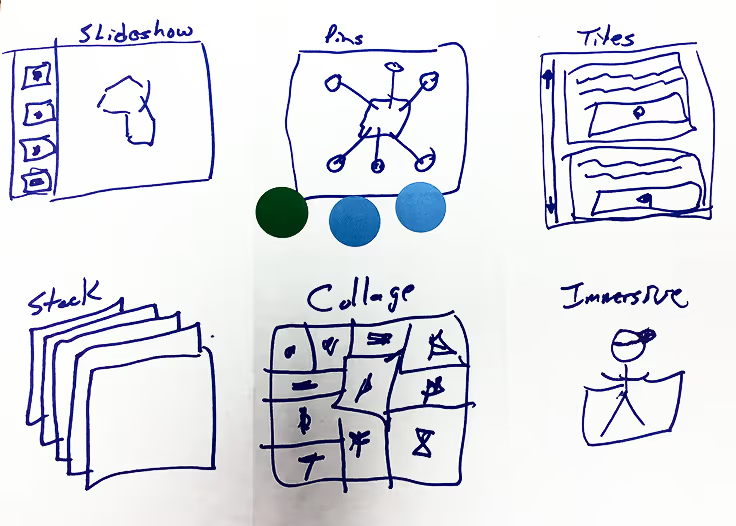
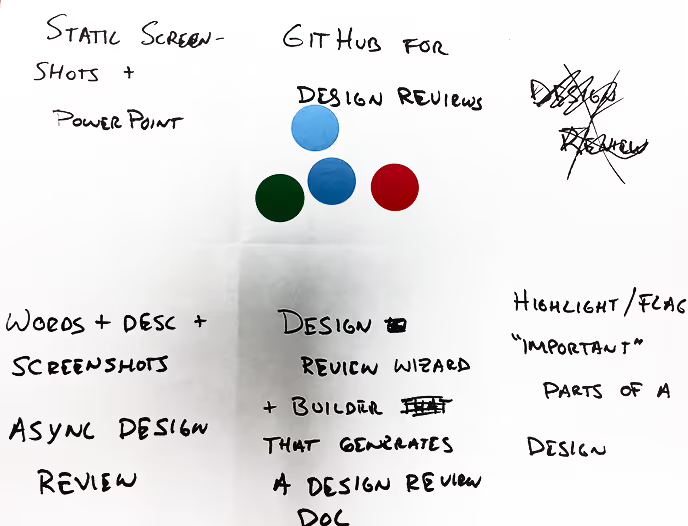
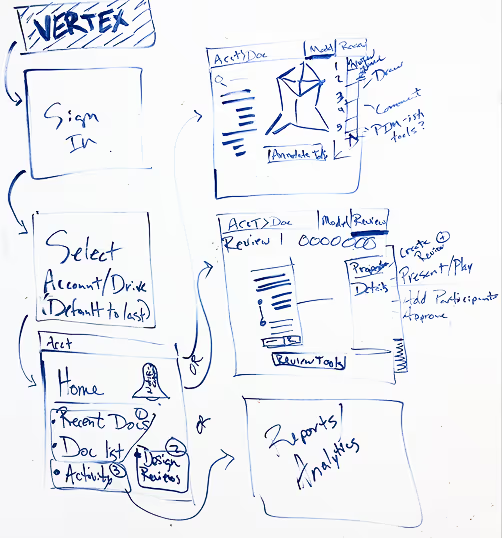
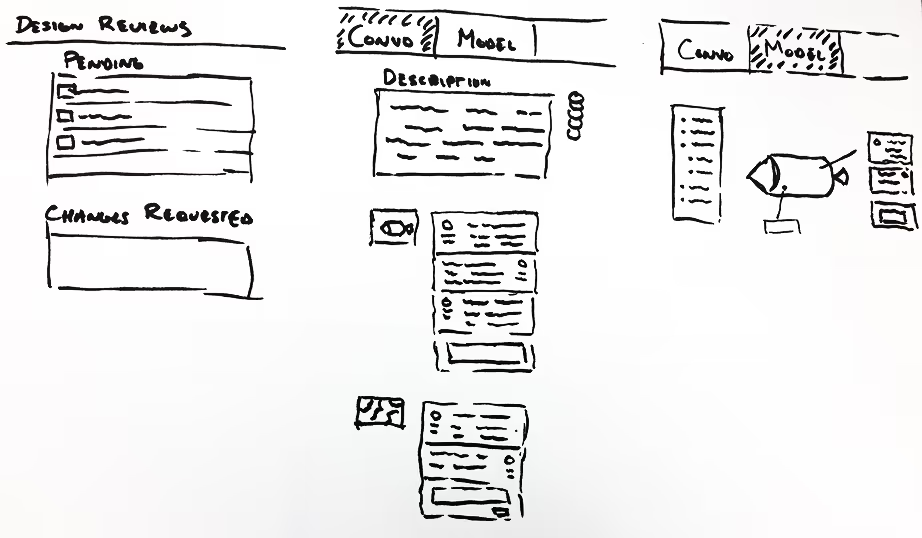
To accelerate shared understanding and move from ambiguity to direction, I facilitated a focused, low-key design sprint with product, engineering, and the SME.
The sprint structure intentionally moved from understanding to action:
This sprint created alignment across disciplines and established a concrete starting point for experience design, grounded in domain reality rather than assumption.
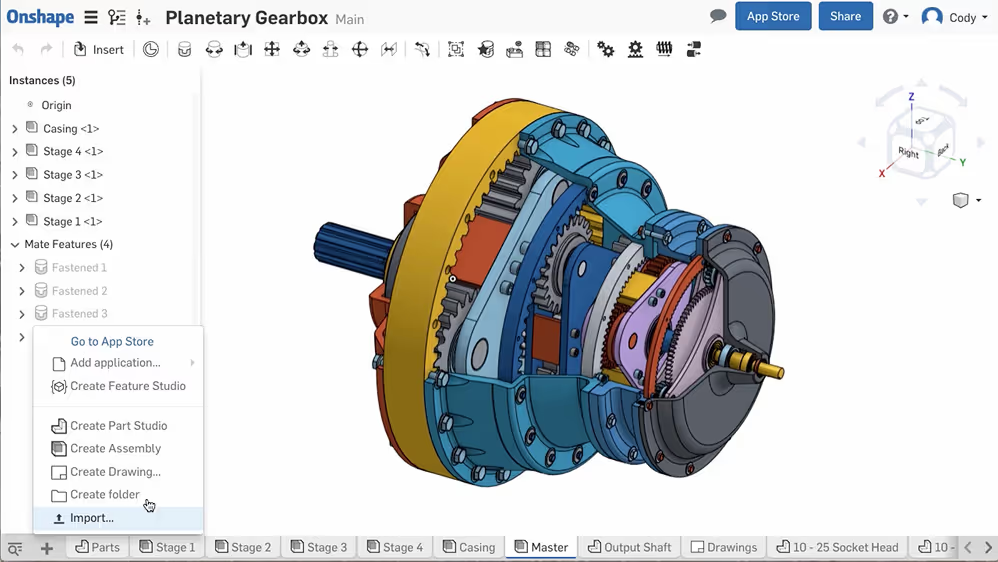
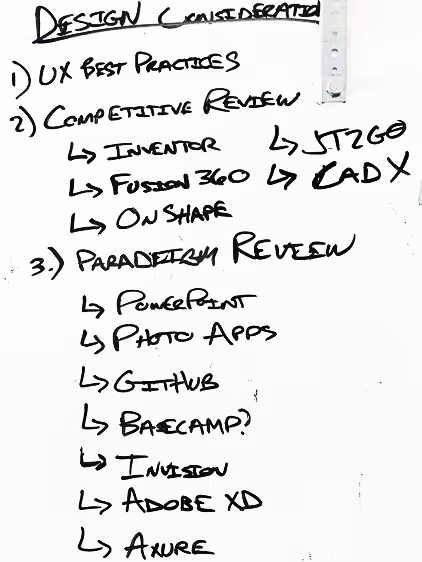
In parallel, I conducted a focused review of both direct CAD tools and adjacent collaboration paradigms to understand where existing solutions succeeded and where they fell short.
This included:
The goal was not to compete with CAD systems or replicate their depth. Instead, it was to understand:
This analysis reinforced that collaboration was happening around models, not within them, often through screenshots, static documents, and disconnected conversations.
Across discovery activities, several consistent insights surfaced:
Discovery made it clear that the problem was not a lack of collaboration tools, but a lack of shared context during collaboration.
Existing workflows forced teams to export models, capture static screenshots, and reconcile feedback across disconnected tools. These approaches removed spatial context, slowed decision-making, and increased risk, particularly when working with external suppliers.
Rather than attempting to recreate existing review workflows in a new interface, the strategy focused on enabling collaboration anchored to the model, allowing discussion, context, and decisions to remain directly connected to the work, either within the model itself or through scoped, story-based views designed for specific audiences.
This reframing shifted the effort from “adding collaboration features” to designing a system that supported shared understanding across roles, disciplines, and access boundaries.
All user interaction in the platform occurs through 2D inputs such as clicks, selections, and annotations, while meaning lives in a 3D spatial environment that changes based on camera angle, zoom, and orientation.
Unlike traditional interfaces, there is no single stable surface. The same model element can appear entirely different or disappear depending on viewpoint, making it difficult to anchor feedback in a way that preserves intent over time. A comment that feels obvious from one angle can become ambiguous or misleading from another.
This challenge is compounded by audience differences. Engineers, reviewers, and external partners view models with different levels of technical access and spatial fluency. Designing collaboration required interaction patterns that could reliably bind 2D input to 3D context while remaining understandable across roles, perspectives, and time.
The strategy was guided by a small set of non-negotiable goals that shaped all downstream decisions:
These goals provided clear guardrails for experience design and prevented the solution from drifting toward familiar but ineffective patterns.
Operating within a stealth startup environment required focus and restraint.
The strategy deliberately prioritized:
Some advanced capabilities were deferred to ensure the team validated the core collaboration model before investing in deeper complexity.
This allowed the product to move forward with clarity while remaining adaptable as technical and organizational constraints evolved.
By aligning on strategy before committing to interface solutions, the team established a shared understanding of what the platform needed to enable and, just as importantly, what it should not attempt to solve yet.
This framing created the conditions for experience design to proceed with confidence, grounding interaction decisions in purpose rather than convention.
With the strategy defined, the focus shifted to designing an experience that enabled real-time collaboration around complex 3D assemblies without overwhelming users or compromising performance, security, or clarity.
Rather than designing isolated features, I focused on establishing a coherent interaction model that supported exploration, discussion, and decision-making across roles and contexts.
These decisions established a consistent, reusable interaction framework that could support new features, workflows, and collaboration modes without redesigning the experience from scratch.
Early design work centered on how users actually collaborated around models, not how they individually inspected them.
The experience was structured around three core activities:
This framing helped keep interaction decisions grounded in real workflows instead of tool-centric patterns.
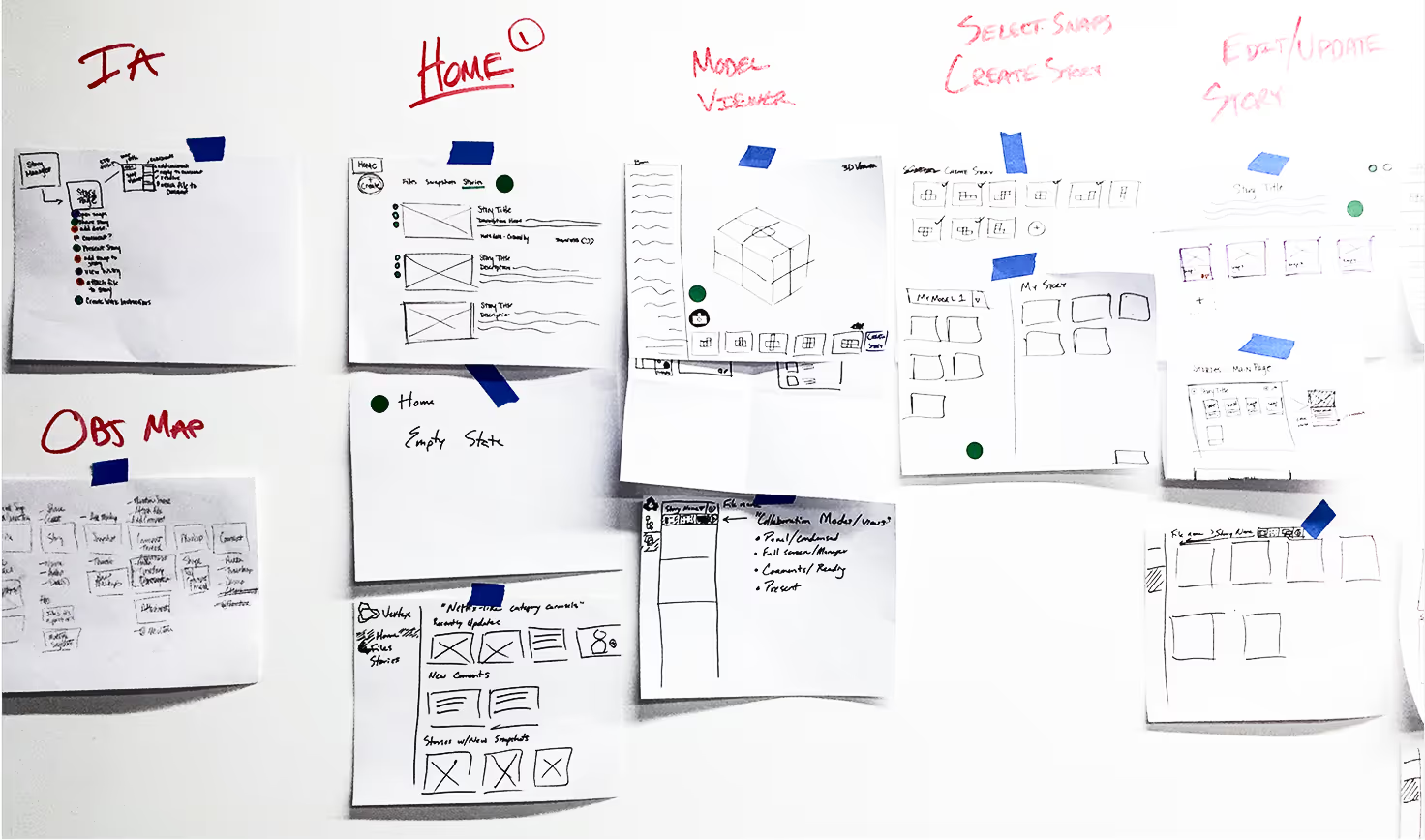
To support these workflows, I designed a system that separated model interaction, commentary, and narrative storytelling while keeping them tightly connected.
Key design decisions included:
This allowed teams to move fluidly between exploration and communication without duplicating effort or breaking context.

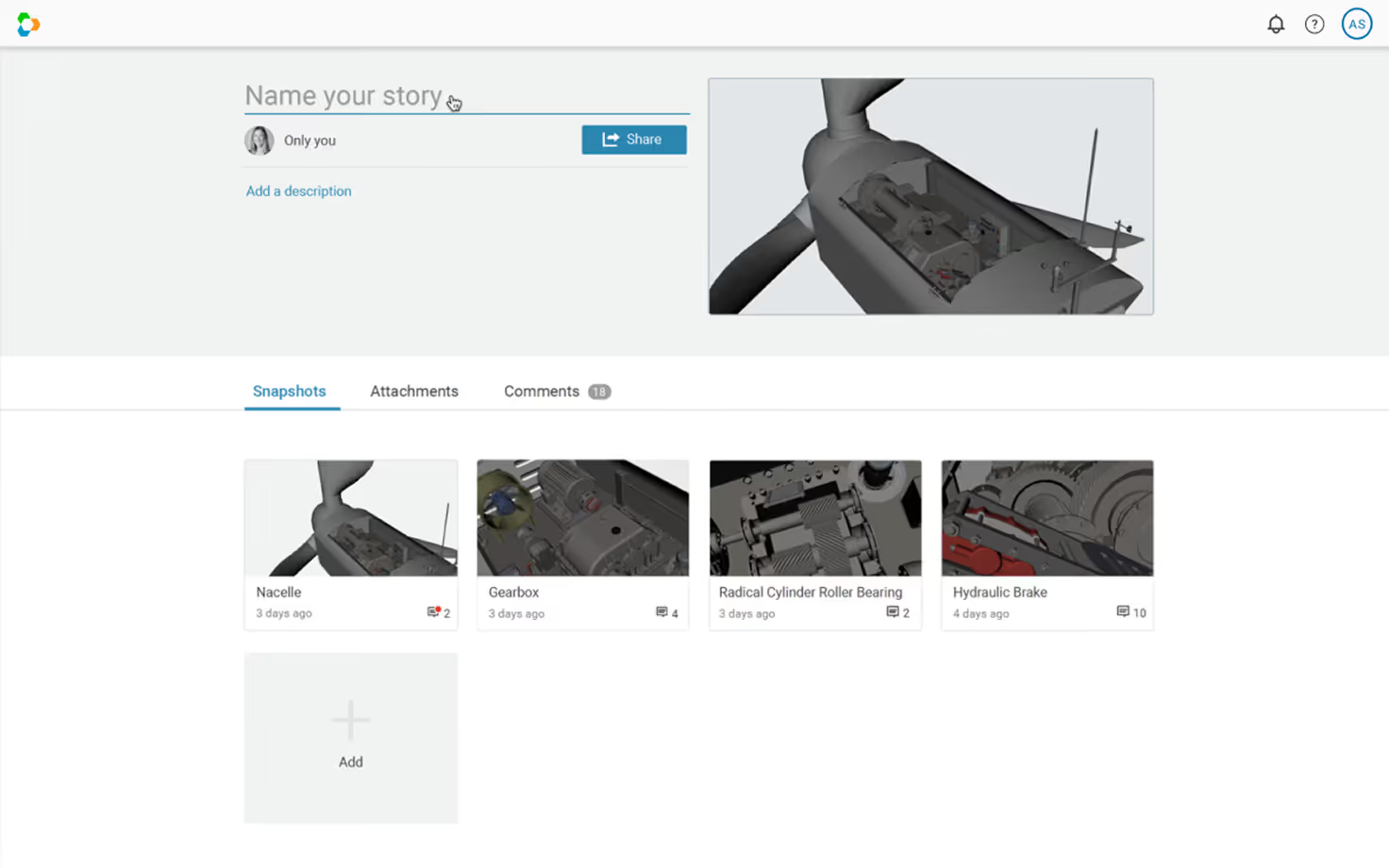
One of the most critical interaction concepts was the introduction of Stories as a way to curate and communicate decisions.
Stories allowed users to:
This reduced reliance on external tools and made collaboration more accessible to non-CAD specialists while preserving engineering accuracy.
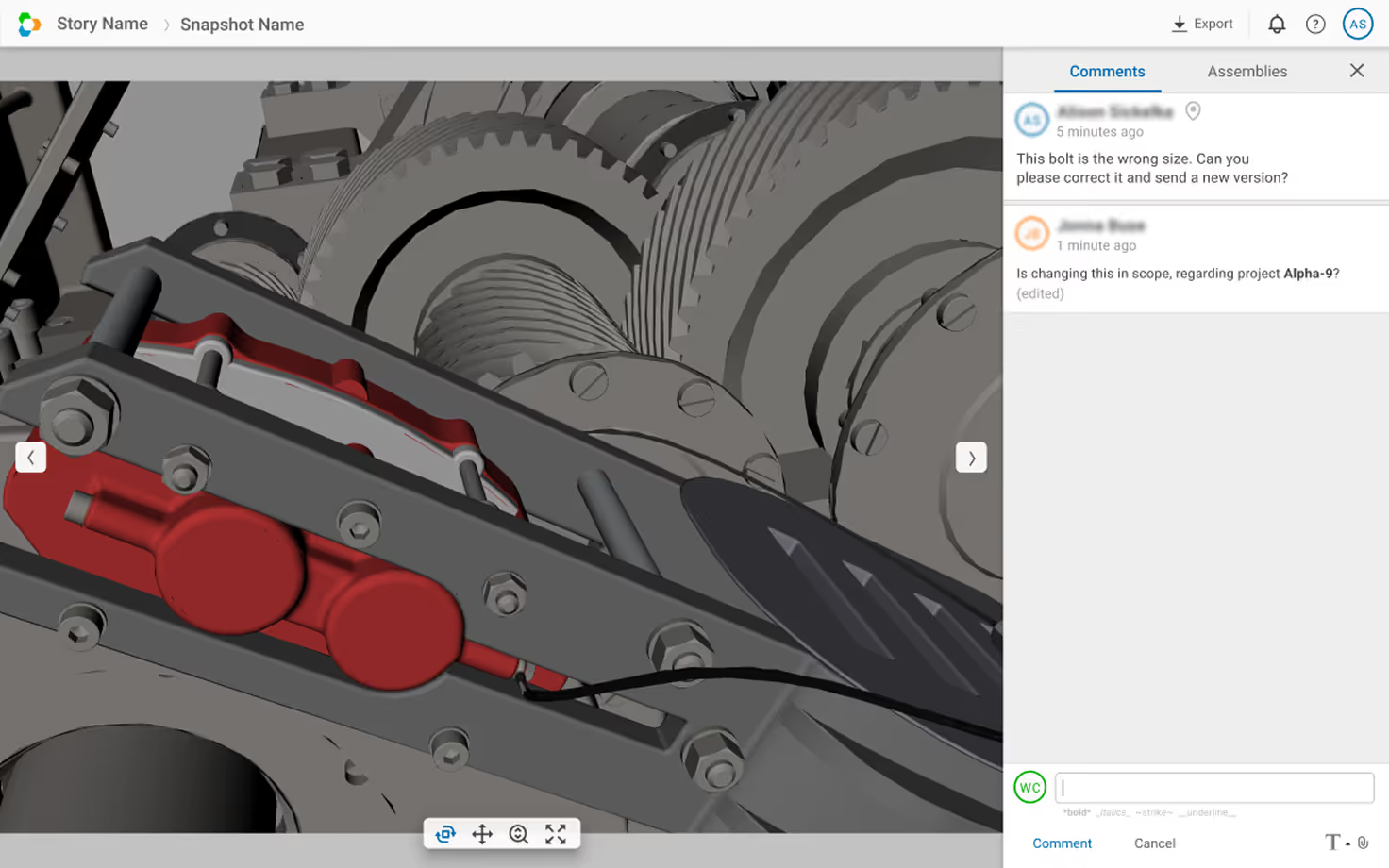
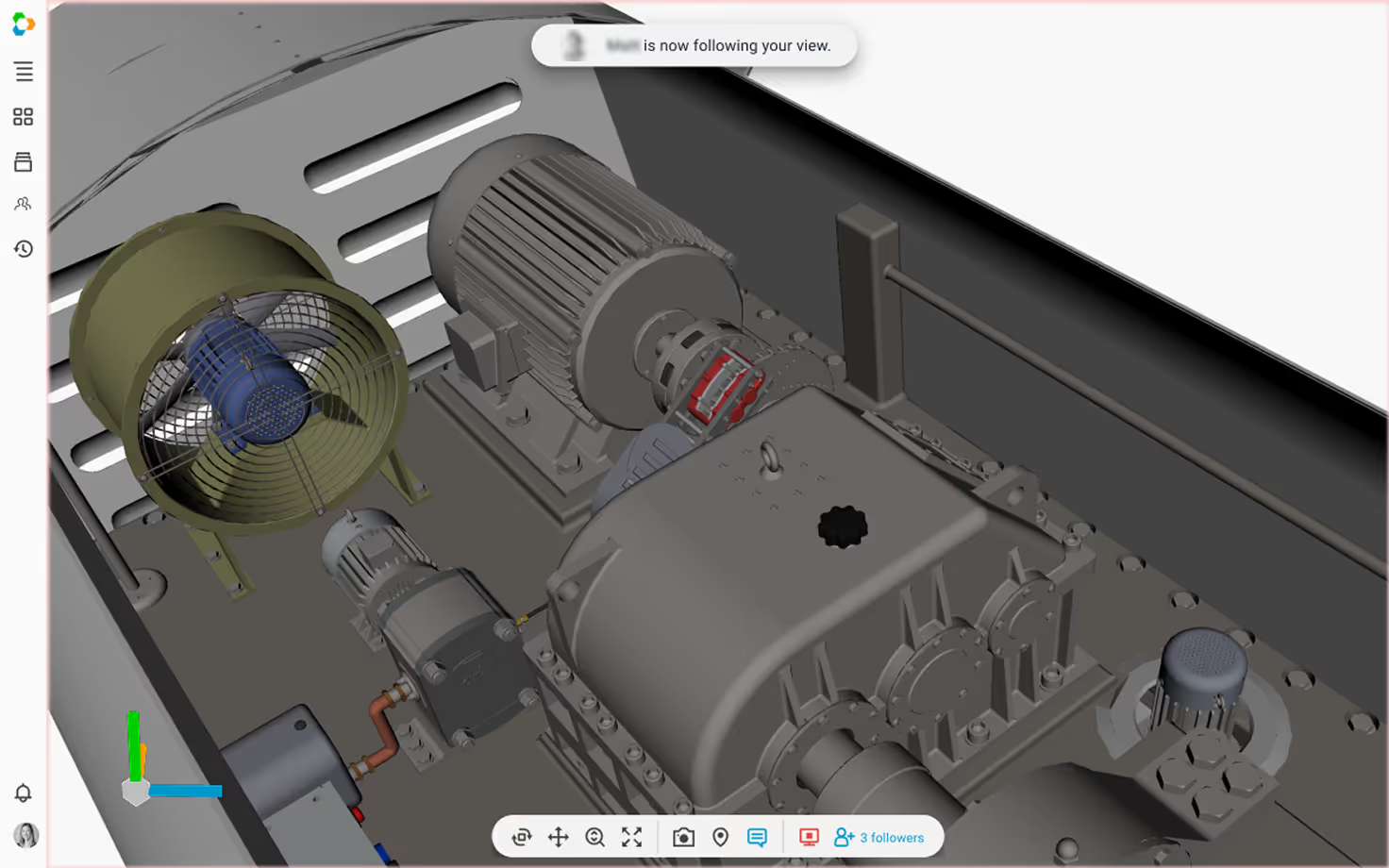
To support synchronous work, the experience included lightweight real-time collaboration features that mirrored how teams already worked together.
These included:
The goal was not to replace existing meeting tools, but to make collaboration around the model faster and more precise.
Throughout execution, designs were iterated collaboratively with product and engineering to balance usability, performance, and feasibility.
This included:
The result was an experience that remained responsive and understandable even under heavy technical constraints.
Once the core interaction model, collaboration workflows, and system structure were in place, validation focused on confirming that the experience aligned with real-world engineering collaboration needs without disrupting the existing design process.
Validation occurred across two complementary tracks: internal stakeholder review and external exposure.
Concepts and flows were reviewed iteratively with product leadership, engineering partners, and a senior design engineer SME with deep CAD and manufacturing domain experience.
These reviews focused on:
Internal validation reinforced that the system-level approach, snapshots, stories, markup, and role-aware collaboration, mapped cleanly to how teams already worked, while reducing friction caused by file-based handoffs and fragmented tools.
Importantly, feedback did not require rethinking the core interaction model, which increased confidence in the overall direction.
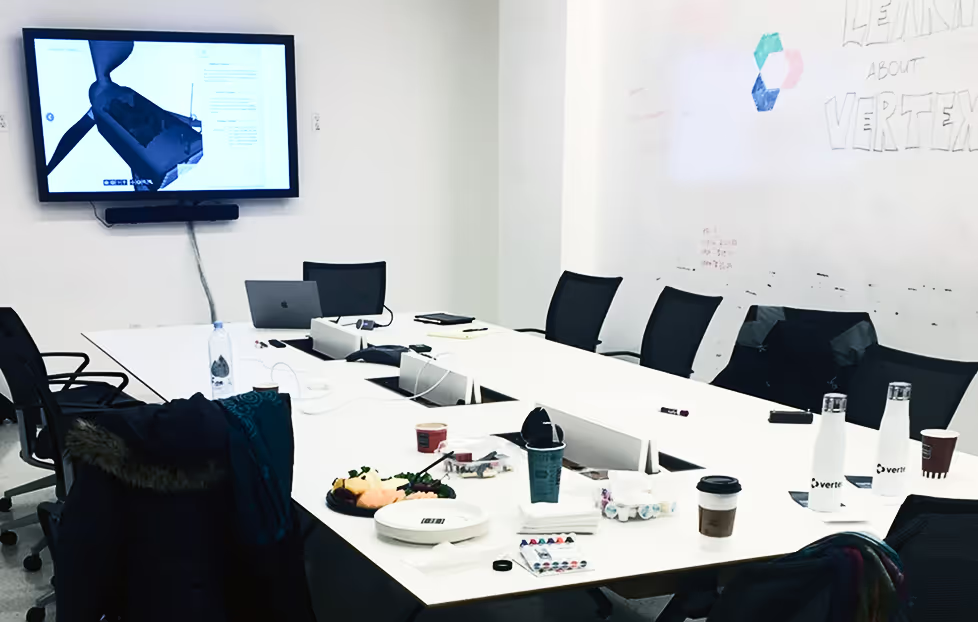
To pressure-test early concepts outside the immediate team, selected designs were shared in facilitated sessions at mHUB, a Chicago-based innovation and prototyping hub, with design and engineering practitioners experienced in complex systems and collaborative workflows.
These sessions served as directional validation, helping confirm:
Feedback was largely affirming and validated that the experience communicated intent clearly, even for participants encountering the platform for the first time. Minor refinements were made to labeling, affordances, and interaction clarity, while the foundational system structure remained intact.
By the end of validation, the team had:
The validation process confirmed that the platform established a strong, extensible baseline for secure, role-aware collaboration around complex 3D assemblies.
Designing collaboration systems requires treating shared understanding as a first-class design outcome, not a byproduct of UI.
In this environment, success depended less on visual polish and more on:
This work reinforced that durable collaboration experiences are built through system clarity, early alignment, and disciplined tradeoff decisions, especially when products are expected to scale in complexity and usage.


