Context
This project focused on redesigning a highly complex product detail experience during a critical platform transition.
The organization was migrating from a legacy, in-house product data system to ProdX, a more advanced vendor platform designed to manage product variations, substitutions, and related products at scale. While ProdX introduced significantly greater flexibility and intelligence, it also imposed new structural constraints that would directly shape the customer experience.
At the same time, the existing product detail experience was already under strain. Variations were frequently incorrect, unrelated products were surfaced as selectable options, and even small changes carried disproportionate risk. The experience struggled to scale across categories, introduced confusion for complex products, and limited merchandising effectiveness.
This was was a system-level redesign under real business, technical, and organizational constraints. The work needed to improve customer clarity and engagement while protecting active revenue flows and establishing a foundation that could support long-term growth.
Business Stakes
This redesign needed to improve customer confidence and engagement while protecting active revenue flows during a live platform migration. Success required measurable gains without introducing risk at scale.
Team
Product, Engineering, Platform Vendor (ProdX), Merchandising, and Operations
Constraints
Impact Snapshot
I served as Lead UX Designer with end-to-end responsibility spanning strategy, research, system design, and delivery.
The role extended well beyond interface design. I led deep edge-case analysis, competitive and best-practice research, experimentation design, and post-launch analytics to ensure the solution scaled both technically and commercially.
I additionally represented design in direct negotiations with ProdX, advocating for changes to their implementation to support real-world product complexity.
Key leadership contribution: I defined and negotiated the system rules that governed all product variation behavior across categories, aligning product, engineering, and external partners around a shared foundation that reduced risk, supported scale, and informed future initiatives.
This project required more than strong design execution. It demanded leadership across ambiguity, influence without formal authority, and comfort operating at the intersection of user needs, system architecture, and business risk.
Working within a product triad, I partnered closely with Product Management and Engineering to ensure decisions were grounded in real customer behavior, system realities, and long-term platform viability. I facilitated working sessions, synthesized research into clear direction, and challenged proposed solutions when they introduced risk or failed to account for known edge cases.
The existing product detail experience was already fragile before this initiative began.
Product variations were frequently incorrect. Items presented as variations were often unrelated products. Customers struggled to understand differences, compare options, or trust what they were seeing. Small changes introduced outsized risk, making iteration slow and confidence low.
At the same time, the organization was transitioning all product data from a legacy, in-house system to ProdX, a more advanced platform capable of managing variations, substitutions, and related products with significantly greater intelligence.
ProdX introduced powerful new capabilities, but it also imposed strict structural constraints. How products were defined, grouped, and governed in the system would directly determine what experiences were even possible at the interface level.
If those constraints were misunderstood or accepted prematurely, the resulting experience would fail regardless of visual polish.
Early exploration revealed that the challenge was not adapting the interface to new constraints, but confronting how those constraints fundamentally shaped the experience.
Through auditing over 100 real product examples, it became clear that ProdX’s default variation model could not reliably represent how customers understood product differences.
Variation categories were not anchored to a primary product, secondary attributes were inconsistently scoped, and state changes triggered unexpected page and URL behavior that broke continuity.
These limitations were not immediately obvious to partners, but I was able to make it clear that without redefining how variation rules were authored and governed, the experience would remain confusing and brittle regardless of visual treatment.
If the variation system was implemented incorrectly, the organization would inherit a more complex platform without realizing its benefits. Customer trust would erode further, teams would be locked into fragile workarounds, and future product growth would be constrained by decisions made too early and too narrowly.
This project required more than a redesign. It required rethinking the system that powered the experience.
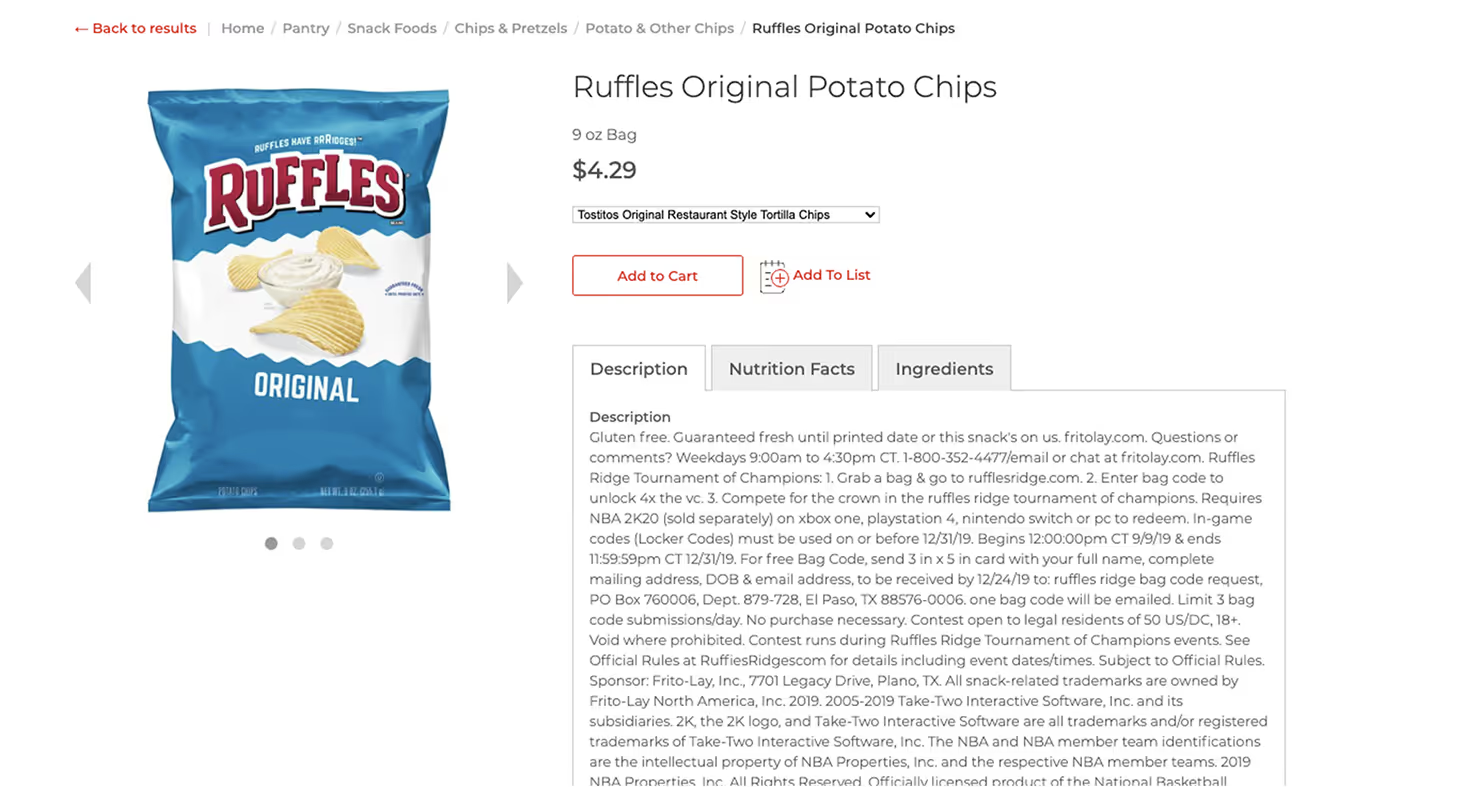
Discovery focused on understanding how product variation logic actually behaved in the real world, not how it was intended to work on paper.
Rather than starting with interface concepts, I concentrated on identifying where the existing experience broke down and why. This required looking beyond individual screens and into how product data was structured, governed, and interpreted across systems.
A core part of discovery involved auditing over 100 edge-case products across multiple categories.
These were not theoretical scenarios. They represented real products with complex combinations of sizes, flavors, bundles, substitutions, and near-duplicates that regularly surfaced incorrect or misleading variations in the current experience.
Patterns emerged quickly:
This analysis directly informed how variation rules needed to be defined, validated, and enforced at the system level, before any interface decisions could be made.
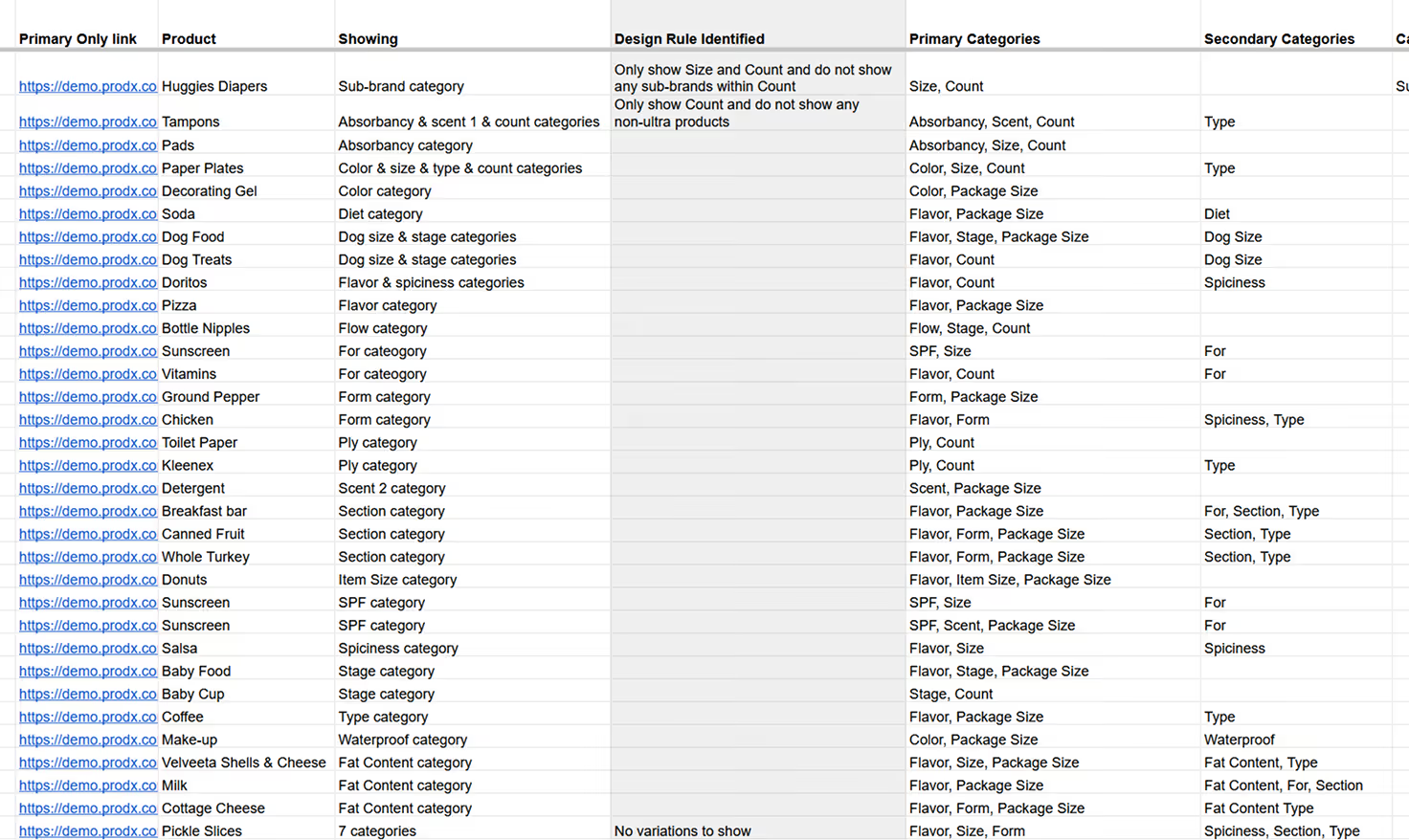
To understand how the new ProdX variation system would behave in real conditions, I conducted a deep audit of edge-case products across categories.
This analysis surfaced inconsistent category logic, ambiguous variation hierarchies, and failure modes that were not apparent in standard flows or vendor prototypes. These findings became the foundation for defining variation rules, pressure-testing system assumptions, and aligning Product, Engineering, and ProdX on what the experience actually needed to support.
Discovery extended beyond stakeholder interviews and technical walkthroughs. In parallel, I led structured exploration across internal teams, competitive platforms, and industry research to pressure-test assumptions and identify proven patterns.
This work included:
This combined discovery effort surfaced a clear gap between platform defaults and customer expectations, reinforcing the need for a rules-driven system rather than ad-hoc configuration.
In parallel, I conducted competitive and best-practice research to validate our direction beyond internal assumptions.
This included analyzing platforms with complex variation paradigms, reviewing Baymard Institute research on product configuration and choice architecture, and pressure-testing our concepts against established patterns.
This work reinforced a consistent theme: successful variation systems prioritize predictability and constraint clarity over surface-level flexibility.
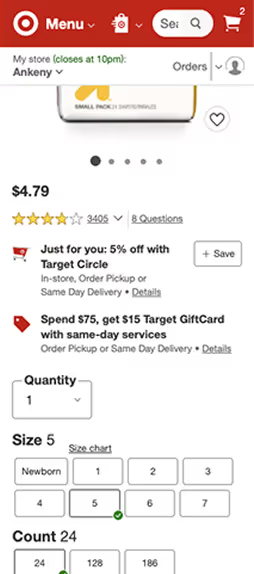
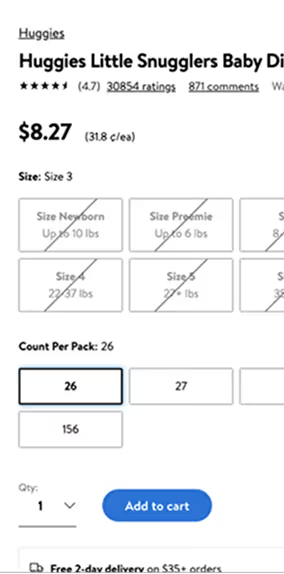

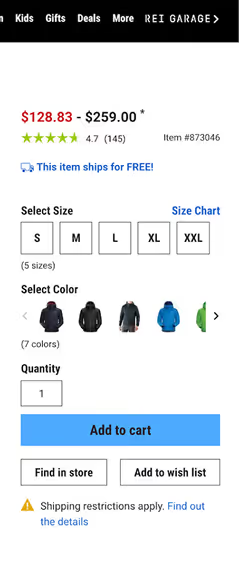
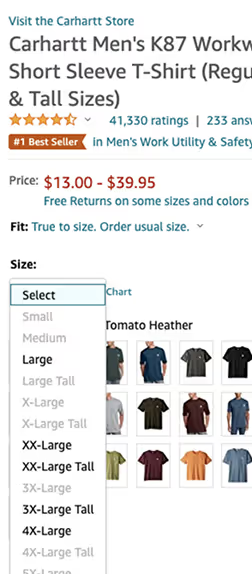
Competitive patterns across major retail platforms revealed consistent best practices for variation clarity, anchoring, and error prevention.
While implementations varied, successful experiences clearly distinguished primary products from selectable options, avoided invalid states, and maintained a stable sense of place as customers explored variations.
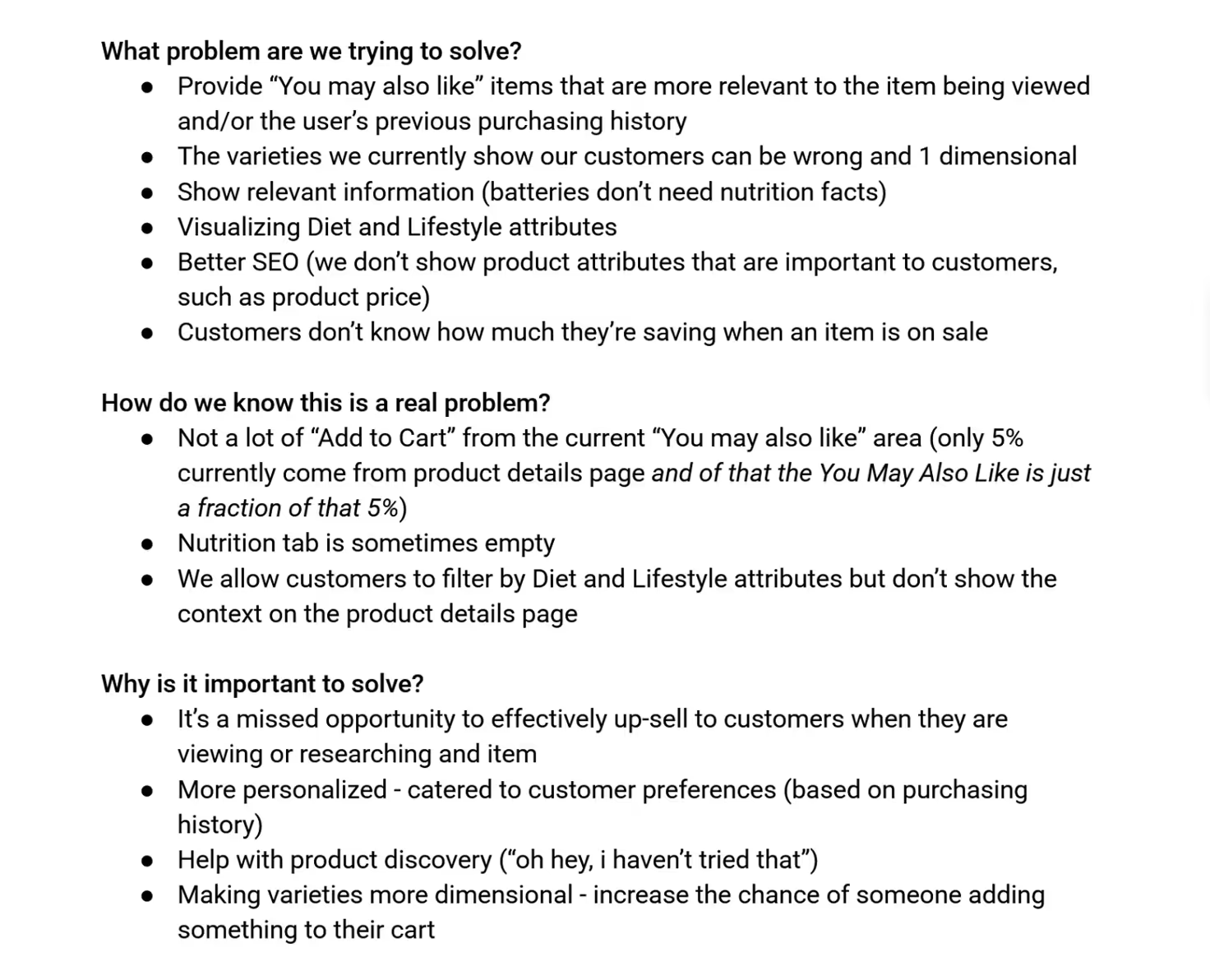
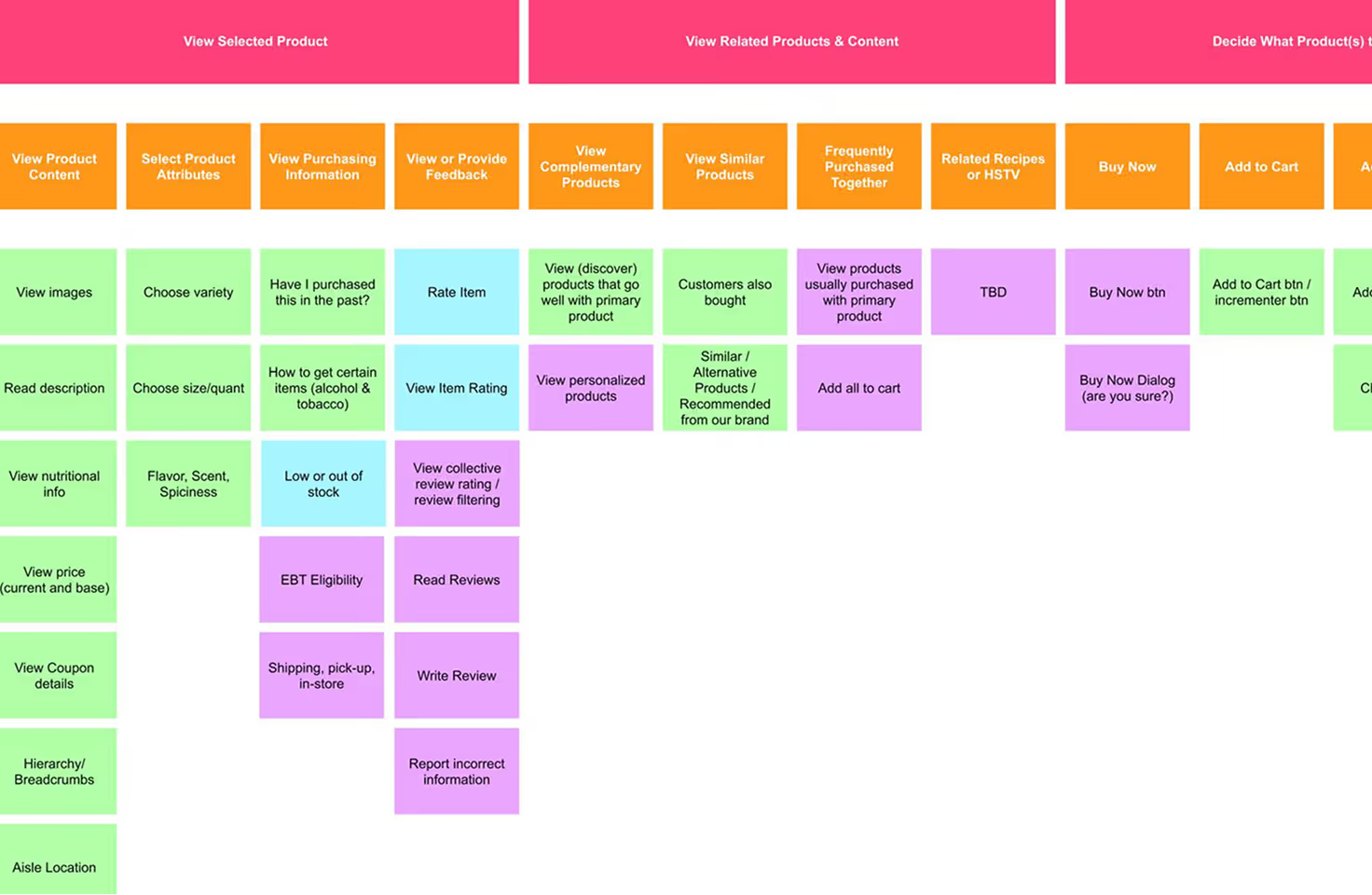
The core challenge was not designing a better interface, but establishing a system that could accurately model product variation, scale across categories, and remain adaptable over time.
Based on discovery and deep edge-case analysis, the system needed to:
This reframed variation logic as first-class product infrastructure rather than a design configuration problem, aligning product, platform, and experience layers around a shared set of rules.
I authored a comprehensive set of variation rules that defined:
These rules were derived directly from audited product examples and validated against real catalog data.
They became the contract between product, engineering, and the vendor platform.
ProdX’s default implementation did not support several of these requirements.
I led a working session with ProdX’s founder with our product owner and engineering counterparts to:
As a result, ProdX agreed to extend their model, adding new attributes and adjusting behaviors to support our needs.
This shifted the relationship from “platform consumer” to active design partner.
With the system rules defined, experience design could finally move forward with confidence.
I worked with engineering to ensure that:
Design decisions were now grounded in explicit rules, not assumptions. This approach replaced assumption-driven design with shared system understanding, reducing ambiguity across teams and lowering long-term maintenance risk.
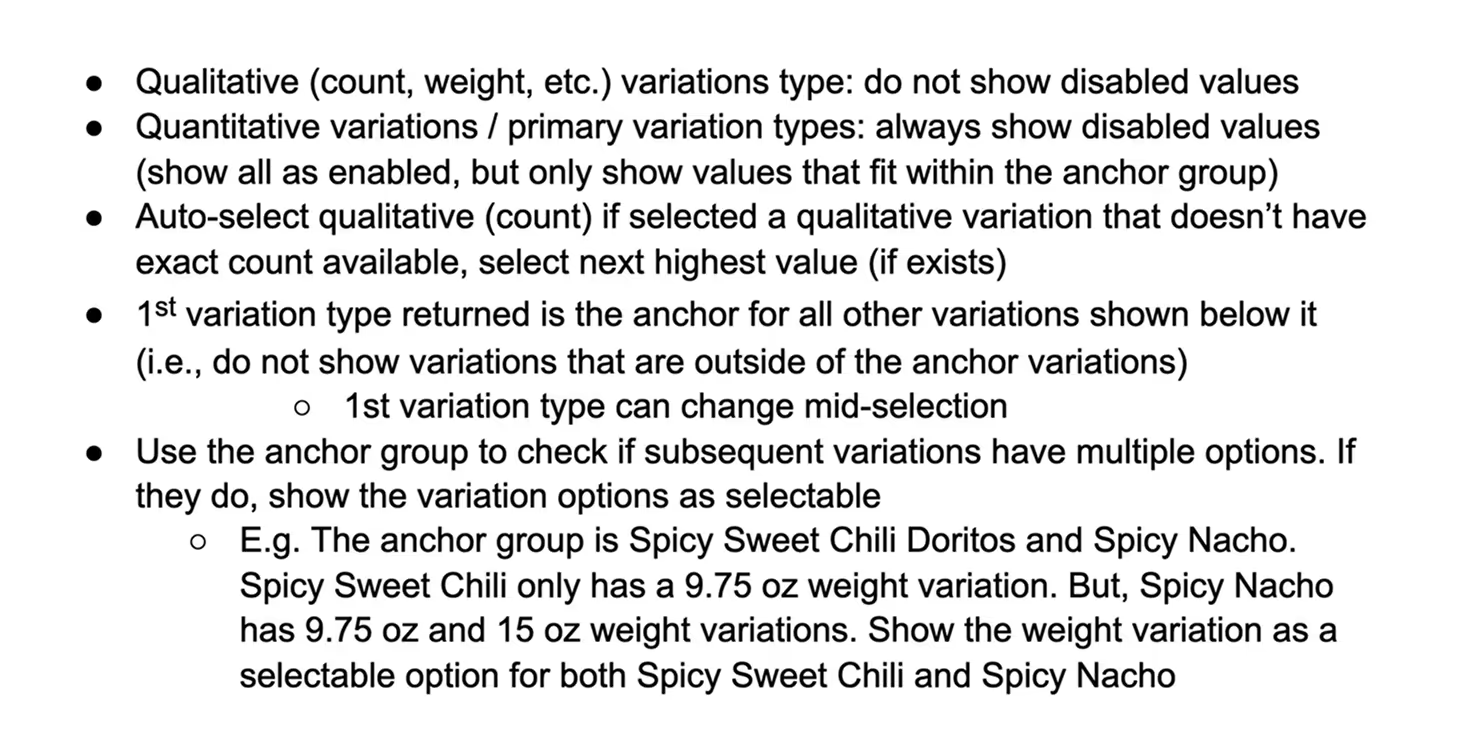
With the strategy aligned and platform constraints understood, the work shifted to formalizing the variation system as a durable foundation.
This was not a design pattern. It was a governance model designed to enforce clarity, prevent invalid states, and scale as the catalog evolved.
Not every product attribute should be treated as a customer-facing variation.
A core failure of the existing experience was that true variations, descriptive attributes, and related products were handled the same way, creating confusing and unpredictable behavior.
I defined a clear distinction between three attribute types:
Primary variation attributes
Attributes customers intentionally choose between, such as diaper size, count, or package quantity. Changing these should update the product without changing what the product fundamentally is.
Secondary attributes
Attributes that provide helpful context but should not drive selection, such as absorbency level, age range, or fit indicators. These inform decisions without triggering a product change.
Excluded attributes
Attributes that should never appear as variations, even if they exist in the data. For example, pulling size or count values from similar products could unintentionally switch a customer from overnight diapers to standard diapers without the customer realizing it.
By making these rules explicit and predictable, the system became easier to reason about across design, engineering, and merchandising.
New attributes and categories could be introduced without redesigning the product detail page or creating UI-driven exceptions. The experience shifted from reactive fixes to governed, system-level confidence.
Many products qualified for multiple variation attributes simultaneously.
Without precedence rules, outcomes became unpredictable.
I established logic for:
These rules ensured each product resolved to a single, predictable variation structure.
With the variation system defined, experience design could move forward with clarity.
Design decisions were no longer driven by edge-case guesswork or UI workarounds. They were grounded in explicit rules that governed how products should behave across categories.
This allowed the interface to focus on clarity, predictability, and trust.
The redesigned product detail experience needed to balance customer clarity, merchandising effectiveness, and measurable business outcomes.
The goal was not to expose system complexity, but to absorb it, allowing customers to move forward with clarity and trust.
Early concepts explored different ways of expressing variation logic without overwhelming customers.
Beyond variations, I partnered closely with product and engineering to define how adjacent systems surfaced related products.
For “Similar items” and “Often bought with this item,” I proposed a looping logic that rotated product groups instead of showing near-duplicate items. This ensured variety, avoided redundancy, and made these swimlanes feel intentionally curated rather than algorithmic noise.
Through iteration, several principles guided execution:
These principles ensured the experience remained consistent even as variation logic differed by product type.
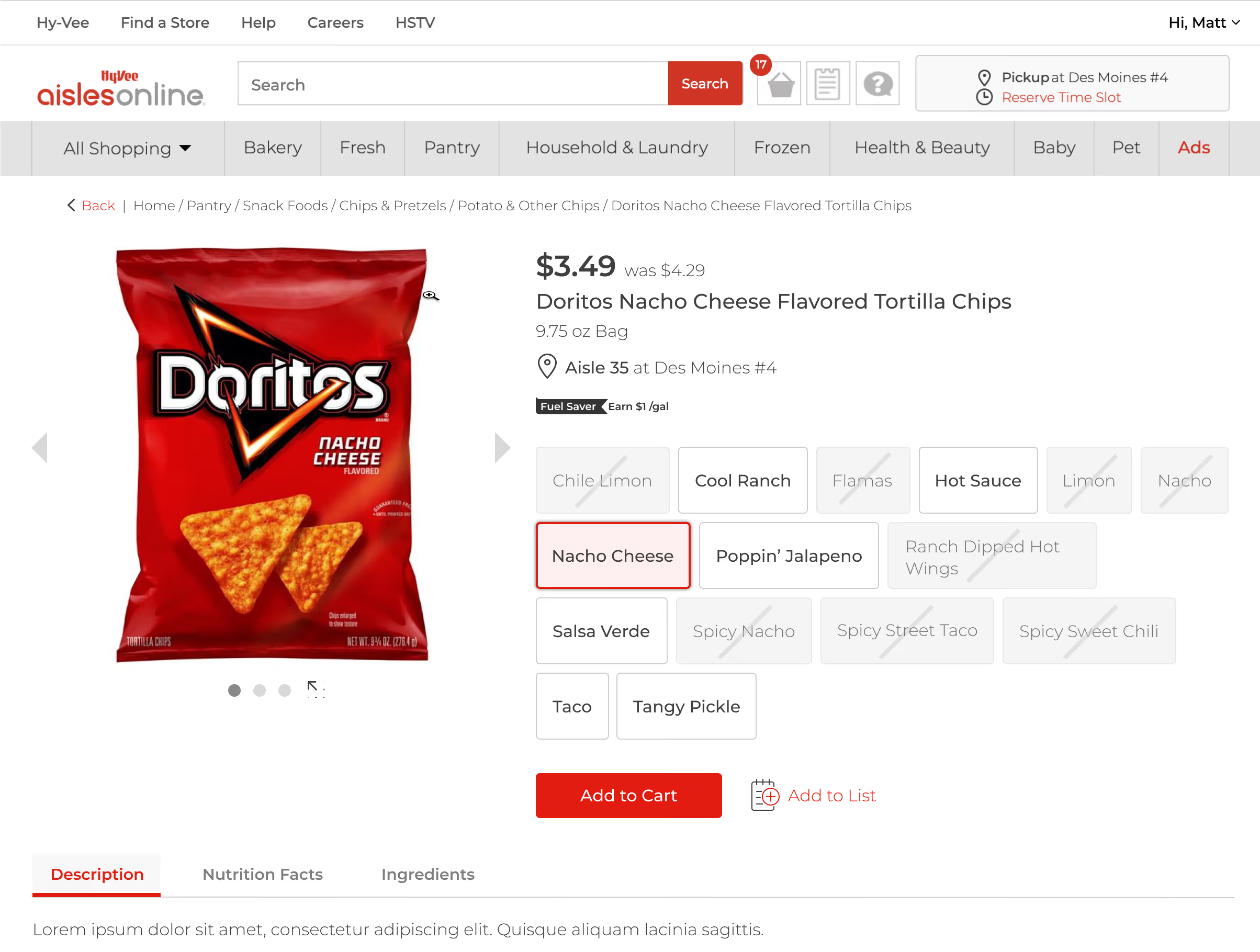
The resulting experience preserved clear product identity, prevented invalid states, and introduced adjacent product discovery in a way that felt helpful rather than distracting.
Each interaction was designed to reflect the system’s intent:
Customers were never asked to interpret internal complexity. The experience behaved logically by design.
Execution was tightly coordinated with engineering to ensure fidelity between system logic and interface behavior.
Rather than handing off static designs, I worked iteratively alongside engineers to validate that:
This reduced rework and prevented late-stage surprises.
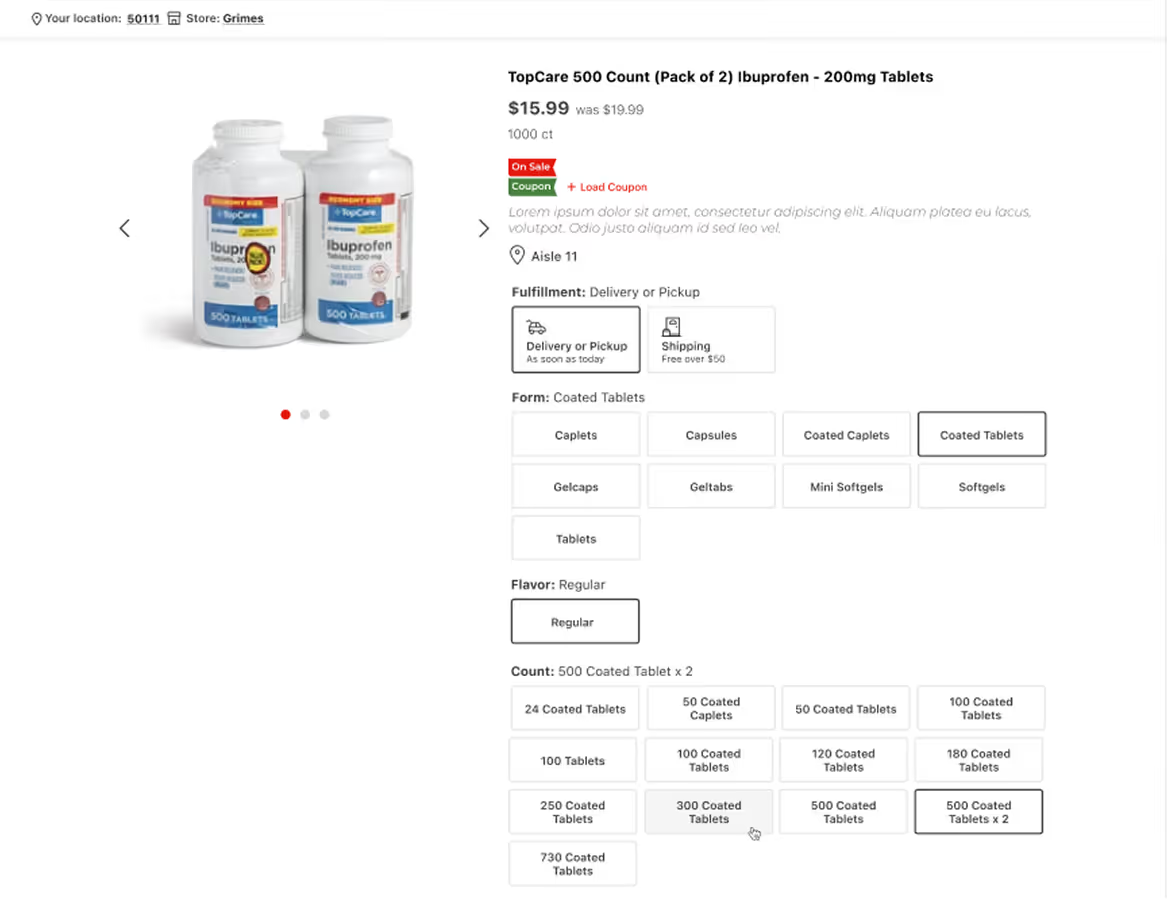
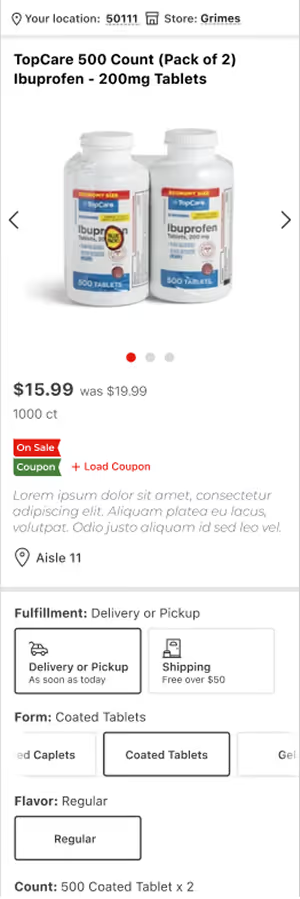
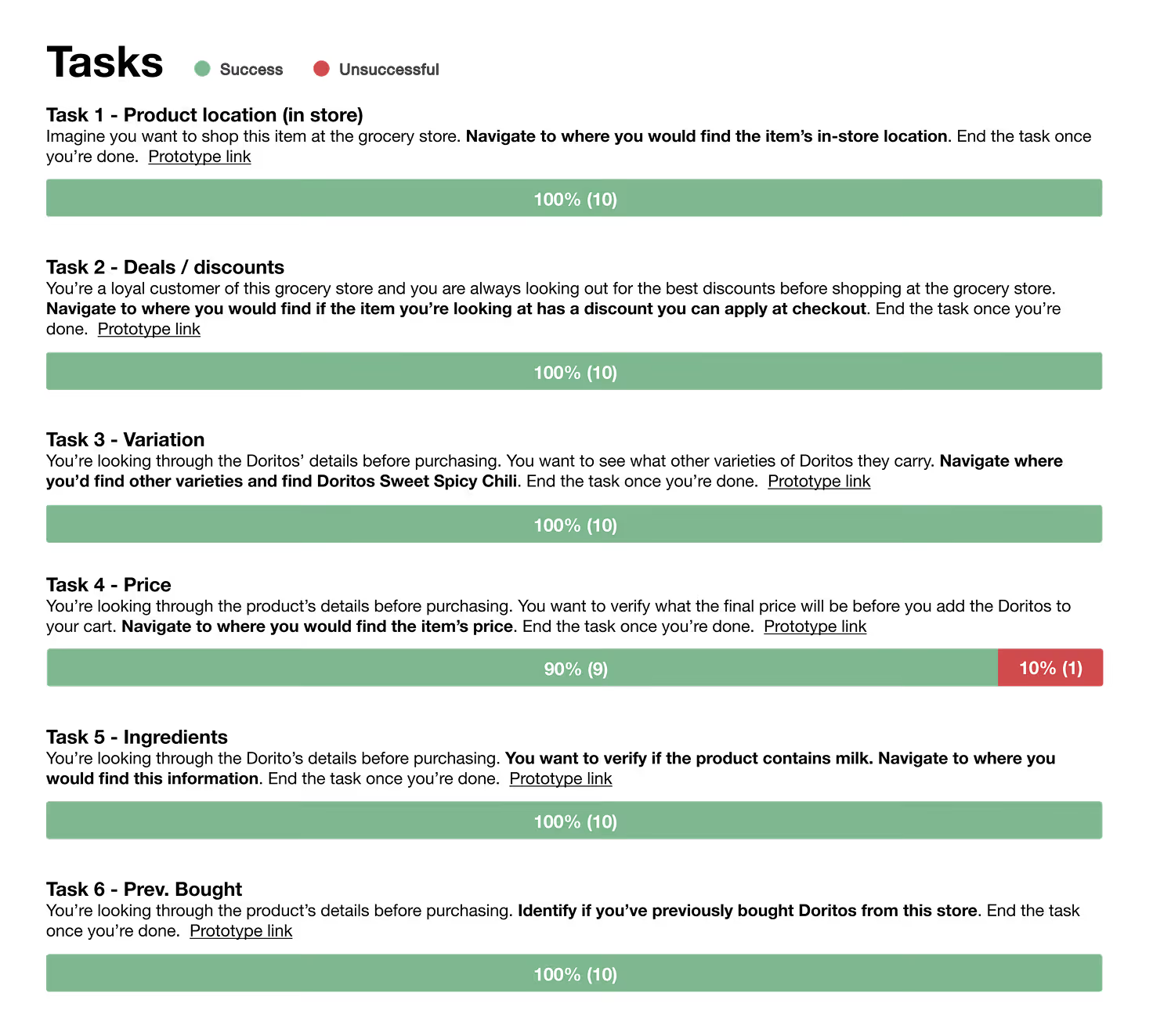
Before exposing the redesigned experience to live traffic, I validated the overall product detail experience through unmoderated usability testing to ensure it was understandable without guidance.
Testing focused on whether customers could:
Key Findings
Participants consistently demonstrated confidence navigating complex product configurations without assistance. They correctly identified valid options, understood why certain combinations were unavailable, and completed selection tasks with minimal hesitation.
Testing confirmed that clarity extended beyond variations alone, supporting product understanding, option confidence, and overall decision-making before exposing the experience to live traffic.
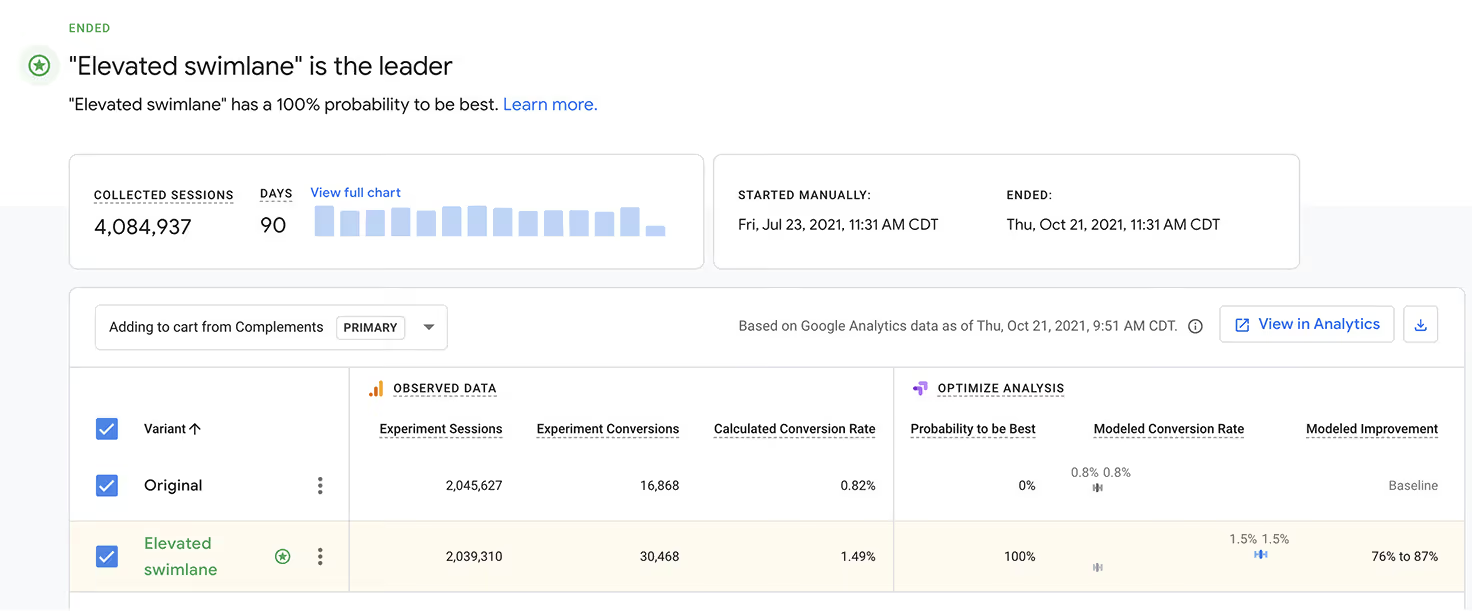
To validate a key system-level decision, we ran a focused A/B test within the redesigned product detail page.
Test
Results
Impact
The test confirmed that surfacing relevant alternatives earlier in the decision flow improved engagement and conversion. Improving clarity and context, rather than adding visual or promotional pressure, materially changed customer behavior.
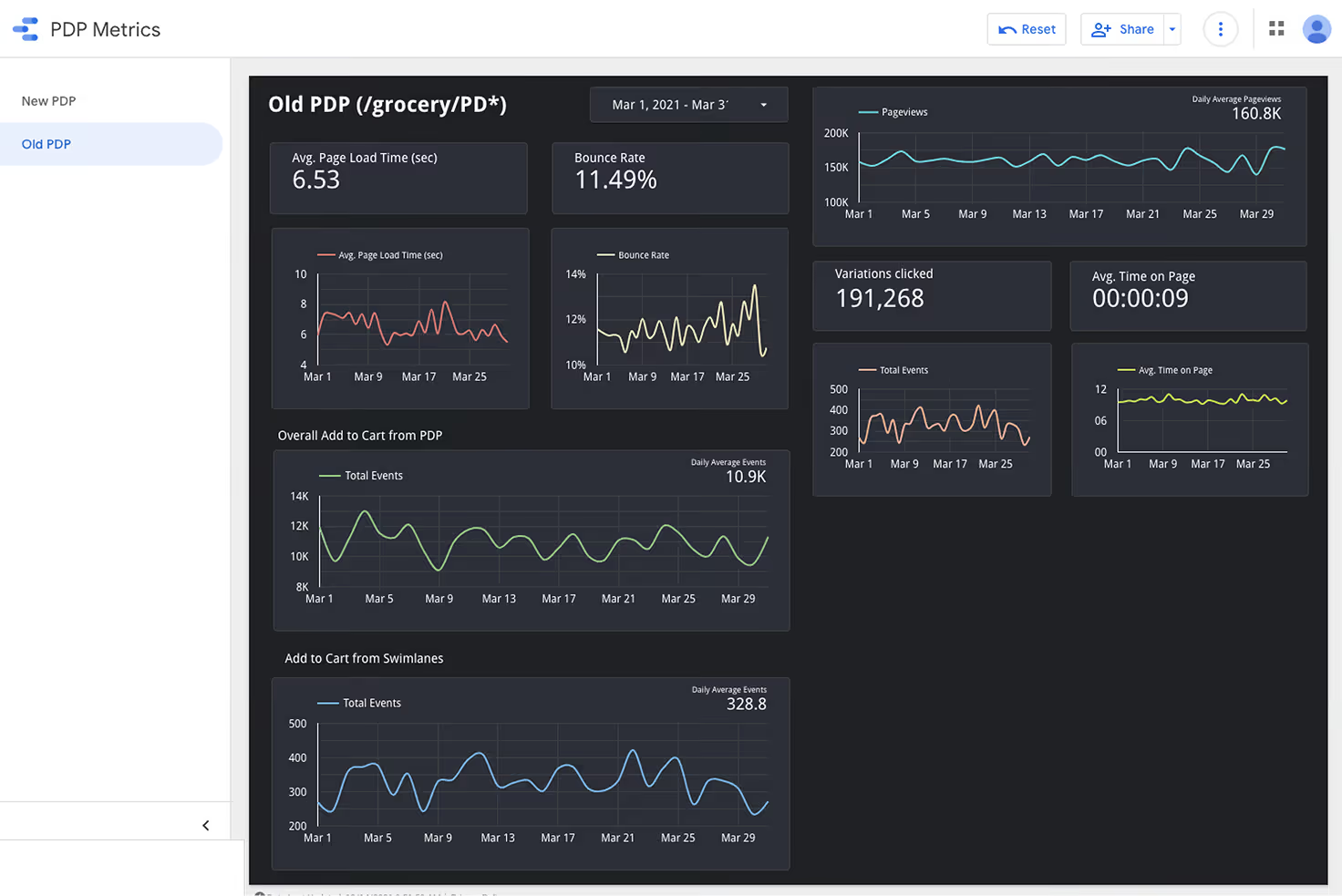
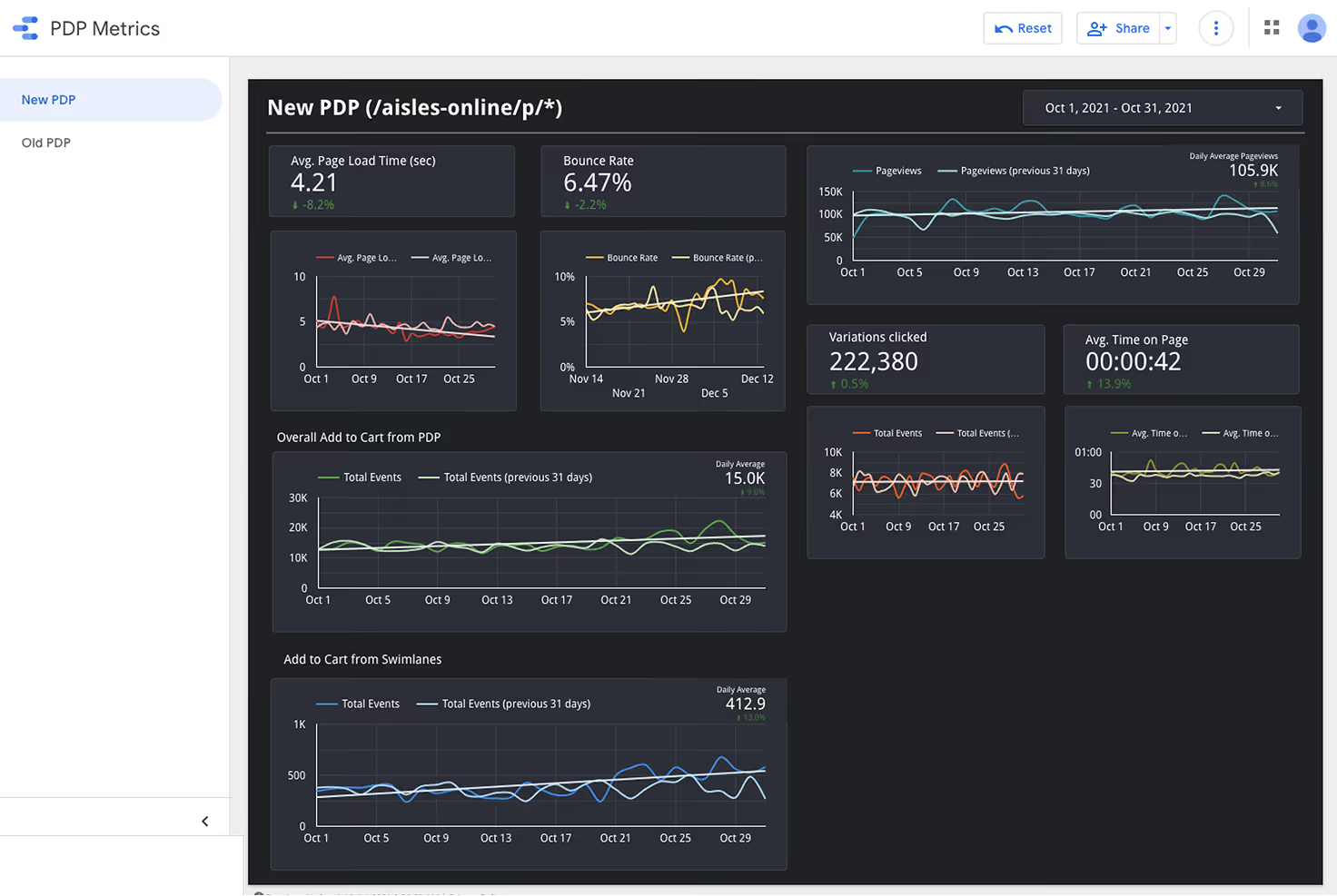
The redesign produced statistically significant gains across engagement, conversion, and revenue-adjacent behaviors within the first month of launch.
Engagement & Confidence
Conversion & Revenue Signals
System & Platform Outcomes
These results reinforced that the redesign did more than improve surface usability. It meaningfully changed how customers engaged with complex product configurations, establishing a foundation for continued performance as adoption increased.
Rather than optimizing for a single conversion moment, the redesign strengthened the overall decision experience for customers managing high-variance products.
The product detail page shifted from a fragile, case-by-case solution to a stable system the organization could confidently build on.
Complex systems require shared rules, not just better interfaces.
This work reinforced that:
Leading this effort required balancing short-term performance pressure with long-term platform integrity, ensuring the experience could evolve without collapsing under its own complexity.


